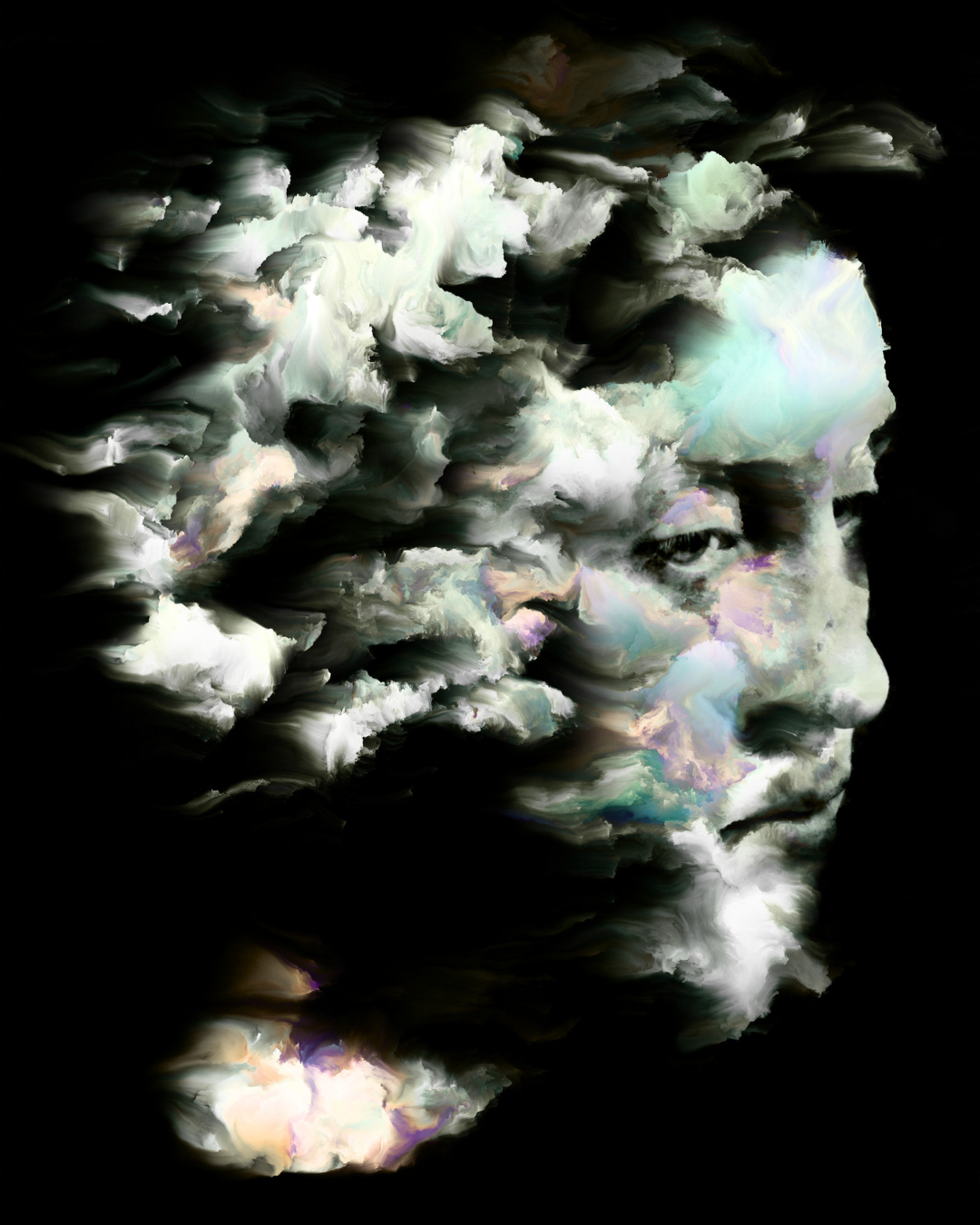
Afterimage: Hiraki Sawa’s
Souvenir IV
Hiraki Sawa’s Souvenir IV (2012) is a silent, black-and-white single-channel video set in an empty domestic room (this video has music on it, which I actually really like and seems to suit the mood for me but worth noting this was not the original as far as I can find out……).
It comes from a period of Sawa’s practice shaped by a friend’s sudden memory loss, in which rooms become mental landscapes where recollections linger like objects left behind (James Cohan, n.d.; Ota Fine Arts, n.d.).
Badger (2013) describes Sawa as an artist who “constructs beautiful video dreamscapes from pedestrian subjects” (p. 27), and here a plain room of patterned wallpaper, bare floorboards and a bright window becomes the site of a haunting. The title carries both meanings of souvenir: a keepsake we carry away, and the French word for ‘memory’ itself – it is a living distortion of may be how we perceive time, memory and feels exactly like my own burnout.
Writing on hauntology, Badger (2013) suggests that “the present perpetually contains within it ghosts of the past” (p. 32). Sawa’s figure embodies this, present several times over and thinner each time, each moment still carrying the ones before it. I
As I said, this is how my present state feels. Raymaker et al. (2020) define Autistic burnout as chronic exhaustion, loss of skills and reduced tolerance to stimuli, arising from the cumulative load of just trying to live in a world that values neuronormativity.
Buckle et al. (2021) describe Autistic inertia as difficulty starting, stopping or changing course, and the figure seems caught mid-movement, leaving the wall without reaching the window, moving but not getting anywhere. At the moment, my days feel broken, looping, and each pass leaves a fainter version of me behind. I seem to be struggling more and more with work and I know I need a rest – this is all very familiar, so no need to worry about me, I have support and am ok. – was just inspired by this when I saw it this morning!
The longer I look at this video, though, the more the fragments change their meaning. Deleuze and Guattari (1987) open A Thousand Plateaus by observing that “since each of us was several, there was already quite a crowd” (p. 3).
Sawa’s figure is a bit like a small crowd in one person, in burnout, fragmentation can feel like being scattered across too many demands, and yet the same image can be held as plurality, where every trace is a self that was truly there and still real.
David Gray-Hammond: NeuroHub Community Ltd (2023) writes of the chaotic self, an AuDHD Schizophrenic self that grows rhizomatically and resists being shaped and restricted into a single tidy way of being. The distortion in Sawa’s image feels like it fits this chaotic self. The streaks of light record movement that a single, more in-focus frame would erase. Nick Walker Sensei’s neuroqueer theory invites exactly this willingness to let divergence from the expected form become generative, in my interpretation, to maybe open up more possibilities, to see what emerges from the liminal stuck states of burnout and the creation of new ourselves (Walker, 2021).
I have written before about being neuro-holographic a concept discussed with Dawn Prince-Hughes and CASY Physics , and Sawa’s figure seems to portray that. For me, being neuro-holographic describes a felt understanding more than a cognitive or intellectual resonance of how we are woven into one another and into the world, a state in which there is no division between us and our environment and wider comos – being intensely attunded to the fact we are all made of star stuff and multiple.
It is bound up with feeling like my sensory system is so wide open, creating heightened sensitivity and hyper empathy that leaves me exhausted and feeling trapped between worlds.
I have also described that the word neuroholographic can perhaps only be felt or experienced in a luminescent, undefinable iridescent way, and the silvery threads trailing from Sawa’s figure come close to that luminescence. A broken hologram keeps an impression of the whole picture in each of its pieces. Seen neuro-holographically, each thinned copy of the figure still carries all of her, blurred and present, bleeding into the patterned wall and the light beyond it. Fragmentation becomes a way of being distributed across place, space, and time, distorted, still there but stuck.
Liminality holds these ideas together. Turner (1967) described liminal beings as “betwixt and between” (p. 93), suspended on a threshold after one form has been left and before the next is taken. In my previous blogs about neuroqueering liminal spaces I have wrtten about how living in the in-between, at the edges of social groups, has shaped my Autistic life, but also how liminal spaces can become thresholds where silenced parts of the bodymind can return transformed.
Burnout is often what that silencing costs us. Gray-Hammond (2024) similarly reclaims the liminal as a space of queer potential, somewhere possibility gathers precisely because nothing has settled. Sawa’s figure hovers on such a threshold, between wall and window, memory and presence, departure and arrival.
Autistic Burnout keeps many of us in that doorway far longer than we would choose. Held neuro-holographically, the threshold can also become a place of queering, where a self exists in several states at once, unfinished and whole, waiting for what grows next.
A souvenir, the title of this piece, is something kept from a place we have left. Burnout may ask for that kind of tenderness toward the selves we pass through: the tired ones, the looping ones, the ones that flicker at the edge of the frame like in this video. Perhaps we can keep them as Sawa keeps his figure, carefully and without hurry, holding them gently while we wait to feel solid again, reclaim our ways of resting – dive into our special interests and passions, the things that bring us joy and glimmers – for me writing about this is therapeutic. It helps – it may not be how people see rest and recovery but it is what I need and may be some others can relate to this too – in parts …..
References
Badger, D. I. (2013). Hauntings: A nodalist study [Master’s thesis, University of Huddersfield]. University of Huddersfield Repository. http://eprints.hud.ac.uk/id/eprint/23291/
Buckle, K. L., Leadbitter, K., Poliakoff, E., & Gowen, E. (2021). “No way out except from external intervention”: First-hand accounts of autistic inertia. Frontiers in Psychology, 12, Article 631596. https://doi.org/10.3389/fpsyg.2021.631596
Deleuze, G., & Guattari, F. (1987). A thousand plateaus: Capitalism and schizophrenia (B. Massumi, Trans.). University of Minnesota Press. (Original work published 1980)
Edgar, H. (2024a, June 23). Neuro-holographic thoughts. More Realms. https://morerealms.com/neuro-holographic-thoughts/
Edgar, H. (2024b, June 16). Neuroqueering in the liminal spaces. More Realms. https://morerealms.com/neuroqueering-in-the-liminal-spaces/
Gray-Hammond, D. (2023, April 30). Reclaiming neurofuturism: Rhizomatic communities and the chaotic self. Emergent Divergence. https://emergentdivergence.com/2023/04/30/reclaiming-neurofuturism-rhizomatic-communities-and-the-chaotic-self/
Gray-Hammond, D. (2024, June 22). Reclaiming neurofuturism: The liminal as a space of queer potential. Emergent Divergence. https://emergentdivergence.com/2024/06/22/reclaiming-neurofuturism-the-liminal-as-a-space-of-queer-potential/
James Cohan. (n.d.). Hiraki Sawa. https://www.jamescohan.com/artists/hiraki-sawa
Ota Fine Arts. (n.d.). Hiraki Sawa, Souvenir IV, 2012. https://www.otafinearts.com/artworks/2269-hiraki-sawa-souvenir-iv-2012/
Raymaker, D. M., Teo, A. R., Steckler, N. A., Lentz, B., Scharer, M., Delos Santos, A., Kapp, S. K., Hunter, M., Joyce, A., & Nicolaidis, C. (2020). “Having all of your internal resources exhausted beyond measure and being left with no clean-up crew”: Defining autistic burnout. Autism in Adulthood, 2(2), 132–143. https://doi.org/10.1089/aut.2019.0079
Turner, V. (1967). Betwixt and between: The liminal period in rites de passage. In The forest of symbols: Aspects of Ndembu ritual (pp. 93–111). Cornell University Press.
https://dl1.cuni.cz/pluginfile.php/1147806/mod_folder/content/0/Turner%20Betwixt%20and%20Between%20The%20Forest%20of%20Symbols.pdf
Walker, N. (2021). Neuroqueer heresies: Notes on the neurodiversity paradigm, autistic empowerment, and postnormal possibilities. Autonomous Press.