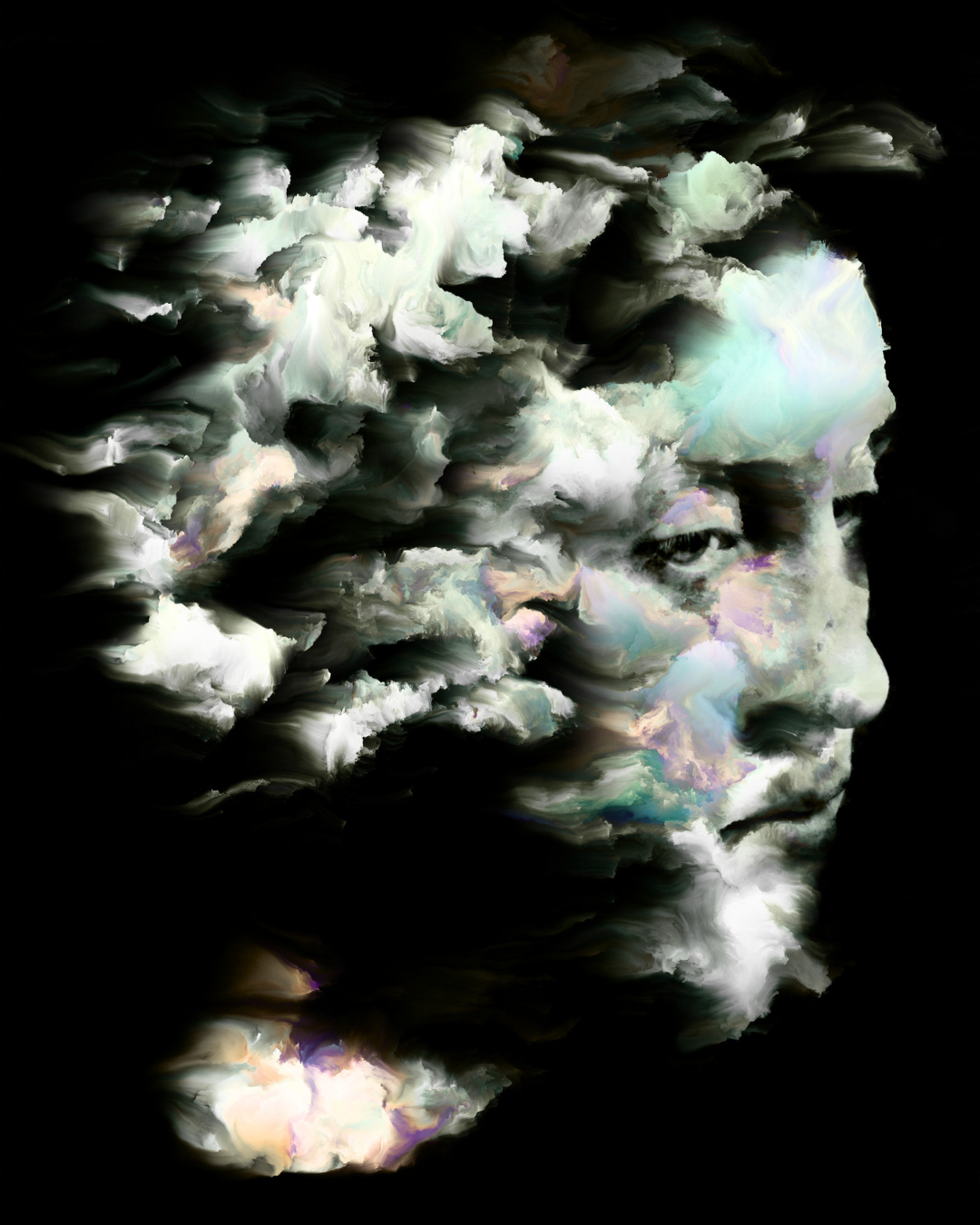
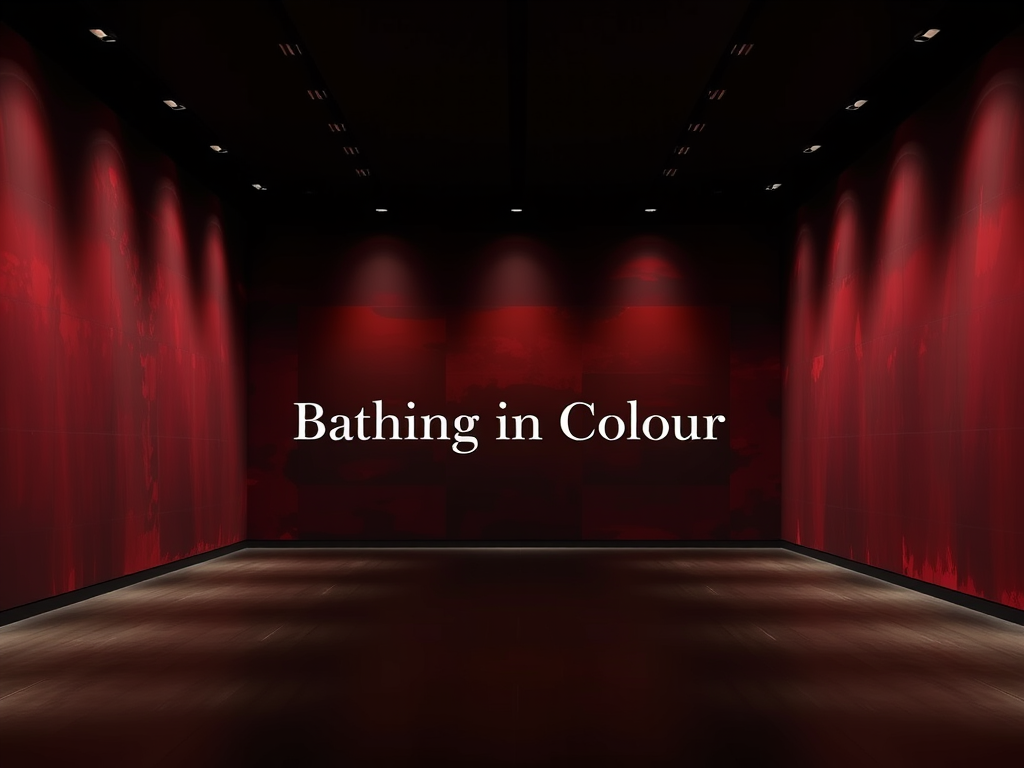
Hiraki Sawa’s Souvenir IV (2012) is a silent, black-and-white single-channel video set in an empty domestic room (this video has music on it, which I actually really like and seems to suit the mood for me but worth noting this was not the original as far as I can find out……).
It comes from a period of Sawa’s practice shaped by a friend’s sudden memory loss, in which rooms become mental landscapes where recollections linger like objects left behind (James Cohan, n.d.; Ota Fine Arts, n.d.).
Badger (2013) describes Sawa as an artist who “constructs beautiful video dreamscapes from pedestrian subjects” (p. 27), and here a plain room of patterned wallpaper, bare floorboards and a bright window becomes the site of a haunting. The title carries both meanings of souvenir: a keepsake we carry away, and the French word for ‘memory’ itself – it is a living distortion of may be how we perceive time, memory and feels exactly like my own burnout.
Writing on hauntology, Badger (2013) suggests that “the present perpetually contains within it ghosts of the past” (p. 32). Sawa’s figure embodies this, present several times over and thinner each time, each moment still carrying the ones before it. I
As I said, this is how my present state feels. Raymaker et al. (2020) define Autistic burnout as chronic exhaustion, loss of skills and reduced tolerance to stimuli, arising from the cumulative load of just trying to live in a world that values neuronormativity.
Buckle et al. (2021) describe Autistic inertia as difficulty starting, stopping or changing course, and the figure seems caught mid-movement, leaving the wall without reaching the window, moving but not getting anywhere. At the moment, my days feel broken, looping, and each pass leaves a fainter version of me behind. I seem to be struggling more and more with work and I know I need a rest – this is all very familiar, so no need to worry about me, I have support and am ok. – was just inspired by this when I saw it this morning!
The longer I look at this video, though, the more the fragments change their meaning. Deleuze and Guattari (1987) open A Thousand Plateaus by observing that “since each of us was several, there was already quite a crowd” (p. 3).
Sawa’s figure is a bit like a small crowd in one person, in burnout, fragmentation can feel like being scattered across too many demands, and yet the same image can be held as plurality, where every trace is a self that was truly there and still real.
David Gray-Hammond: NeuroHub Community Ltd (2023) writes of the chaotic self, an AuDHD Schizophrenic self that grows rhizomatically and resists being shaped and restricted into a single tidy way of being. The distortion in Sawa’s image feels like it fits this chaotic self. The streaks of light record movement that a single, more in-focus frame would erase. Nick Walker Sensei’s neuroqueer theory invites exactly this willingness to let divergence from the expected form become generative, in my interpretation, to maybe open up more possibilities, to see what emerges from the liminal stuck states of burnout and the creation of new ourselves (Walker, 2021).
I have written before about being neuro-holographic a concept discussed with Dawn Prince-Hughes and CASY Physics , and Sawa’s figure seems to portray that. For me, being neuro-holographic describes a felt understanding more than a cognitive or intellectual resonance of how we are woven into one another and into the world, a state in which there is no division between us and our environment and wider comos – being intensely attunded to the fact we are all made of star stuff and multiple.
It is bound up with feeling like my sensory system is so wide open, creating heightened sensitivity and hyper empathy that leaves me exhausted and feeling trapped between worlds. I have also described that the word neuroholographic can perhaps only be felt or experienced in a luminescent, undefinable iridescent way, and the silvery threads trailing from Sawa’s figure come close to that luminescence. A broken hologram keeps an impression of the whole picture in each of its pieces. Seen neuro-holographically, each thinned copy of the figure still carries all of her, blurred and present, bleeding into the patterned wall and the light beyond it. Fragmentation becomes a way of being distributed across place, space, and time, distorted, still there but stuck.
Liminality holds these ideas together. Turner (1967) described liminal beings as “betwixt and between” (p. 93), suspended on a threshold after one form has been left and before the next is taken. In my previous blogs about neuroqueering liminal spaces I have wrtten about how living in the in-between, at the edges of social groups, has shaped my Autistic life, but also how liminal spaces can become thresholds where silenced parts of the bodymind can return transformed.
Burnout is often what that silencing costs us. Gray-Hammond (2024) similarly reclaims the liminal as a space of queer potential, somewhere possibility gathers precisely because nothing has settled. Sawa’s figure hovers on such a threshold, between wall and window, memory and presence, departure and arrival.
Autistic Burnout keeps many of us in that doorway far longer than we would choose. Held neuro-holographically, the threshold can also become a place of queering, where a self exists in several states at once, unfinished and whole, waiting for what grows next.
A souvenir, the title of this piece, is something kept from a place we have left. Burnout may ask for that kind of tenderness toward the selves we pass through: the tired ones, the looping ones, the ones that flicker at the edge of the frame like in this video. Perhaps we can keep them as Sawa keeps his figure, carefully and without hurry, holding them gently while we wait to feel solid again, reclaim our ways of resting – dive into our special interests and passions, the things that bring us joy and glimmers – for me writing about this is therapeutic. It helps – it may not be how people see rest and recovery but it is what I need and may be some others can relate to this too – in parts …..
References
Badger, D. I. (2013). Hauntings: A nodalist study [Master’s thesis, University of Huddersfield]. University of Huddersfield Repository. http://eprints.hud.ac.uk/id/eprint/23291/
Buckle, K. L., Leadbitter, K., Poliakoff, E., & Gowen, E. (2021). “No way out except from external intervention”: First-hand accounts of autistic inertia. Frontiers in Psychology, 12, Article 631596. https://doi.org/10.3389/fpsyg.2021.631596
Deleuze, G., & Guattari, F. (1987). A thousand plateaus: Capitalism and schizophrenia (B. Massumi, Trans.). University of Minnesota Press. (Original work published 1980)
Raymaker, D. M., Teo, A. R., Steckler, N. A., Lentz, B., Scharer, M., Delos Santos, A., Kapp, S. K., Hunter, M., Joyce, A., & Nicolaidis, C. (2020). “Having all of your internal resources exhausted beyond measure and being left with no clean-up crew”: Defining autistic burnout. Autism in Adulthood, 2(2), 132–143. https://doi.org/10.1089/aut.2019.0079
Professor Arday’s work, and the work of everyone the Clarion Call stood in solidarity for, deserves more than grief. It deserves honouring. Honouring means resisting and calling out the harm. Resisting and calling out ableism, sexism, racism, classism and the neuronormative bias that shaped all the narratives around him and the recent uprising against neurodivergent people. We need to continue to share the good work so many people have given so much of themselves to.
It’s easy, in the middle of all this, to feel like all hope is gone and we are in a never ending dark night, shouting into the void, still unseen. But there is hope.
Together we are a community, a constellation network made up of all our unique ways and differences, and everyone has something to contribute.
Hope can transform a moment, a mood, a day, a whole life.
We live on a planet where mushrooms glow in the dark. Where trees share resources with each other through mycelial networks. Where some of the water in your glass may be older than the sun itself. Where whales sing songs that travel for miles, and dolphins call each other by name. Where sea otters hold each other while they sleep, so the current doesn’t carry them apart. Where axolotls can regrow a limb or even part of their own heart. Where lightning can turn sand to glass, where horses can read our feelings on our faces, and where rain has a smell before it even arrives.
We are a community where Autistic, neurodivergent, disabled, otherwise marginalised groups and our allies are creating networks of care for each other and sustaining each other. We are coming together resisting and shining stronger despite the darkness we may feel.
Every atom in your body heavier than hydrogen or helium was forged inside a star. Made in its fusion, or scattered by its death, long before our Sun ever existed. As Carl Sagan said in Cosmos (1980): “We are made of star stuff“.
Posthumanism asks why we ever decided “human” belonged in a separate category from everything else: animal, plant, technological, planetary (Braidotti, 2013). Donna Haraway (2016) talks about “making kin,” being in relation with the world. I think about my own Autistic ways of sensing, being and relating in the same way: there is no one “correct” way to sense, be, or relate to the world, human or otherwise, and our differences are what make kinship and solidarity possible in the first place.
I’ve been working with Ryan Boren from Stimpunks on our StarStuff.Earth zines all year. It’s been a real passion project and pure joy, diving into everything weird, wonderful and awe-inspiring.
It’s a bit of a side quest that we’ve not really shared yet, folded in between everything else we’re doing at Stimpunks and Autistic Realms. Star Stuff holds some of the ideas closest to my heart: neuroqueering, more-than-human, expansive thoughts that help ground us and reclaim a love that reaches past any category of race, gender, sex, label or diagnosis, all the way down to your star stuff.
“It’s not one person that changes the world, its everyone that is present with them. In the same way, its not one star that lights the night, its all of them shining together.” (Leo Starrs-Cunningham)
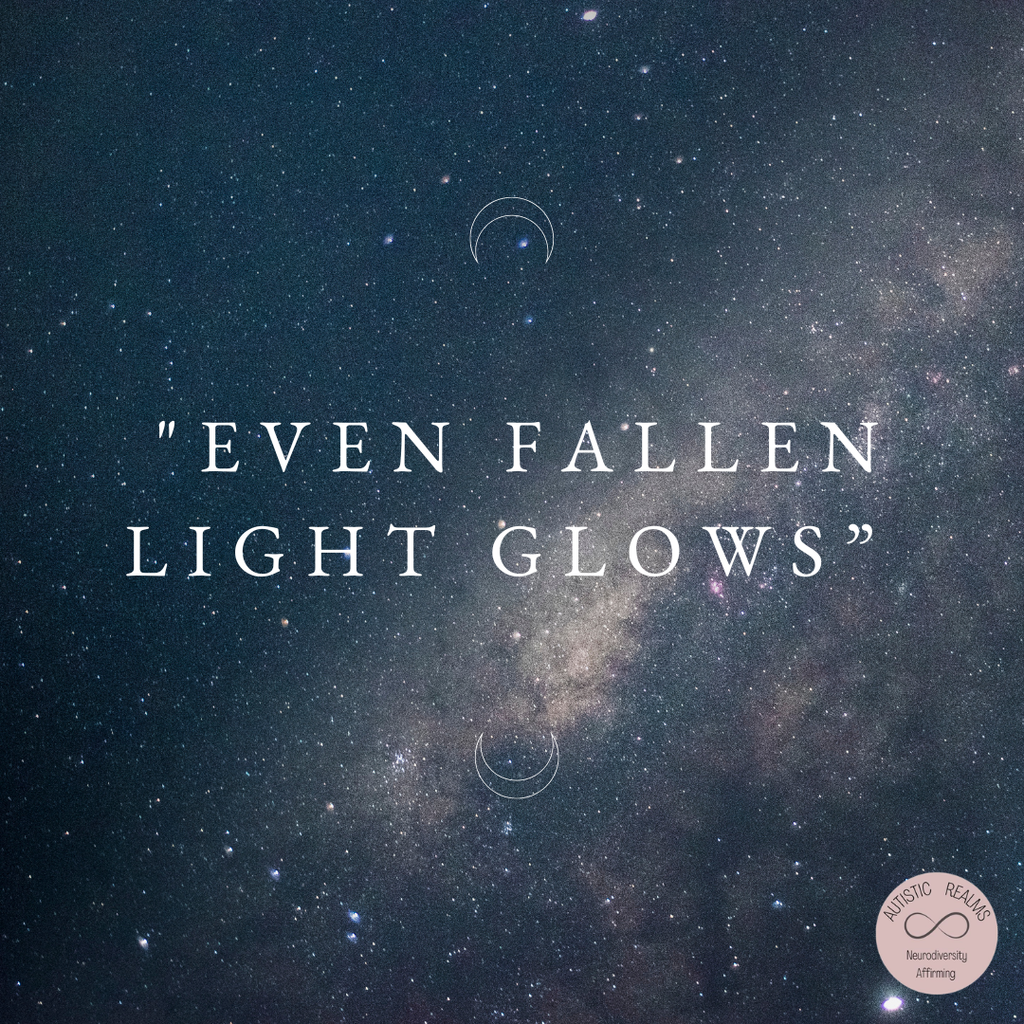
We are a community, a constellation made up of all our unique ways of being. It may feel like we are weighed down by darkness, but even fallen light glows. We can strengthen our networks of care & constellations of love. We shine brighter together.
In the last year of his life Pablo Neruda wrote a short untitled poem. It opens by saying that if each day falls inside each night, there is a well “where clarity is imprisoned.” Then it tells you what to do about that:
We need to sit on the rim of the well of darkness and fish for fallen light with patience.
Pablo Neruda, untitled, El mar y las campanas (1973) · translated by William O’Daly, The Sea and the Bells (Copper Canyon Press, 1988), pp. 94–95
What if the thing that made Odysseus remarkable wasn’t his many turns, but the one thing that never turned? A personal, AuDHD read on Homer’s Odyssey and the words polytropos and monotropos.
Watching Christopher Nolan’s The Odyssey (2026) left me thinking about the Greek word that opens Homer’s poem: πολύτροπος (polytropos). At first glance, one possible translation of polytropos, “many-turned,” seems almost the opposite of monotropism, the theory that Autistic attention is often organised around fewer, deeply engaging interests rather than being broadly distributed across many competing demands (Murray, Lesser, & Lawson, 2005; Murray, 2022). Yet Odysseus suggests that these ideas may not be simple opposites: a person can adapt in many ways while remaining profoundly oriented towards one enduring purpose.
Polytropos and monotropos share a root. Both come from tropos, “a turn, a way of being,” joined to a different first element: poly- (“many”) against mono- (“one”). Where polytropos described someone of many turns — Homer’s word for Odysseus’s resourcefulness and adaptability — monotropos described someone of a single turn.
The relationship is therefore suggestive rather than equivalent. Polytropos describes a quality attributed to Odysseus’s character, while monotropism describes a theory of attentional organisation. The shared root offers a useful point of reflection, not a claim that the two concepts describe the same or different things.
What strikes me most isn’t Odysseus’s many twists and turns. It is the one thing that never diverted his attention or devotion from Penelope and his family. Against everything thrown at him, the gods, the sea, monsters, temptation, and years away from home, Odysseus never loses sight of returning to Penelope and his family. His deepest orientation never shifted. His methods changed constantly, but they remained organised around one enduring purpose.
Polytropos is the very first adjective Homer uses to describe Odysseus. Translators have wrestled with that single adjective (polytropos / πολύτροπον) for centuries. Richmond Lattimore famously rendered it as “the man of many ways” (Homer, 1965). Robert Fagles gave us “the man of twists and turns” (Homer, 1996). Emily Wilson’s 2018 translation, which Nolan appears to draw on heavily, opens instead: “Tell me about a complicated man” (Homer, 2018).
Each translation highlights something slightly different. Lattimore foregrounds versatility; Fagles emphasises movement and perhaps unpredictability; Wilson stresses the complexity of Odysseus’s character, encompassing his suffering, his deceptions, and his long wanderings, rather than presenting him as a straightforward hero.
Wilson has written about this choice in her blog “On Complicated…” (Wilson, 2024). She ruled out coining an artificial word like “much-turny,” since polytropos is “a real, legitimate Greek word,” and she wanted an equally English word rather than an invented one. Wilson’s “complicated” captures the layered nature of Odysseus: his suffering, deception, adaptability, and contradictions. She also notes that in later Greek the word travelled beyond Odysseus himself: Thucydides used it of “manifold circumstances,” and it was later applied to changeable diseases and even to the notorious turncoat Alcibiades, so a purely negative or purely positive rendering never seemed quite adequate to her either.
Interestingly, the word polytropos is itself a bahuvrihi compound: poly (“many”) and tropos (“turn,” “way,” or “manner”). Rather than naming an action, it describes someone by a characteristic they possess. In Homer, Odysseus is someone who adapts and turns to his many changing circumstances.
However, these translations all leave another aspect of Odysseus’s character slightly less visible: every one of those turns serves a single, enduring purpose. His adaptability is not aimless; every turn is complicated and organised around one unwavering direction of attention, that of returning home to Penelope, his family, and Ithaca.
Before watching the film, I came across a Bluesky post by Fergus Murray that pointed me towards an interesting connection between the word polytropos and the later Greek word monotropos. That led me to the work of the classicist P. A. Meijer, who discusses the philosopher Antisthenes’ interpretation of polytropos (Meijer, 2017).
Antisthenes argued Odysseus earned the word polytropos because he knew how to deal with all kinds of people, shifting his approach depending on who he was talking to and what the moment called for. His many “turns” weren’t deceptive tricks; they could be seen as different ways of meeting different situations and different people.
The word monotropos does not appear in Homer’s Odyssey itself although it shares the same linguistic root as polytropos (tropos, meaning a way or mode of turning). The theory of monotropism uses that root to describe a characteristic style of attention in which cognitive resources are concentrated into a smaller number of intensely focused interests, rather than spread broadly across many competing demands — a pattern many Autistic and ADHD people recognise strongly in their own experiences (Murray, Lesser, & Lawson, 2005).
I’m not suggesting that Odysseus was Autistic, and I don’t think it’s relevant to speculate about how a Bronze Age literary character might score on the monotropism questionnaire. That’s definitely not the point of this blog. What interests me is how these different but related words invite us to think about attention and ways of being.
Polytropos has generally been used in various differently worded translations of Homer’s Odyssey to describe Odysseus as a man capable of many approaches. Monotropism describes the way a person’s attention is deeply organised around a limited number of concerns at any one time. Together, these words may help to illuminate human behaviour, how we respond to the world around us, and how our attention is organised, what drives and motivates us.
Antisthenes’ interpretation of polytropos, as discussed by Meijer, suggests that someone who cannot vary their approach to different people may appear limited or one-sided. Read through a contemporary lens, it’s easy to hear echoes of the deficit-based accounts that have shaped autism research for decades.
One of the most influential examples is the theory of mind hypothesis, which came to be interpreted as suggesting that Autistic people lacked the capacity to understand that other people have different thoughts, beliefs, and perspectives from their own (Baron-Cohen, Leslie, & Frith, 1985). It contributed to a broader, hugely problematic narrative that framed Autistic social differences primarily as deficits.
More recently, Damian Milton’s Double Empathy Problem has challenged that assumption. Rather than suggesting communication difficulties and responsibilities lie solely with Autistic people, Milton argues that misunderstandings arise because people with different ways of experiencing and interpreting the world often struggle to understand one another. Communication is relational; the difficulty lies in the mismatch between different perspectives, not necessarily in a deficit on one side (Milton, 2012).
I think this shift is important because it changes how we think about adaptability, attention, and flexibility. Someone who does not naturally change their communication style from person to person may certainly experience friction in predominantly neuronormative environments, but whether that should be understood as a personal deficiency or as a difference between communicative styles is a very different question, and one where the responsibility should be mutual.
It proposes that Autistic attention tends to be organised around fewer, more deeply engaged interests, with cognitive resources concentrated rather than widely distributed (Murray, Lesser, & Lawson, 2005). It is an account of how attention is allocated, not a judgement about its value.
Watching Nolan’s film of The Odyssey, what struck me wasn’t Odysseus’s versatility alone as a “man of many twists and turns”. Every disguise and every adaptation seemed to serve the same enduring goal: to reunite with Penelope and return to Ithaca. His attention never wandered, his methods changed constantly, but his purpose didn’t; he remained focused, fully absorbed in his quest.
Odysseus lies when necessary, disguises himself, negotiates, fights, flatters, persuades, and endures. He changes his approach as each new situation and context demands. Yet inwardly, he seems quite monotropically focused; every turn ultimately points towards Ithaca. His many ways are all organised around one unwavering orientation.
Perhaps this is why polytropos has proved so difficult to translate. Another point Wilson shares that feels worth ending on is that tropos itself doesn’t just mean “turn.” It also carries the sense of a way of life, a custom, a habit, a guise, a manner, a character (Wilson, 2024).
Odysseus’s many turns, in that light, were the many guises, habits, and ways he had to adapt to survive. He was, in every sense of the word, a complicated man. I like Wilson’s choice of translation, and after all this thought, it feels right and truly captures him. She chose a word that evokes the imagery of folding and layering, that lands with the same weight and pace of the original poem. It carries an immediate meaning that everyone can relate to, while still opening onto something more, a hint of truths still to come (Wilson, 2024).
Underneath every guise, one thing never changed. Odysseus’s complicated greatness lies less in how many ways he can turn than in what all those turns were for. For all his disguises and transformations, he remains profoundly oriented towards home. His complicatedness makes sense because it also expresses the complexity of his one enduring commitment, to finally return home to Penelope, his family, and Ithaca.
References
Baron-Cohen, S., Leslie, A. M., & Frith, U. (1985). Does the autistic child have a “theory of mind”? Cognition, 21(1), 37–46. https://pubmed.ncbi.nlm.nih.gov/2934210/
Homer. (1965). The Odyssey of Homer (R. Lattimore, Trans.). Harper & Row.
Homer. (1996). The Odyssey (R. Fagles, Trans.). Viking.
Homer. (2018). The Odyssey (E. Wilson, Trans.). W. W. Norton.
Meijer, P. A. (2017). A new perspective on Antisthenes: Logos, predicate and ethics in his philosophy. Amsterdam University Press.
Murray, D., Lesser, M., & Lawson, W. (2005). Attention, monotropism and the diagnostic criteria for autism. Autism, 9(2), 139–156. https://pubmed.ncbi.nlm.nih.gov/15857859/
Autistic burnout, monotropism, and living in the in-between
Fergus Murray posted a link in the Monotropism Discord today about Flowing-Afterglow Mass Spectrometry. The title pulled me in, even though I struggled to understand the specifics of the actual chemistry. It made me think of my own internal energy as an Autistic ADHD monotropic person, and how this may relate to burnout.
I think I’m living in the afterglow right now — and I’m noticing it has two different kinds of ember.
I have been ebbing in and out of a perpetual burnout my whole life. It intensifies periodically, the last time was in 2020-2023 when I completely crashed in a mental health crisis, and it hit a new intensity again earlier this year. The embers of that burnout always linger longer than I expect, a low burn that takes my energy, under the surface, long after I’ve supposedly “recovered” or it looks like I’m doing “better.”
There’s a second ember in this afterglow too. Despite occasional bursts of energy like this now, just writing my thoughts about what I am interested in — which I find really rejuvenating — the full tunnel of my highly focused, energetic monotropic flow isn’t open to me at the moment, but I’m not completely empty or in crisis either. Something is still glowing, like a flicker of my attentional resources, which sparks connections and thoughts when something pulls me in, like the title of this article.
My bodymind is in what Tanya Adkin describes as meerkat mode — alert, scanning, half-aroused. I think this is that second ember, still seeking flow and connections, still searching for something to hook into, but I just don’t have the energy to do much with it in a very productive way outside of writing. My executive functioning has been impacted recently, I am forgetful, struggling with basic tasks and have very little energy to communicate. I have had to cut back on my work just to get through my day and continue in a survival state.
On the Wikipedia page about Flowing-afterglow mass spectrometry, it describes afterglow as the plasma that lingers after the initial energy source is switched off. Ions keep colliding; they keep drifting through the flow tube, slowly thermalising and settling towards an equilibrium rather than snapping into it and fully engaging. Reading all this without understanding the actual technical side of the chemistry, all I could do was interpret the article in my own way; it felt like reading a poem that described how I am at the moment.
I have written a lot about living in the liminal, in the in-between states – socially, cognitively and systemically. I am not in a full crisis, not in a complete shutdown, but I know I am not flowing the way I sometimes do when I have more energy.
Perhaps a good word to use is ‘thermalising’. Things are still trying to connect and fuse, slowly, bit by bit, in my liminal state, without my usual intensity. I am conserving my energy; my attentional resources are being reallocated and redirected into a kind of survival mode.
The article notes that as the cost of helium rises, some researchers now use interrupted helium flow “to conserve gas” rather than a continuous stream. Reading that felt like it summed up my burnout. Not broken, not failed, more the result of monotropic split — the exhaustion of a monotropic bodymind repeatedly stretched past its limits trying to meet demands built for a polytropic world — and constantly having my natural flow interrupted day after day, because I need to function, do shopping, clean the house, cook food, care for my family – none of that can stop, it is life.
I don’t fully understand the chemistry about flowing-afterglow mass spectrometry, and I don’t think I need to for this (although sciencey people may argue against that!).
As an Autistic monotropic person, I think I understand the afterglow as the residue of interest still moving through me, unhurried, unforced, finding its own quiet equilibrium until there’s fuel enough for the flame to flow and grow, when I can return to my work again.
In memory of Dr Dinah Murray, 27 May 1946 – 7 July 2021.
Today marks five years since Dinah Murray died. Dinah was the Autistic researcher who, alongside her neighbour Jeanette Buirski, coined the term monotropism. Dinah Murray went on to write the original paper Attention, monotropism and the diagnostic criteria for autism (2005) with Mike Lesser and Wenn Lawson.
Through my wonderful conversations with her son, Fergus Murray, and my work on monotropism.org with them, I have discovered we have lots of shared interests and passions – not only about autism advocacy and human rights, but Dinah also loved nature, especially mushrooms, and she was a keen photographer.
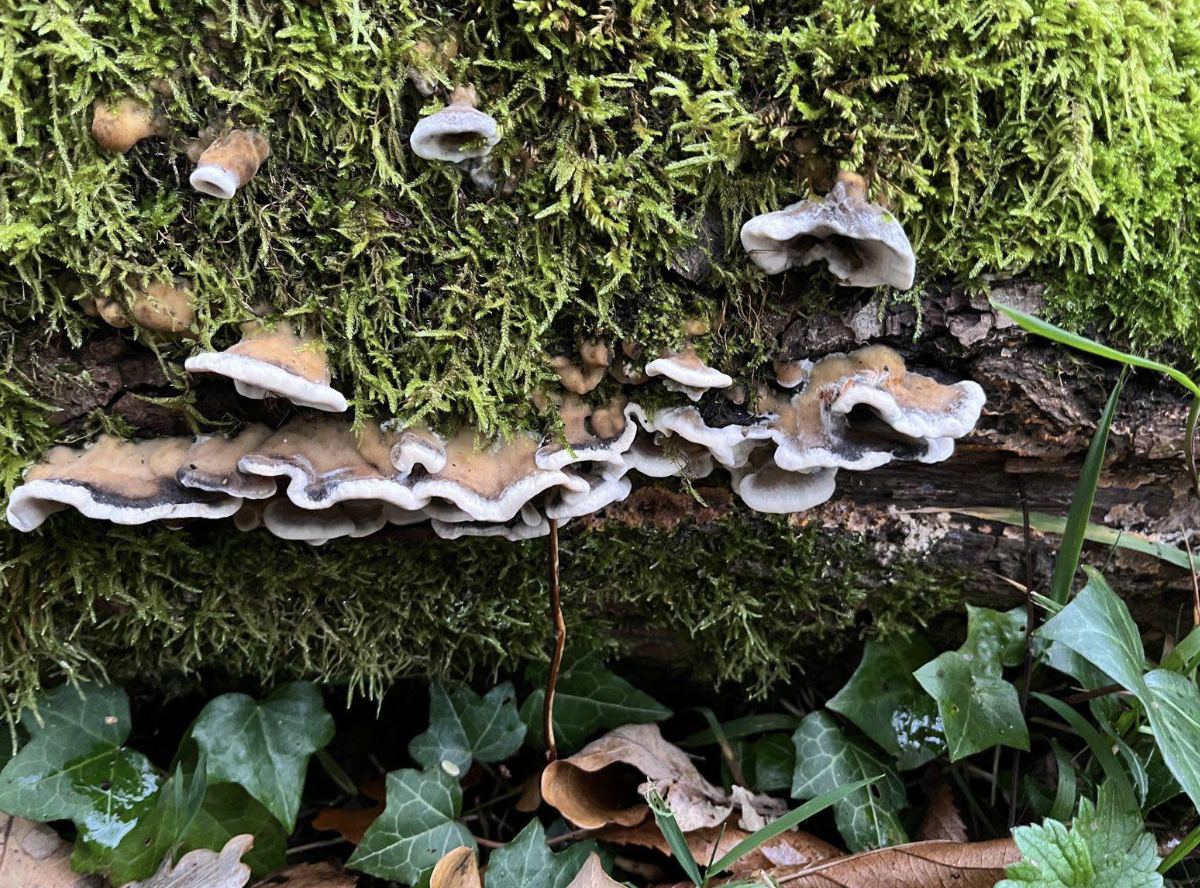
In her final years, living in Dalgety Bay, Scotland, she spent her days studying lichens and mushrooms, finding endless fascination in the quiet, often overlooked textures of the natural world (Guardian, 2021). It feels fitting that this piece begins and ends with her, and with a plant that lives its whole life through exactly the kind of fungal network she loved to dive into and photograph. It felt right, too, to weave in the theory of monotropism that she helped bring into the world. The theory of monotropism continues to transform so many lives, giving people a better sense of who they are, and it keeps growing through the community research constantly being undertaken and shared which we collate on monotropism.org.
The theory of monotropism is connected to something at the very core of who I am, and of how I understand everyone and everything around me. I identify as a deeply monotropic person. She has profoundly transformed my understanding of my own life and given me words I never had for all my monotropic ways of being and experiencing the world, and her work continues to transform our communities and wider networks.
“Attention without feeling is only a report.”
— Mary Oliver, Upstream (2016)
Monotropa Uniflora
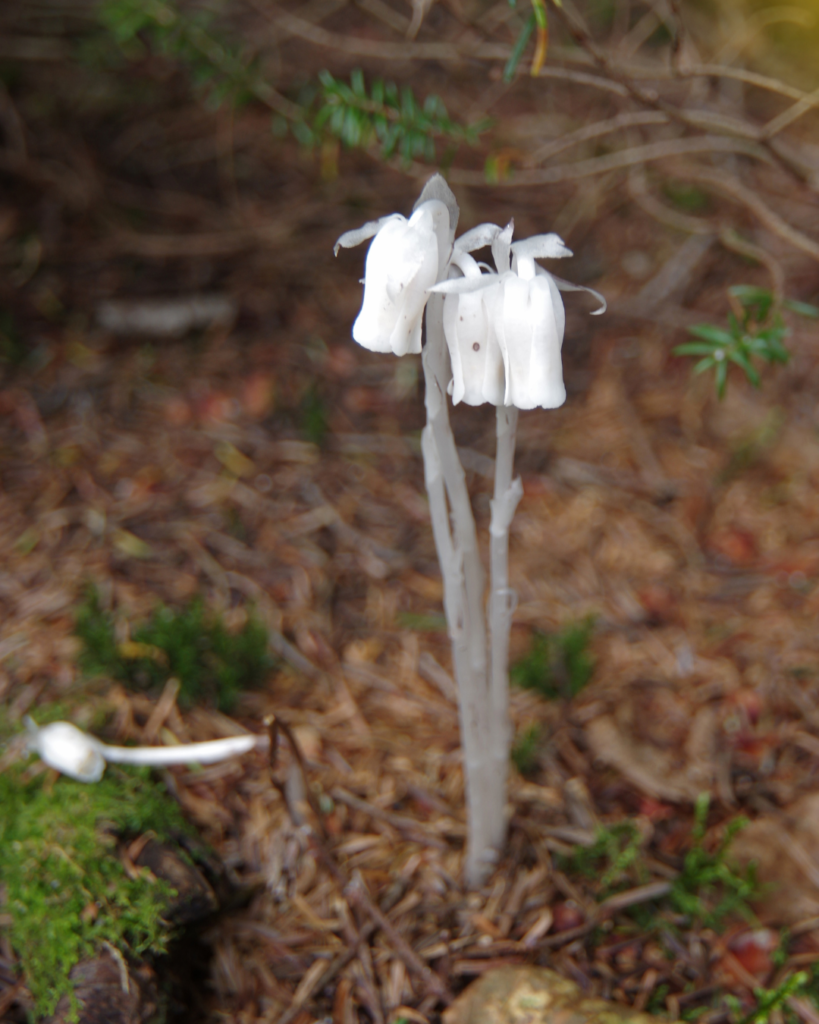
There is a plant that grows only in the deepest, darkest parts of the moist forests throughout North America, Latin America, and East Asia. It emerges after rain, ghostlike, from the leaf litter, pale and translucent, white as bone, carrying no green at all. It does not reach toward the light, and it cannot photosynthesise; instead, it draws everything it needs from the hidden mycelial networks of fungi threading through the soil beneath the trees, nourishing itself entirely from connections that are invisible to us above the ground (Foster, 2024).
Its name is Monotropa uniflora.
In Latin and Greek: one turn, one flower.
The same root as monotropism.
The same tropos.
Carl Linnaeus classified the plant as Monotropa uniflora in 1753. “Monotropa” is Greek for “one turn,” and it is a reference to the arched stem that supports the flower, and “uniflora” means “one-flowered” in Latin. It doesn’t need light to grow; it thrives in depth and in shadow, in the quiet, overlooked, in-between places of the forest floor. People have called it the Ghost Plant and the Ghost Pipe because of its appearance and its ability to thrive where other plants cannot. It resonates with me in both its strength and its weirdness as an Autistic person, qualities that might also have resonated with the poet Emily Dickinson, who called it her “preferred flower of life“.
Dickinson and the Ghost Pipe
It is reported that Emily Dickinson first encountered Monotropa uniflora as a child, pulling it from the forest floor in Amherst. She was an amateur botanist who studied plants at Amherst Academy and Mount Holyoke Female Seminary, assembling more than 400 plant specimens in books that now reside in Harvard’s Houghton Library, including Monotropa uniflora (Foster, 2024). She attended to each specimen with the deep, sustained, joyful attention that many monotropic people will recognise, one of total absorption, with great care, and a sense of wonder and awe that never diminished, no matter how much she studied (Popova, 2023).
In the autumn of 1882, Dickinson received a surprise painting of the Ghost Pipe (Monotropa uniflora), from her friend Mabel Loomis Todd. Dickinson wrote back immediately:
“That without suspecting it you should send me the preferred flower of life, seems almost supernatural, and the sweet glee that I felt at meeting it, I could confide to none — I still cherish the clutch with which I bore it from the ground when a wondering child, an unearthly booty, and maturity only enhances the mystery, never decreases it.” (Emily Dickinson Museum, 1882)
(I am not sure of copyright to embed the image in this blog, but please take a look here in the Emily Dickinson Museum ).
Eight years later, when Todd edited and published the first posthumous collection of Dickinson’s poems, she placed the same painting of the Ghost Pipe on the cover.
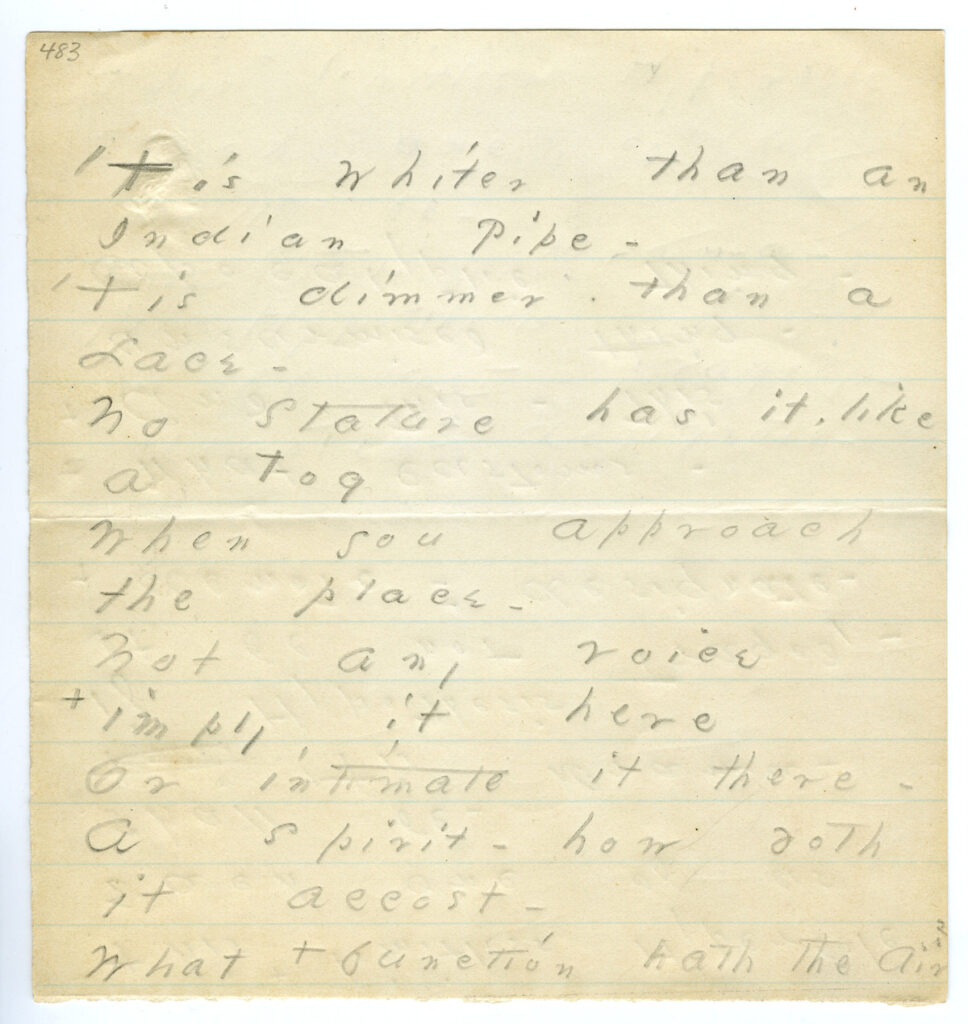
Three years before that letter, in 1879, Dickinson had already written a poem about the plant (Emily Dickinson Archives):
‘Tis whiter than an Indian Pipe – ‘Tis dimmer than a Lace – No stature has it, like a Fog When you approach the place – Not any voice imply it here – Or intimate it there – A spirit – how doth it accost – What function hath the Air? This limitless Hyperbole Each one of us shall be – ‘Tis Drama – if Hypothesis It be not Tragedy –
’Tis whiter than an Indian Pipe – Poem, ca. 1879 Amherst College Archives & Special Collections
Credits: Amherst College, Amherst MA https://acdc.amherst.edu/view/asc:10742 Amherst Manuscript # 483 Amherst – Amherst Manuscript # 483 – Tis whiter than an Indian pipe – asc:10742 – p. 1 Publication History Poems (1896), 156, as three quatrains, with the alternatives for lines 5 and 8 adopted. Poems (1955), 1024-25; CP (1960), 625-26. (J1482). Franklin Variorum 1998 (F1513A). -History from Franklin Variorum 1998 Emily Dickinson Archive http://www.edickinson.org Copyright & Terms of Use: CC BY-NC-ND 3.0 http://www.edickinson.org/terms
People continue to debate what the “it” in the poem refers to, is it spirit, death, life itself, or all of it? Perhaps it is something many of us as Autistic people recognise, the thing that is deeply present, real, and nourishing, yet invisible to those who do not know how to look for it or how to relate to it. The quality of presence that the world persistently mistakes for absence, the inner life that runs deeper than it appears from the outside?
The way the Monotropa uniflora blackens and wilts, dissolving back into the earth, the moment it is touched all feels very relatable to me and how I am at times, just wanting to hide in the dark and be left alone but also thriving in often unexpected ways. Or maybe it’s just me who relates in this way? Either way, the Monotropa uniflora is not a tragedy, and neither are we as Autistic people. We can thrive when the environment meets our needs, even if that environment may not be what people expect it to be!
A Monotropic Life
It feels to me that Emily Dickinson lived her life somewhat monotropically, though she never had that word back then. She spent most of her adult life within her family home, rarely venturing out, conducting her richest relationships through letters, attending to her interests with an intensity that those around her often found excessive, weird or strange, perhaps also relatable for many of us?! Her attention tunnelled, her focus pooled as she moved through the world, pulled in by her interests, with her whole self given over to what she was attending to, which I feel is evident through all her work and my own sensory way of being.
We shouldn’t claim that Dickinson was Autistic, but her way of being in the world resonates deeply for me, much like that of Virginia Woolf and Sylvia Plath, writers often seen as different, as not fitting in, whose work seems to capture something of what it is to be Autistic before they had the term and certainly before women were identified as Autistic. They speak of the isolation that so often comes with not being really understood, and also the joy of being able to immerse yourself fully in your passions and sensory self as a way to sustain life, to survive. They write about a deep presence and connection with the world around them, feeling everything sensorily, intensely, and being deeply empathetic.
Woolf herself wrote of a mind she called androgynous, the mind most “resonant and porous… naturally creative, incandescent and undivided” (Woolf, 1929, as cited in Popova, 2021). That porousness, that undivided quality, is something many Autistic people may recognise too, not a mind guarded and compartmentalised, but something more fluid, always connecting, seeking patterns, transforming, morphing and adapting.
Many people call Monotropa uniflora a perfect flower, it holds both stamen and pistil, both what has been called “male” and “female,” in the one bloom, needing no other to complete it, which feels like more than coincidence (Popova, 2021). It is a plant that refuses to be binary at the root of its being, in the same way it refuses to draw its nourishment from sunlight, the way other plants are expected to. It is non-binary, and yet still deeply, richly connected and interdependent with everything around it through the hidden web of nourishment from beneath the ground. For those of us who are Autistic, otherwise neurodivergent or disabled, those who may also be queer, trans, or non-binary in how we understand our own identity, this may feel like a plant that was never trying to fit in to start with, it thrives in its difference, weirdness and uniqueness, a bit like us.
From the outside, Emily Dickinson’s life may have looked reclusive and withdrawn, but from the letters, the poems, and the extensive herbarium with its 400 pressed plants, each attended to with such care, I think it was extraordinarily full, in a way that held meaning for her and brought great joy. This perhaps gives some validity to the way many people may feel and experience their lives still today, especially if you are Autistic/ AuDHD and monotropic and are able to get into those lovely monotropic flow states.
Dinah Murray, Monotropism & Monotropa Uniflora
Sadly, Dinah Murray died in 7th July 2021, 5 years to the day I am writing this. The poet Kate Fox, who had interviewed Dinah in her flat in Dalgety Bay just a month before she died, wrote a poem to read at her memorial service and titled it Monotropa Uniflora (Fox, 2021).
“The first two lines were from a poem Dinah wrote as a girl. The title is a type of fungus (ish) species that her friend Joan McDonald said at the memorial service she was delighted to discover existed, given her pioneering work on the monotropic theory of autism” (Fox, 2021).
In their interview, Dinah described her life not as a career but as a mission:
“About justice and fairness and living in a fair world. I haven’t really ever had a career, I’ve had a mission. And I think I’ve accomplished my mission basically.”
Like Monotropa uniflora, Dinah Murray’s work continues to nourish us through mycelial-like networks of care: through the people she supported, the papers she wrote, the theory of monotropism she brought into the world, and the community she helped build.
The Mycelial Network of Care
The secret of the Monotropa uniflora’s survival is almost magical: its roots entwine with underground fungal networks, mycorrhizal hyphae from fungi in the Russulaceae family, that are themselves connected to the root systems of nearby trees. The Monotropa uniflora takes sugar and nutrients from this fungal web, thriving through a form of nourishment that is hidden, indirect, and entirely dependent on the richness of the network beneath the surface (Foster, 2024; Popova, 2023).
In my Mossy Minds and Monotropism (2025) piece, I was thinking about the monotropic bodymind as porous and mycelial-like, deeply interconnected, and often thriving in the margins and liminal spaces. This is where my DEEP framework (Dynamic, Embodied, Ecological, Political), inspired by Damian Milton’s work on the Double Empathy Problem (2012), feels most relevant here from an Autistic perspective, as it also resonates with my own way of being.
The Monotropa uniflora is Dynamic, changing form and behaviour depending on what the network around it provides, rather than following one single fixed way of being. It is Embodied, entirely dependent on its relationship with soil, fungus, and roots sustaining it. It is Ecological, existing only because of its place within a wider mycelial web of mutual inter-dependence, and it could also be thought of as Political, because a world that only values what performs visibly in the light, what photosynthesises and produces on demand, is often misread and has been called weird or spooky.
The Monotropa uniflora feels like one of the most perfect botanical expressions of being monotropic for me. It prefers the dark; it goes deep, and it is held by the mycelial network of care, which, for me, being part of our Autistic community, I am certain I could not survive otherwise.
Like Monotropa uniflora, many Autistic people have learned to adapt and morph to survive; we have had to find ways to nourish ourselves through mutual aid networks and grass roots projects as society just isn’t meeting our needs. I thrive in the deep shade of my forest-themed den with my blackout blinds drawn day and night. My mycelial network is online, on the World Wide Web rather than the Wood Wide Web. I live amongst the many neurodivergent spaces I am so grateful to be a part of, that keep me nourished and sustain me across the Autistic Rhizome.
“Energy is only transformed, never gone”
“Attention without feeling is only a report,” Mary Oliver wrote (2016). When Dickinson called the Ghost Pipe (Monotropa uniflora) “the preferred flower of life,” I don’t think she was only naming a plant she’d loved since childhood. I think she was naming a way of loving, a way of embracing the kind of monotropic attention that finds its nourishment not in what is easily seen, but in what is deeply felt. Something that, for many of us, may also reflect our Autistic ways of being, at least, it does for me.
On this anniversary of her death, five years on, I want to close with the words the poet Kate Fox wrote for Dinah’s memorial, in a poem she titled after the Monotropa uniflora
Energy, as Kate’s poem tells us, is only transformed, never gone. May Dinah’s legacy keep flowing, monotropically, through the communities of care she helped shape.
References
Edgar, H. (2025). Mossy Mindsand Monotropism. More Realms. https://morerealms.com/mossy-minds-monotropism/
Helen Edgar – Autistic Realms / More Realms June 2026
“The curious paradox is that when I accept myself just as I am, then I can change.”
— Carl Rogers, On Becoming a Person (1961)
“Becoming is not imitating or identifying with something. It is producing a zone of proximity, of indiscernibility.”
— Deleuze & Guattari, A Thousand Plateaus (1987)
You may know the feeling of being in a room and not being truly seen. You may be present, being spoken to by people who seem genuinely friendly towards you, yet you feel you are not truly being met. It is like the person next to you or across from you is responding to their idea of who they think you are rather than to who you actually are. There are norms and social conventions that people may feel they have to keep, and that can impact genuine presence and connection.
For many Autistic and neurodivergent people, this is not an occasional frustration but an often felt, sustained condition of our daily life. Over time, this teaches us that it is not safe to bring our whole authentic self into the room. You may suppress stimming, be hyper-aware of your body language and even how you communicate. You may find that you are constantly translating yourself into someone you hope will be more legible, more palatable, more aligned with the norms that were never designed around your experience. Masking, in this sense, is not a choice so much as a trauma response, a learned adaptation to a world that has made authenticity costly.
This piece draws together three threads of my recent thinking that I have been exploring: the humanistic psychology of Carl Rogers, the philosophy of Gilles Deleuze, and Damian Milton’s Double Empathy Problem — extended through my own Double Empathy Extreme Problem (DEEP) – Dynamic, Embodied, Ecological, and Politicalframework. I am also drawing on a recent paper by philosopher Kris Goffin (2026) that reframes the question of Autistic injustice in ways I find really helpful. Together, I think they can help us explore what the conditions for genuine belonging might actually be, so we can be supported in environments that value a process of ongoing becoming and neuroqueering.
Conditions of worth
Rogers began from a radical premise in the 1950’s: that people are not fundamentally broken, deficient, or in need of correction, but that they carry within them an innate drive toward growth and becoming more fully themselves. This is what he called the actualising tendency (Rogers, 1957). He thought of it as something like a seed’s instinct toward light: persistent, directional and always pressing toward expression. Growth cannot be destroyed, but it can be buried, become distorted and hard to surface.
What buries or distorts growth are what Rogers named conditions of worth (1959). These are the internalised messages, absorbed most powerfully in childhood, that love and acceptance are contingent on meeting certain conditions: being quieter, being less intense, doing whatever it takes to be accepted. These messages don’t usually come from a place of cruelty; they often come from concern, from guidance, from the reasonable expectations of people who themselves learned to perform belonging within the same system, such as parents, carers and teachers. However well-meant, their cumulative effect is to redirect the energy of genuine growth into the labour of self-management, into performing a version of the self that will be found acceptable, rather than becoming the self that is actually there. For neurodivergent people, this is not incidental but structural. The conditions placed on us are shaped by a world that measures worth against neuronormative standards from the outset.
For Autistic and AuDHD people, conditions of worth are not only relational but cultural and systemic. They are embedded in our education systems, healthcare settings, and workplaces; in every context that measures human value against the standards of neuronormativity. The message neurodivergent people often face in therapy or counselling is that the authentic self requires editing before it can be brought into a relationship with others, even when that therapy may be classed as person-centred as we are still living in the system that causes us harm.
Rogers believed that three relational conditions could begin to dismantle those blocks. The first is empathy, which he defined as the capacity “to sense the client’s private world as if it were your own, but without ever losing the ‘as if’ quality” (Rogers, 1957, p. 99) — presence without projection, attunement without merger. The second is congruence: authentic presence rather than performed warmth, which matters because many of us with heightened sensitivity to interpersonal nuance can sense the gap between what is presented and what is real, often more acutely than others might expect. The third is unconditional positive regard, which Rogers described as meaning “there are no conditions of acceptance, no feeling of ‘I like you only if you are thus and so’” (1957, p. 98) — being valued as you are, now, without needing to perform or justify yourself first.
When these conditions are genuinely present, something can shift. The energy previously devoted to self-protection becomes available for something else. The actualising tendency can begin to move again, and that movement can be quietly transformative.
However, I am wondering whether Rogers’ theory has a limit when it comes to meeting the needs of neurodivergent people in a world still dominated by neuronormativity. Rogers himself acknowledged that the therapeutic relationship is not a special case, but rather “a heightening of the constructive qualities which often exist in part in other relationships, and an extension through time of qualities which in other relationships tend at best to be momentary” (1957, p. 101). In other words, Rogers understood his practice as working within the existing relational world, extending and deepening what is already there. When the session ends, the person returns to the same schools, workplaces, and social structures that created the conditions of worth in the first place that led them to counselling. Rogers offers healing within the system, but he does not provide tools to examine or dismantle the systems that cause harm.
This is where I find myself reaching towards Erin Manning (2016), who offers a different register of thinking about relation and difference that attends to what she calls the “minor gesture.” The minor gesture, although it may pass almost unperceived, transforms the field of relations. For Manning, the minor is a force that challenges received wisdom and common sense — what she calls “the major” — by offering potentially unlimited experiential variations that suggest alternative forms of being, knowing, and doing. Crucially, this framework directly challenges the ways in which the neuronormative image of being human devalues alternative ways of being moved by and moving through the world which may be especially relevant to Autistic people who perceive the world differently.
Rogers asks what conditions within a relationship might allow a person to grow, Manning extends this by asking what small, acts and orientations might begin to shift the normative field itself. These are not competing frameworks so much as operating at different scales. Rogers is working at the depth of the relational encounter, and Manning is also attending to the texture and politics of the world in which the encounter is embedded. Together, they suggest that healing and belonging are not only interior processes, but are also shaped by whether the world around us leaves room for us to exist in our difference.
If a person leaves the therapy room and returns to a school that still rewards masking, a workplace that still pathologises their way of communicating, a healthcare system that still measures them against a neurotypical body, then Rogers’ conditions of worth are simply regenerated. Becoming, within Rogers’ framework, remains possible only within the structures that already exist; there is only growth in the space the system allows.
This is where Manning (2016) may become a useful companion to Rogers. Where Rogers works at the depth of the relational encounter, Manning attends to the texture of the world that the encounter is embedded within. The minor gesture, although it may pass almost unperceived, transforms the field of relations, and it is in those small acts that some of the most important work can happen. For example, a teacher may restructure a task so that a student does not have to make eye contact to demonstrate understanding. A colleague who names in a team meeting that there are multiple valid ways of communicating, such as written or verbal, without making it about any one person. These are not grand systemic interventions; they do not dismantle the neuronormative ableist school or workplace, but the minor gesture introduces variation and genuine inclusion into experiences that would otherwise remain fixed or captured by norms, and that variation, however small, can be the difference between a person being able to remain themselves or once again contracting into a version of their self that the system will accept which can have severe impacts upon wellbeing.
Rogers gives us the conditions for healing within a relationship, whereas Manning reminds us that a relationship is never only between two people, it is always also between a person and the world they live in and must return to as well.
Creating New Maps
This is where the work of philosophers Gilles Deleuze, Félix Guattari, and Autistic scholar Nick Walker’s neuroqueer theory can expand this discussion, as they point toward something Rogers’ framework doesn’t quite reach. Their works lead us not just to a space where you are allowed to become who you already are, but one that holds becoming itself as ongoing, never a fixed destination to arrive at. Where Rogers offers room to grow within existing conditions, in line with Manning, both Deleuze and Walker ask what it might mean to stop treating any version of the self as final, and what it could mean to build spaces that hold change itself as safe, rather than safety as something found only once change is finished.
For Deleuze and Guattari (1987), social structures operate by carving grooves into the world and into us. I am using “grooves” as my own (hopefully!) accessible way into their concept of striated space: space that is measured, ordered, and directional, like the fixed threads of a woven fabric or the furrows of a ploughed field.
The word “grooves” feels important to me because it captures something embodied and cumulative, the sense that these structures do not only organise the world around us but wear pathways into us over time. What Walker (2021) calls neuronormativity is precisely this kind of deep striation, a system of assumptions often insisting there is one correct “normal” way to think, feel, communicate, and inhabit a human life. The problem, Deleuze and Guattari understood, is not just that the grooves constrain our movement, it is that the grooves are presented as natural, as simply the shape of reality and how society is, rather than as a constructed map that serves only particular interests, privileges some people over others, and erases the rest of us, with those most marginalised often left with no voice or support at the edges of society.
Rogers’ conditions of worth are themselves a kind of striation, grooves handed down to us before we were old enough to question them. From infancy, many of us were rewarded for playing, eating, talking, and moving in the expected ways, and those rewards became internalised as if we had drawn the lines ourselves. This is how ableism enters so quietly: not always as a rule imposed from outside, but as a shape we learn to become, often unaware that we have been masking throughout our lives — until burnout or a mental health crisis arrives and we can no longer sustain it. Rogers’ answer is to offer warmer, more accepting conditions, but still within that same tracing. It is perhaps a kinder version of the same map, rather than a genuinely different one.
Deleuze asks for something more radical, not a gentler, warmer copy of an existing outline, but a different map entirely, made in movement, drawn from where you actually are rather than where the tracing says you should be. This is not an abstract philosophical point; I think it is a deeply political one. The poet and theorist Audre Lorde reached a parallel conclusion, that the tools a structure provides can only ever renovate it from within, never dismantle it. In her essay “The Master’s Tools Will Never Dismantle the Master’s House” (Lorde, 1984), she argued that real belonging cannot be built from the instruments of the very structure it is trying to escape. It needs new tools, and a new starting point that never belonged to that structure in the first place.
Walker’s neuroqueer theory draws on Lorde’s insight, queer theory, and disability studies to make a related point: that the rules around what counts as “normal” thinking and those around what counts as “normal” gender are intertwined at the root. Walker goes further than simply critiquing the system. Inspired by Lorde, Walker does not call for destruction but for transformation, as David Gray-Hammond and I explored in our Neuroqueer Learning Spaces webinar with Stimpunks (Edgar, 2024), Walker’s position is that we should “queer the system, queer the tools and create new tools” (Walker, cited in Edgar, 2024).
Neuroqueering is not a tearing down; as I noted in that same webinar, “to neuroqueer is to transform, not destroy”. This feels important in a therapeutic context, too. The goal is not to abandon everything Rogers offered, but to queer it: to ask what new tools, what new language, what new relational conditions might be possible if we start from neurodivergent experience rather than mapping it onto frameworks built without us in mind.
Deleuze called this kind of departure a line of flight: a movement toward something that does not yet have a name within the existing system, because that system was never built to describe it. Rogers helps us become our best selves within the system we already have. Deleuze, Manning, Walker, and Lorde, arriving from very different places, all point toward something more: that we can find our way forward together, building our own ways of becoming, with our own language to describe what we actually experience. And it is then, perhaps, that we can become our true selves, and finally feel a sense of belonging.
The Gaps Between Us
This is where Damian Milton’s Double Empathy Problem (2012) becomes important. For a long time, the difficulty Autistic people experience in social interaction was located inside us, framed as deficit, as a failure of empathy, as something in need of fixing. However, Milton’s work reframes this entirely. Misunderstanding between everyone, including Autistic and non-Autistic people, goes both ways: each finds it genuinely difficult to read the other, because each is experiencing and communicating from a fundamentally different starting point. The problem is never inside one person; it lives in the gap between two people, and I think that changes everything about how we think about connection, belonging, and what good, affirming support actually looks like.
I have built on Milton’s theory with my own framework, DEEP — the Dynamic, Embodied, Ecological, and Political model of the Double Empathy Problem (Edgar, 2024). The gap Milton identifies isn’t just a one-off communication mix-up. It is felt throughout the whole bodymind, shaped by our nervous systems and sensory differences, and by the layered weight of intersectional difference. It is ecological too, shaped by the environments and communities around us, and it is political as it is tied to ableism and to every system that treats neuronormativity as the default, measuring everyone else against it and finding them lacking.
That gap wears people down; it leaves us chronically misread, exhausted from the constant work of translating ourselves, and slowly eroded from a steady sense of who we are. It is a significant factor in Autistic burnout, and it cannot be fixed by individual effort alone; it needs something structural. We need a change in the systems themselves, not just in us.
Affective Injustice
Philosopher Kris Goffin’s (2026) recent paper, “Autistic injustice as affective injustice: the double empathy problem is not about empathy,” pushes this further. Even framing the Double Empathy Problem as a two-way empathy gap, still locates the problem within individual psychology. Goffin argues that the real injustice is structural, and resonates to the political dimension of my DEEP framework.
What Goffin calls the emotional regime is a set of unspoken rules about how emotions should be expressed, which feelings count as appropriate, and whose emotional experience is taken seriously. Autistic ways of being — stimming, directness, sensory overwhelm, intensity — are routinely measured against these rules and found wanting: treated as irrational, excessive, or in need of suppression. This is not a failure of empathy on anyone’s part, it is the structural sidelining of Autistic emotional life by a culture that has never had to question its own assumptions, because those with power and privilege have always set the bar, without Autistic people having a voice.
Goffin names this affective injustice; it shifts the conversation from what is wrong with us as neurodivergent people to what is wrong with the system doing the measuring. Once we see the system as the problem, we can begin to make changes and queer the system. The emotional regime Goffin describes is not a neutral backdrop, it is actively constructed, historically maintained, and capable of being challenged.
Robert Chapman’s (2023) Empire of Normality helps us understand how we got here, Chapman traces how the very concept of the “normal” brain is not a natural fact but a product of capitalism, a system that transformed human minds and bodies into units of productivity, and measured everything that deviated from that standard as a deficit. The emotional regime Goffin identifies did not emerge from nowhere; it was built, and built to serve particular interests: to privilege those whose minds and bodies fitted the productivity model, and to pathologise, silence, and render invisible those of us who did not. Which means the question is no longer just about how we can help neurodivergent people cope better, but something more fundamental. We can start to consider who gets to decide what counts as normal in the first place, and what it would mean to dismantle that power and redistribute it.
To create real belonging, we need to sit with that question and ask whether normality is even a coherent concept, or simply a reflection of whose experience has historically been centred and whose has been erased. That question needs to be asked in classrooms, workplaces, therapy rooms, and healthcare settings alike. Autistic emotional life should not be something managed or judged against neuronormative standards.
Empathy, understood this way, is not simply a psychological capacity or a therapeutic skill. It is also a political commitment — the active refusal to allow one group’s emotional norms to function as the invisible, unquestioned measure of what it means to be fully human. And that, perhaps, is where Rogers’ vision and the neurodivergent rights movement meet: in the shared insistence that every person deserves to be met as they actually are, not as the system wishes they were.
A Space for Becoming and Belonging
This blog began with a question folded inside its title: what does it really mean to be met across difference — in our empathy, in our becoming, in our belonging? Rogers gave us a language for that meeting. Deleuze, Manning, Walker, Lorde, Milton, Goffin, and Chapman showed us why that meeting so rarely happens, and what it would take to make it possible not just in a therapy room, but in the world itself and for the infinite ways we can become and keep becoming.
So what would it actually take to build a space where that is possible?
Real change happens at multiple levels simultaneously, in the therapy room, in the classroom, in the workplace, in our families, in policy, in research, in the language we use, and in the minor gestures and choices about whose comfort we centre and whose we ask to wait. It is slow, often exhausting work, particularly for those of us who are neurodivergent and doing that work while also living inside the systems we are trying to change.
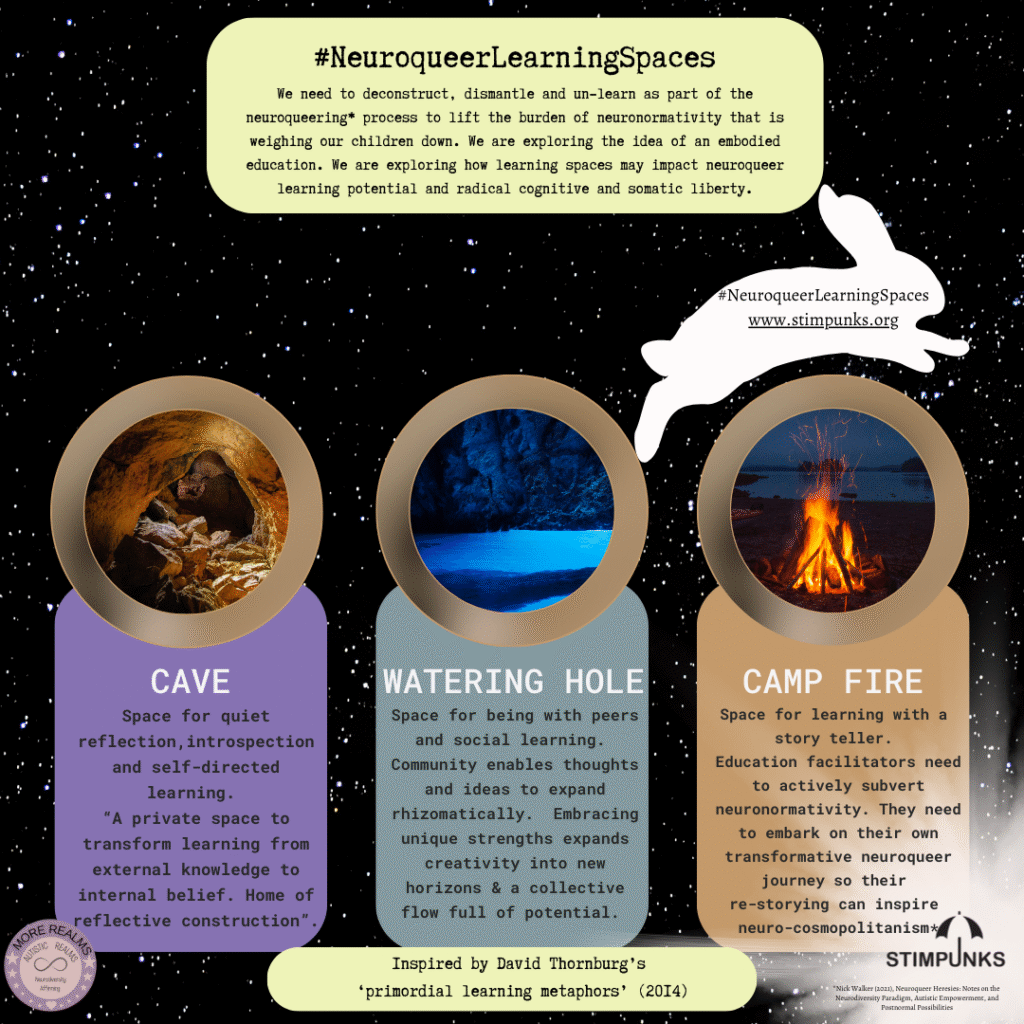
However, within the Stimpunks community, we are already queering the map, already building the spaces, the language, and the relational conditions that the thinkers in this blog have pointed toward. Cavendish Space, developed collaboratively by myself, Ryan Boren, and the Stimpunks Foundation team as part of our Neuroqueer Learning Spaces project, is a living example of what becoming and belonging can look like when they are built from neurodivergent experience outward.
Cavendish Space is a framework for designing environments around three kinds of space rooted in how human beings have always learned and connected.
The cave offers solitude, deep rest, and self-directed focus — space to go inward without apology. The campfire holds intimate shared meaning, storytelling, and connection in smaller, safer circles. The watering hole opens into energised, open community — the kind of space where ideas move freely and unexpected connections happen.
These are not accommodations bolted onto the edges of a space built for someone else. They are the space’s whole reason for being, shaped from the start around how neurodivergent people actually move, rest, connect, regulate, and think.
In Cavendish Space, every way of being belongs. The cave is held as carefully as the campfire. Stimming, directness, sensory sensitivity, the deep pull of monotropic focus, these are not quirks to be managed at the margins or quietly discouraged when others find them uncomfortable. They are exactly what the space was built to welcome. This is what Rogers’ unconditional positive regard looks like when it stops being confined to a single therapeutic hour and becomes the architecture of a whole environment and a new way of being for an entire community, when empathy, becoming, and belonging are no longer aspirations but the actual shape of the space itself.
Structural injustice, affective injustice, and the empire of normality Chapman describes require political change at a scale that no single framework can deliver alone. However, Cavendish Space offers something valuable that large-scale theory sometimes cannot: proof at a human scale that something different is already possible. Lorde told us that the master’s tools will never dismantle the master’s house, and so we have built new ones.
Our small community of neurodivergent, disabled, and multiply marginalised people, holding between us many intersecting experiences of being othered, misread, and pushed to the edges, has created tools, languages, and spaces that were never handed to us, because they could not have been. They had to be built from the inside, from our own experience, in community with each other. When spaces are built from those experiences outward, people do not have to shrink themselves to belong. They arrive, and they are already home. This is not a utopian dream waiting for the right political conditions; we are already a living space, supported by interdependence and mutual aid, showing that it is possible to build something genuinely new, starting not from the centre of what has always been considered normal, but from the rich, complex, irreplaceable edges.
We began with the feeling of being in a room, not truly seen. A world where empathy is practised as a political commitment, where becoming is understood as a collective right, and where belonging is built from the edges inward, from our experiences, our languages, our tools, and our communities. Not a kinder version of the old world. The beginning of a genuinely different one. As the Cavendish Space framework reminds us, most environments are not built for us; schools, workplaces, and public spaces are designed for a norm that excludes neurodivergent and disabled people by default.
Cavendish Space is our offering; it names what we need and gives us a framework for building it, wherever we are, with whatever we have. Where you can walk into the room and feel, perhaps for the first time, that you belong here — and that from that belonging, your own possibilities and your own ways of becoming can begin to unfold.
Goffin, K. (2026). Autistic injustice as affective injustice: The double empathy problem is not about empathy. Philosophical Psychology. https://doi.org/10.1080/09515089.2026.2651512
Lorde, A. (1984). Sister outsider: Essays and speeches. Crossing Press.
Manning, E. (2016). The minor gesture. Duke University Press.
Milton, D. E. M. (2012). On the ontological status of autism: The double empathy problem. Disability & Society, 27(6), 883–887.
Rogers, C. R. (1957). The necessary and sufficient conditions of therapeutic personality change. Journal of Consulting Psychology, 21(2), 95–103.
Rogers, C. R. (1959). A theory of therapy, personality, and interpersonal relationships. In S. Koch (Ed.), Psychology: A study of a science (Vol. 3, pp. 184–256). McGraw-Hill.
Rogers, C. R. (1961). On becoming a person: A therapist’s view of psychotherapy. Houghton Mifflin.
Walker, N. (2021). Neuroqueer heresies: Notes on the neurodiversity paradigm, Autistic empowerment, and postnormal possibilities. Autonomous Press.
Yergeau, M. R. (2018). Authoring autism: On rhetoric and neurological queerness. Duke University Press.
Helen Edgar — Autistic Realms | More Realms | June 2026
Spaces In-Between
I recently looked at the night sky, I was outside and cold, the sheer number of stars, the ones I could see and the knowledge of the ones I could not, shifted something in me that I did not have a word for at the time. It felt like an opening, a feeling of being very small and very connected at the same time, of the distance between me and the universe suddenly becoming less certain, of living in the in-between space. What I was experiencing is called awe, I also know, looking back, that awe may be one of the most distinctly Autistic experiences to feel.
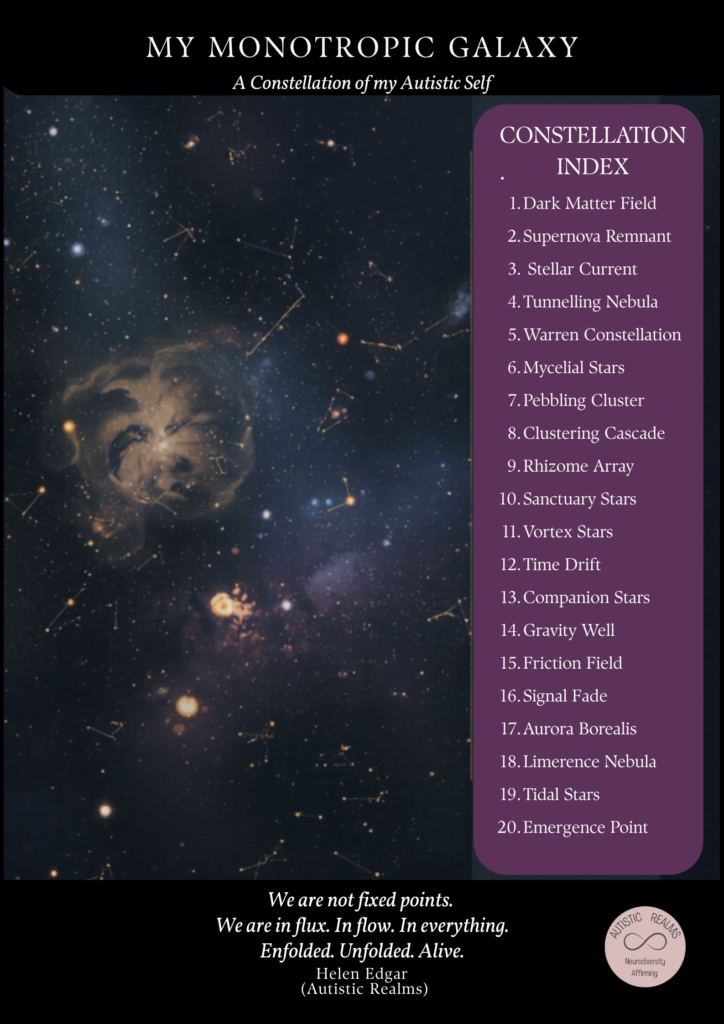
This piece is about feelings of awe and wonder, my own Autistic ADHD experiences, and about the map I have tried to represent of my inner life using the language of the cosmos. It is called My Monotropic Galaxy: A Constellation of My Autistic Self. It is a deep-field image of space, overlaid with constellation lines, accompanied by an index of 20 named features of some of my monotropic experiences. Some of these constellations I have lived in for decades, others I have only recently been able to name. All of them are in relationship with each other, always in motion, always becoming something the map and myself has not yet caught up with.
Before I guide you through my galaxy of monotropic experiences, I will explain a bit about the theory of monotropism and why I feel it is so important for my own sense of self-identity as an Autistic ADHD person.
What Is Monotropism?
Monotropism is an attentional theory of autism developed by Autistic researchers Dinah Murray, Mike Lesser, and Wenn Lawson (2005). It describes how many Autistic people tend to have their attention drawn more strongly to fewer things at any given time, going deep rather than wide, concentrating rather than spreading their focus. Rather than framing this as a deficit — an inability to multitask or shift attention — monotropism understands it as a distinct attentional style with its own strengths and difficulties.
Discovering the theory of monotropism for the first time felt like being handed a map of a place I had always lived in but had never been able to describe. I was identified as Autistic and ADHD in my forties, while my children were also going through their own assessments. What followed was a long process of re-sense-making, a re-storying that went back through my entire life, understanding finally why things had been the way they had been, and finally being able to begin to understand my own neurodivergent identity a little bit better.
Awe and Wonder as a Way of Knowing
Let me return to the night sky and think about what awe actually is and why it may be especially relevant for monotropic people. Helen De Cruz (2024), in her book Wonderstruck: How Wonder and Awe Shape the Way We Think, describes wonder as a form of epistemic opening, a way of relating to knowledge and how we have come to know things. The epistemic opening is the moment when the way we know expands; it is more than just a feeling. When we encounter something that is genuinely awe-inspiring, the usual categories we use to make sense of the world temporarily loosen. It is as if you are maybe seeing or sensing something for the first time; you may notice things you had previously learned to filter out. For De Cruz, wonder is not just a happy side effect of seeing something beautiful; it is a cognitive and moral orientation. It is how we stay genuinely curious about a world we might otherwise let ourselves assume we already understand, or are taught to ignore, as it doesn’t fit into how people expect us to perceive and respond.
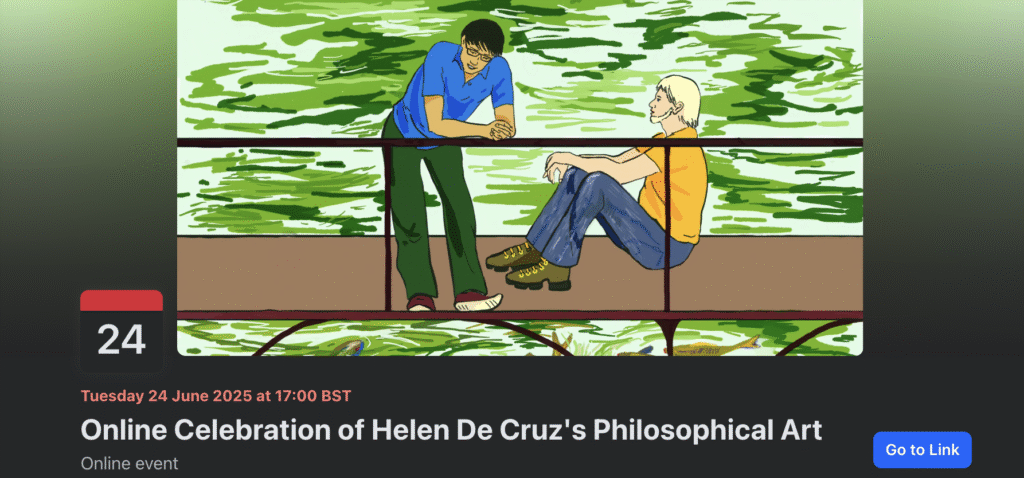
When I read De Cruz’s book in 2024, something in me recognised what she was describing at a really deep level. It was the most inspiring book I have read for many years. I took part in a brilliant reading group hosted by The Philosopher 1923, where we explored Helen De Cruz’s work in depth. In the final week, we were lucky to be joined by Helen herself, and I remember discussing Nick Walker’s neuroqueer theory (2021) and the projects I was developing with Stimpunks, particularly the ways her ideas resonated with and helped shape our thinking. These conversations had a lasting impact, influencing our Neuroqueer Learning Spaces project, helping to evolve the vision behind Cavendish Space, and continuing to inform much of my current writing and emerging ideas around the theory of monotropism.
Awe and Flow
When I am pulled fully into something that has truly captured my attention, not just my mind, but my whole body and nervous system is immersed. What opens is not simply focus; it is that first-ness quality of perception De Cruz describes, the sense of seeing and feeling something for the first time, even if I have encountered it a hundred times before. New connections become visible, and the boundaries between things soften. It feels like my nervous system, so often braced against a world not designed for me, can finally exhale in the in-between spaces as new connections form and I feel literally awe-some.
Keltner and Haidt (2003) describe awe as arising when we encounter something vast that challenges our existing mental structures, something that does not fit the categories we already hold, and that invites us to expand our ways of being rather than retreat or fold inwards. Awe can be humbling and expansive at the same time; it opens up possibilities.
I feel this resonates with what it feels like for me to be in monotropic flow. My self does not disappear, nor does it become more rigid or narrow; instead, it feels as though I open up, my whole bodymind becomes more porous. The boundary between me and what I am attending to becomes less fixed; I am both in the flow, and the flow is in me. The distance between those two things collapses and unfolds in a way that feels like both loss and arrival, and it can feel deeply liberating and joyful (and sometimes deeply troubling and anxiety-provoking!).
For many Autistic people, these experiences are undervalued, even stigmatised or shamed as we grow up. We are told to concentrate on what the teacher is saying, to focus on what our family and friends think really matters, and slowly, our own ways of perceiving the world are flattened as we learn to mask and stop trusting ourselves. The things we find awe-inspiring are treated as having no value: the joy of looking closely at a mushroom or an insect may be met with being told to hurry up and rejoin the group; the wonder of feeling the sea against your toes in the sand may be met with being told to just get in and swim and stop fussing.
This quality of experience, this awe and wonder, is represented by the Stellar Current at the heart of my galaxy: the deep flow state through which my whole system comes into coherence, and I move with the current of what matters most. It feels fitting that this current carries me toward a phrase that has become foundational to how I think about the Autistic community and a sense of belonging.
Love You Down to Your Star Stuff
The phrase Love You Down To Your Star Stuff grew out of collaborative work with Ryan Boren and Stimpunks Foundation (Boren & Stimpunks Foundation, 2026). It reaches back to something Carl Sagan observed: that the atoms in our bodies were forged in the interiors of stars that lived and died long before our sun existed. We are, quite literally, made of star stuff.
To love someone down to their star stuff is to locate love for their core way of being. Love is not conditional on performance, legibility, or being the kind of person the world finds easy to translate. Love should not be dependent on meeting neuronormative expectations, masking well enough or being productive enough or social enough. To love someone down to their star stuff is to love their way of being continuous with the universe and their authentic self.
Much of the lived experience of being Autistic for many people is weighed down by what I have called the Dark Matter Field in my galaxy. This is the heavy darkness of neuronormativity, reflected in the accumulated weight we carry around of a world that does not meet our needs, and does not love us down to our star stuff. The Dark Matter Field is everything that is harmful in our systems, behaviourism, ableism, racism and more. As Autistic people, we are constantly being measured against a map that was not ours.
The Double Empathy Problem (Milton, 2012) highlights the mutual misunderstanding between people with very different experiences, where the gap of this map is often framed as ours to close; this sits at the heart of the Dark Matter Field’s weight. Decades of masking, so thoroughly embedded in me that I genuinely did not know for most of my life where the mask ended and where I began, meant I was always accommodating others to try to meet expectations.
Love You Down to Your Star Stuff is a different orientation entirely. It is the foundation of what I believe the constellation of the neurodivergent community is reaching toward. The Mycelial Stars — underground networks of care and interdependence. The Rhizome Array — the non-hierarchical community that creates something together that none of us could make alone. The Companion Stars — those who do not need me to perform. The Sanctuary Stars — where I do not have to translate myself. All of these are expressions of what it means to love someone for who they actually are and are part of the galaxy that many neurodivergent people may recognise or relate to.
The Implicate Order and the Autistic Bodymind
A concept from quantum physics has really inspired my thinking recently, helping me articulate my inner self and conceptualise my Galaxy of Monotropic Experiences. Physicist David Bohm (1980) proposed that beneath the explicate order, the world of distinct objects and separate events we can see and measure, there exists a deeper dimension he called the implicate order. In the implicate order, nothing is truly separate; everything is enfolded into everything else. What appears distinct at the surface is always an unfolding of something that, at a deeper level, was always entangled.
I am thinking about the implicate order through the lens of monotropism and flow theory. The surface of a river looks like separate ripples and currents, each one seeming to rise, curl, and vanish on its own, but beneath the surface, the water is continuous; there is no ripple that exists apart from the river. What appears as individual movement is always part of a larger, deeper pattern, momentarily folding into visibility before folding back into the whole.
This is something of what monotropic flow feels like to me from the inside. The attention tunnel is the explicate order: a single ripple, distinct and absorbing, everything else falling away from view, but the depth beneath it, the coherence, the sense that this particular focus is connected to everything I have ever cared about, is the implicate order surfacing, slowly emerging and connecting with other thoughts. The interest that pulled me in is and was never really separate from the rest of me; it only looks that way from above the waterline or from what others may perceive. When I am in flow, I am not narrowing myself down to one thing and losing everything else; it is more like I am going deeper beneath the surface ripples to the place where it was all one current to begin with, to where I feel whole.
This may be part of why monotropic flow can feel like both loss and arrival at once; the “loss” is the disappearance of the surface separations of events and experiences outside the attention tunnel, the distinct sense of me here and the world being there. The “arrival” is perhaps the recognition of what was really underneath all along, the boundary was an explicate-order appearance, and the implicate order beneath it was entangled the whole time. When I am in flow, I can feel that oneness and vastness at the same time creating a sense of awe.
The world tends to perceive Autistic people through the explicate order, through what is behaviourally visible, measurable, categorisable. But what drives and shapes and sustains Autistic experience is largely implicate, the enfolded pattern of sensory processing, attentional depth, emotional layering, temporal fluidity, and relational intensity that does not show at the surface, or shows in ways that are consistently misread by others.
When I am in a deep monotropic flow, I am living in the implicate order. Thoughts do not arrive in sequence; they arrive already feeling more like a constellation, in relationship with each other, already folded into a larger pattern I can sense before I can articulate it. This is the Tunnelling Nebula in my galaxy — the way monotropic attention goes deep rather than wide, concentrating and transforming everything it connects to, always making more connections beneath the surface. It is around this Emergence Point that ideas and connections surface, when something is finally ready, arriving in its own time. It is at this Emergence Point that things finally start to make a bit more sense, at least to me and enable me to keep moving and keep becoming.
Bohm’s framework has also helped me understand burnout being the result of what I have called the Dark Matter Field. The Supernova Remnant in my galaxy is like a new way of becoming that emerges after burnout, remnants of my old self entangled in new ways of being.
Burnout is not simply tiredness; it is what happens when the implicate order is violently disrupted and when the continuous process of unfolding is interrupted by sustained demand to operate exclusively in the explicate: to spread thin rather than deepen, to switch and fragment and present surface after surface with no return to the enfolded whole – it is flooded with the Dark Matter Field. Each significant burnout has remade me into a new version of myself; something changes at my core, and it gives rise to new constellations. The supernova scatters what I was, how I thought and my previous ways of being; in a way, it reforms me into an ongoing cycle of becoming.
Rhizomes and the Non-Hierarchical Mind
Alongside Bohm, the philosopher Gilles Deleuze and the psychoanalyst Félix Guattari offered me another framework that helped me name something I had always experienced but could not clearly articulate in the past.
In A Thousand Plateaus (1987), they introduce the concept of the rhizome. A tree has a single trunk, its roots descend from a fixed point, and branches grow outward in a discernible hierarchy. Everything can be traced back to a central point; a rhizome is completely different. If we think of how grass spreads, or how mycelium moves through soil, more laterally, reaching out in every direction at once, with no fixed origin, no central authority, no privileged direction of growth, it may feel relatable to the experience of being Autistic. A rhizome connects with anything it encounters, it can be broken at any point and begin again from that node. It has no archive in the traditional sense, but it is dense with the traces of everything it has connected to and possibilities of what may form in the future.
This is pretty much how I feel my mind works. I have spent much of my life feeling different and not understanding my own thought processes, my non-linear associations, the omnidirectional leaps, the way a thought about a star might become a thought about mutual aid that might become a thought about penguins, and all of it feels necessary and connected, even if the connections are only fully felt inside me. It makes relationships hard, it makes communicating harder, always seeing that look of confusion on people’s faces as they think ‘what is she on about’ as there may be no obvious link to others, unless they know me really well!
The Rhizome Array in my galaxy represents the Autistic community itself. It is non-hierarchical, constantly connecting, forming new nodes, creating something together that none of us could make alone. As David Gray-Hammond and I have written about extensively there is no centre for the Autistic Rhizome and our community. There is no single way in; people can connect, join and communicate in their own way. The mycelial network metaphor runs alongside this: Mycelial Stars represent the underground networks of care that sustain us, growing toward each other in ways that do not follow a straight line or a hierarchy, representing the community of mutual aid that often sustains life for disabled and neurodivergent people.
Both frameworks, Bohm’s implicate order and Deleuze and Guattari’s rhizome, have helped me understand that the way my monotropic bodymind works has its own pattern, its own constellation, its own way of reaching toward others and toward the world and how the world works with me and in me.
The Constellation Index
What follows is an index of twenty constellations in my Monotropic Galaxy. These are not separate entries in a list; they are interdependent, entangled and always in relationship with each other and with everything around them. They are always in motion and always in flow.
Find what resonates with you from this, some of these constellations may feel immediately familiar, and others may not be part of your galaxy at all. This map is just my own constellation in a universe of infinite possible configurations of ways of Autistic being. You may find it sparks the beginnings of creating your own map or drawing your own constellation or galaxy.
1. Dark Matter Field is the weight of neuronormativity before I had words for it.
2. Supernova Remnant is burnout — the kind that arises when my monotropic attention is asked to spread attention thin, to split, to switch constantly and to mask. Each significant burnout has remade me and formed new constellations.
3. Stellar Current is the heart of my galaxy — the deep, flow states of being monotropic. When I am truly in flow, my whole bodymind system exhales and time dissolves. I am completely, wholly present, regulated and feel alive. I move with the current.
4. Tunnelling Nebula — monotropic attention goes deep rather than wide; it concentrates and transforms everything it connects to, always making more connections.
5. Warren Constellation are my rabbit holes of research. They reflect the joy of following a question, of feeling awe and wonder, and always expanding and reaching out.
6. Mycelial Stars represent the underground networks of connection that sustain the neurodivergent community of Autistic researchers, advocates, writers, families, and educators. It is our community network of care and interdependence, all growing toward each other in ways that don’t follow a straight line or a hierarchy. The foundation of mutual aid, care and well-being.
7. Pebbling Cluster is how I show love. Inspired by the way penguins offer pebbles to those they care for, this is my Neurodivergent Love Locution. Offering small glimmers, such as a twig I found or a meme or song I share as a way to say ‘I thought of you, I care’.
8. Clustering Cascade is my infodumping. The deep need to share my interests and passions, at considerable length and in detail, with those I feel safe with and to engage with others who want to share their joy.
9. Rhizome Array is the Autistic community itself — non-hierarchical, constantly connecting with other people and forming new communities and nodes. Creating something together that none of us could make alone.
10. Sanctuary Stars are the places, practices, and people where I do not have to translate myself or mask; it is where I feel safe and can simply be and know I will be accepted for who I am to regulate and communicate in my own ways.
11. Vortex Stars are the intensity of deep absorption I feel as a monotropic person. That pull into a single channel of interest that is so total it feels like a gravitational field.
12. Time Drift is my Autistic experience of time as non-linear, layered, fluid and felt. Where past and present merge into each other, and my lived time feels closer to superposition than sequence.
13. Companion Stars are the people who orbit close, who understand penguin pebbling, and the Neurodivergent Love Locutions. Those who don’t need me to perform and who just ‘get it’.
14. Gravity Well represents my monotropic looping and ruminating mind. Thoughts that circle and return, that find their way back to the same point regardless of how many times I try to leave them. It represents Autistic inertia and a feeling of being stuck.
15. Friction Field is the relentless exhaustion of having needs the world was not designed to meet, and of having to advocate for them, over and over, in systems not built with Autistic people in mind.
16. Signal Fade is the anxiety that rises when something or someone I care about moves outside my attention tunnel, the panic of object impermanence, the fear that what is out of sight may simply be gone.
17. Aurora Borealis is the joy and wonder of being Autistic — the profound aliveness that comes with deep engagement in sensory experiences. The way the world and my whole bodymind can suddenly blaze with meaning and feel beauty when I am fully with something that matters to me.
18. Limerence Nebula is the intensity of falling deeply into a connection with a person, a totality that can feel overwhelming and all-consuming.
19. Tidal Stars represent the porousness between myself, the environment I am in and the wider cosmos. The sense that my edges are less fixed than the world tends to assume. My pull towards nature, towards water, towards things that are ancient. A feeling of returning to something that was always within me.
20. Emergence Point is what surfaces from the liminal depths of my monotropic bodymind when something is finally ready to surface. It is the crest of an invisible process, trusted rather than forced, arriving in its own time, on its own terms. I am always being in a process of becoming.
Always Becoming
Our own Milky Way contains hundreds of billions of stars, and most have no name, only coordinates, or nothing at all. My own constellation feels similar, as some of my stars may dim; others may brighten, and they all have their own way of processing time. Some are still finding their way through the dark toward the light, still connecting with other stars, still discovering what they illuminate. The map I have created will never be finished, as it really only captures a moment in time, as it is always transforming, it is alive.
The Autistic rhizome keeps spreading, the implicate order keeps unfolding and the constellations keep reaching toward each other, forming new nodes, new patterns, new ways of knowing that none of us could arrive at alone. What lives beyond my twenty constellations is the infinity of Autistic ways of being, every way of knowing, sensing, connecting, and belonging that has not yet found its name, its language, its place in any map.
You may recognise some of these constellations as your own and others may not be part of your galaxy at all. We are each a unique configuration of matter, patterns and attention; we each have a particular way of being continuous with a cosmos that has been becoming itself for longer than we can even perceive.
We are not like the cosmos. We are continuous with it. In the infinite space beyond every map we have ever made, the phrase from our collaborative work at Stimpunks holds everything together: Love You Down to Your Star Stuff (Boren & Stimpunks Foundation, 2026). Every star belongs, every constellation has its place and every way of being Autistic is woven into the fabric of what this community is and is always becoming.
We are not fixed points.
We are in flux.
In flow.
In everything.
Enfolded.
Unfolded.
Alive.
References
Bohm, D. (1980). Wholeness and the implicate order. Routledge.
Murray, D., Lesser, M., & Lawson, W. (2005). Attention, monotropism and the diagnostic criteria for autism. Autism, 9(2), 139–156. https://journals.sagepub.com/doi/10.1177/1362361305051398
Walker, N. (2021). Neuroqueer heresies: Notes on the neurodiversity paradigm, autistic empowerment, and postnormal possibilities. Autonomous Press.
Invitation
I am delighted to share that I have a chapter in an upcoming book called UNIQUE. UNIQUE invites neurodivergent contributors to map themselves: their qualities, strengths, struggles, deep interests, and challenges, all held together as a constellation.
My chapter centres on my Monotropic Galaxy — the constellation map of my Autistic self, and this blog is an edited and expanded version of my forthcoming chapter submission. My own constellation is a small offering among many in what I hope will be a rich, diverse, and deeply affirming collection of neurodivergent people’s inner worlds and experiences.
The book is still open for contributions.
If you are neurodivergent — whether formally diagnosed or self-identifying — you are warmly invited to contribute your own constellation. No artistic skill is needed. No particular way of writing. Just your own unique map of who you are. The project is intentionally moving away from deficit narratives and toward something that reflects the full richness of neurodivergent experience and identity.
Contributors need to be over 18. If you’re interested to find out more, Mark and Lisa would love to hear from you at book@vicarious-traumatisation.com.
“Objects do not come first and then differ; rather, objects emerge out of more fundamental processes of differentiation.”
This feels like a statement about identity, about what we actually are. It felt, in a way I am still working through, like a description of something I have always known from the inside, without ever quite having the language for it. It helps explain how I feel that I am not a fixed, bounded thing moving through the world, but that I emerge, in and through my relationships and encounters with everything around me.
This piece is my attempt to think that through. As always, this is exploratory, I am definitely not a physicist, and I am not making literal claims about quantum mechanics applying directly to human experience, as I really don’t know enough! However, I do think physics can offer us resonant frameworks, ways of thinking that help us articulate things that neuronormative language has never quite been able to hold, and it may help understand and explain some ways of being Autistic or otherwise neurodivergent.
What quantum physics may be actually saying
Webster’s article draws on the work of physicist Carlo Rovelli, who developed what is called Relational Quantum Mechanics (RQM). The basic idea is that at the quantum level, particles do not have fixed, independent properties. A particle’s properties only become real in relation to another system. There is no such thing as an absolute, standalone description of a quantum object that holds true for all observers in all contexts. In other words, what something is depends on what it is in relation to.
Rovelli explains that the world of quantum mechanics is not a world of objects, it is a world of events, and events are always interactions between systems. Reality, at its most fundamental, is not a collection of separate things with built-in properties, it is a vast, shimmering web of relations.
Webster goes even further, drawing on the philosopher Gilles Deleuze to argue that this is not just a strange quirk of the quantum scale, it is actually how reality works at every level. Deleuze argued that difference and relation come first. The apparently stable, separate things we perceive — objects, individuals, identities — emerge out of relational processes, not the other way around. As Webster puts it: “Objects do not come first and then differ; rather, objects emerge out of more fundamental processes of differentiation.” Deleuze saw this as a model for how reality works at every level — not objects first, then relations, but relations first, and then eventually what we recognise as objects.
In my ongoing reading of Deleuze and Guattari over the past few years, it feels like things are starting to connect in a strange way……something is starting to make a bit more sense, folds unfolding and nodes of the rhizome and constellations are beginning to connect a bit more in relation to my Autistic identity and relations with others……
Why this matters for how Autistic people have been understood
One of the things Webster observes is that even our philosophical and logical language cannot easily hold a relational worldview. Our logic is built to describe objects and their properties. If relations come first, that language actively gets in the way, so we need different frameworks, different vocabularies, to say what is actually true and also how we feel.
Many of us, as Autistic people, may recognise this difficulty as the neuronormative-dominated language and society we have all grown up in, with its emphasis on fixed traits, stable categories, and measurable deficits has never quite been able to hold what our experience actually is or feels like. As I explored in Living in Layers, my reality is layered, non-linear, and sensorily permeable in ways that the majority of the world seems to fail to recognise or understand. It feels like the language we have is so limited, and just keeps breaking up against us.
This is why I am so passionate about our Stimpunks glossary, created by the neurodivergent and disabled community — we have to create our own vocabulary to survive, as it just isn’t there in the world we currently live in. As Audre Lorde’s and bell hooks’ work reinforces, language is a vital tool for survival, self-revelation, and political action – ‘language is a place of struggle‘.
The frameworks built to describe and assess Autistic people are rooted in exactly the kind of object-thinking that Webster is critiquing. They ask people, what properties does this person contain? What is inside this individual that differs from the norm? How do we measure, categorise, and if possible remediate, fix or change the object so they fit into society?
Damian Milton’s (2012) Double Empathy Problem helped my understanding of this gap of difference over a decade ago. The double empathy problem helps explain that the misunderstanding so often attributed to Autistic people is not located inside one person, it lives between people, in the quality and texture of the encounter, the shared or unshared frameworks two people bring into contact with each other through their lived experiences. In my longer piece The Double Empathy Problem is DEEP (Double Empathy Extreme Problem – Dynamic, Embodied, Ecological, and Political), I explore how this operates not just between individuals but at social, cultural, and structural systemic levels.
The “problem,” in other words, is a relational property. It is not something carried in the Autistic person’s neurology like a stone in a pocket. It emerges, as all relations do, in the encounter itself, in the liminal spaces. In the gap between two different ways of sensing the world, two different attentional rhythms, two different histories of what communication has felt like and meant.
I have spent a long time feeling like the problem, as I think many of us may have as Autistic people. I find something genuinely moving in the idea that physics is pointing towards the same conclusion that disabled activists and Autistic-led researchers have been making for decades. The difficulties we encounter are ecological as David Gray-Hammond has been writing about in their Ecosystemic Model, which we have expanded on in our Re-Storying Autism course and book.
What needs to change is not the person but the conditions of relation. Rovelli might put it a little differently, saying that properties only become real in relation to another system. There is no absolute, observer-independent description of a person that tells the whole truth about themselves. What we are is always, in part, a function of what and who we are in relation to each other and our environment.
This connects to the work of Ombre Tarragnat (2025) on ethodiversity. Ethodiversity (short for ethological diversity), is a concept that moves neurodiversity thinking beyond the brain and into the wider ecological and relational field. Rather than focusing only on neurological difference, ethodiversity attends to the full range of behavioural and existential styles: the different ways that humans and other animals move through, sense, and inhabit their worlds. Tarragnat describes it as encompassing not just biology but inter- and intraspecific relationality, the ways our differences are always already entangled with the environments and relationships we are embedded in.
What I find so useful here is that ethodiversity frames difference as fundamentally ecological and relational rather than as a property contained within an individual. The parallel Tarragnat draws with biodiversity makes sense to me as just like biodiversity is a property of an ecosystem, (something that emerges from how species relate to each other and their habitat), ethodiversity is a property of a relational field. You cannot understand anything by studying one organism in isolation.
Tarragnat also introduces the concept of ethonormativity, the often unspoken rules that govern which ways of being, behaving, and relating are acceptable or expected in a given context. Ethonormativity, like neuronormativity, is not located inside the person. It is a property of the relational and social environment, a set of conditions that certain bodyminds move through with ease, and that others may find exhausting, painful, or simply impossible to meet. When we think of diversity in this way, the difficulty and barriers Autistic, otherwise neurodivergent or disabled people face are not their personal divergence, it is the narrowness of what the relational field is prepared to hold.
A Pause……
This piece is pretty wordy, and I am aware that when we talk about Autistic and neurodivergent experience in these kinds of registers, we can end up — without meaning to — centring the voices that the world already knows how to value. I want to gently push back against that, including in my own writing.
The ideas here belong to all of us, and relation has to come first. These are not ideas that matter more or less depending on how someone communicates, moves, or exists in the world. I have been thinking and writing a lot lately about how neuro-affirming practice is not a framework or a checklist — it is a way of being. It is about being genuinely present with people, as they are, in the relational field we share. That means all of us, including, and I would say especially, people with profound and multiple learning and intellectual disabilities, whose ways of being in relation are so often the most misread, the most unseen, and the most undervalued by the systems built around them.
I spent twenty years as a SEND teacher, and some of the richest, most meaningful things I have come to understand about what genuine relation looks and feels like, what it means to truly be with someone, came from my time in class. Relation and safety was the foundation of everything. A shift in breathing, a change in muscle tone, a turn toward a familiar voice or a sound. These weren’t lesser forms of connection, just different ones, asking something different of the people around them to connect with them. Asking us to slow down, to pay attention differently, to stop waiting for communication that looks like ours before we decide someone is worth relating to. This is the embodied DEEP dimension of the Double Empathy Problem — Dynamic, Embodied, Ecological, and Political — the reminder that relation happens in and through bodies, breath, and shared presence, long before it happens in words. It is a way of being with each other, across the full and beautiful range of how we all exist with one another and with our environment.
Tarragnat’s ideas about ethonormativity does its most violent work on those whose ways of being are furthest from what any normative system recognises as meaningful communication or social participation. The relational field that needs to change is not only the one around verbally articulate Autistic people, but it is also every environment that has decided in advance what counts as a person worth relating to, with those most marginalised always being pushed further away instead of centring them.
This is why, if we return to Rovelli, the question is never just about asking “what is this person like?”, it is also always about “what kind of relational field are we creating together, and whose ways of being does that field make possible?”
Philosopher and physicist Karen Barad (2007) calls this intra-action, which is a bit different from inter-action. Interaction assumes two separate, already-formed things that then come into contact. Intra-action suggests something more radical, that the things themselves, the identities, the properties, the selves, are produced through the meeting. We do not arrive fully formed and then enter into relation, we are, in part, constituted by the relations we are held within and have always been a part of. Barad also draws on quantum physics to make this argument, which is why it sits so naturally alongside Rovelli’s, as both point toward a world where relation is everything.
Erin Manning (2016) develops something similar when she writes about Autistic experience and what she calls the minor gesture, the ways of moving, attending, and relating that do not register within dominant frameworks, but that are doing real, significant, world-making work nonetheless. For Manning, Autistic ways of being are not failed attempts at neurotypical relation, they are different modes of intrarelation, of being constituted in and through a world that is always already more-than-individual.*
This is why I find the word intradependent useful alongside the more familiar interdependent. Interdependence acknowledges that we need each other and intradependence goes further as it suggests that we are, in some fundamental sense, made of each other, that the boundaries between self and relation, between individual and environment, are more porous and more dynamic than the frameworks built around us have ever allowed us to embrace.
What becomes possible when we think relationally
We are all interdependent and intradependent and Webster helps highlight that this is precisely why Deleuze matters. Deleuze offers what Webster calls “the metaphysics science needs”, a different conceptual vocabulary, one built for difference, flow, and becoming rather than for fixed objects and their properties. I think this may also be part of the metaphysics that neurodiversity needs, an ever-expanding neuroqueer framework that begins with relation rather than with the individual as an isolated, assessable unit.
If identity emerges from relations rather than residing inside individuals, then support cannot be about fixing a person in isolation. It has to be about transforming the relational conditions — the environment, the encounter, the quality and structure of connection itself. The sensory climate of a space, the pacing, the temporality and texture of relating and forming connections and relationships. Whether a community can hold someone’s particular way of attending to the world without requiring them to translate themselves into something more legible, more manageable, more like the expected norm, and whether the people building those spaces are genuinely asking whose ways of being they are designed around, and whose they are still leaving out.
This is what I see at work in the best neurodiversity-affirming spaces I am fortunate to be part of — the CASY group, the Stimpunks community, NeuroHub Community and Thriving Autistic. These aren’t spaces that take a person as an object to be supported, assessed, and adjusted, but co-created spaces that understand themselves as relational fields. They are communities that consider what those fields need to become, so that different kinds of bodyminds can genuinely flourish within them. Spaces that hold the full range of experiences, from the most academically articulate to those whose presence, joy, pain and relation express themselves entirely outside of neuronormative language as sensory beings. Everyone has equal worth and we are all dependent on each other to not only survive, but thrive and create meaningful lives together.
In We Are Star Stuff, which I am continuing to develop collaboratively with Ryan Boren at Stimpunks, we wrote about being literally made of elements forged in dying stars: about the deep, physical reality of our connection to the cosmos and to each other. Relational quantum mechanics takes this even further, not just that we are made of the same stuff, but that what we are, at the most fundamental level of reality, is constituted by our relations with each other and our environments. There is no isolated self beneath the web of connection, there is only what emerges in, through and in the spaces between every encounter.
We are not broken objects. We are relations, all of us still becoming. And I think (and I hope) that sitting with some of these thoughts might help change everything about how we understand, support, and truly be with each other.
Cordero-Rivera, A. (2017). Behavioral diversity (ethodiversity): A neglected level in the study of biodiversity. Frontiers in Ecology and Evolution, 5, art. 7. https://doi.org/10.3389/fevo.2017.00007
Deleuze, G. (1994). Difference and repetition (P. Patton, Trans.). Columbia University Press. (Original work published 1968)
Deleuze, G., & Guattari, F. (1987). A thousand plateaus: Capitalism and schizophrenia (B. Massumi, Trans.). University of Minnesota Press. (Original work published 1980)
Walker, N. (2021). Neuroqueer heresies. Autonomous Press.
Webster, G. (2024). The metaphysics science needs: Deleuze’s naturalism. European Journal of Philosophy, 32(3), 820–846. https://doi.org/10.1111/ejop.12909
I re-read Wuthering Heights last year and just watched the new 2026 film adaptation. This isn’t a blog about gothic romance, or a critique of the film. It is more of a personal reflection on Cathy and Heathcliff’s relationship that is beginning to make more sense to me as I re-read and re-watch various adaptations of one of my favourite books ever. I am rethinking their relationship through a new lens as I learn more about my own Autistic identity.
When Catherine Earnshaw says “I am Heathcliff,” it really resonates with me. It captures a connection to an inner world so intense it loses all sense of boundaries. For me, it captures my Autistic way of being where I can feel myself becoming part of someone or something else entirely. An all-consuming, whole-bodymind way of experiencing life. That deep monotropic pull of being totally immersed in whoever or whatever my attention is drawn towards.
There’s a theory of Autistic attention called monotropism — developed by Murray, Lesser, and Lawson (2005) that I have written about extensively. It describes how many Autistic and ADHD people organise their attentional resources. Instead of spreading attention broadly across many things at once, monotropic people tend to go deep, very deep. We tend to pour everything we have into fewer channels, whatever is inside our tunnel of attention gets the full experience: full focus, full feeling, full presence.
I think Cathy and Heathcliff’s all-consuming love can be reimagined and perhaps better understood through the lens of monotropism. Being monotropic is not just about cognitive resources, it is everything! It is about how people move, sense, perceive, and relate to each other. In their case, they are the centre of each other’s attentional worlds; they are completely entangled, even after years apart, their souls are still looped and hooked into each other. The wild Yorkshire moors aren’t just a backdrop to their relationship; they’re an important part of the environment and the shared language and memories they have created together since childhood.
Everything else sits outside of their relationship and the moors; Edgar Linton, Nelly, the drawing rooms, in fact, the whole performance of social respectability and ways of being in the world at that time, is all at odds with Cathy and Heathcliff’s relationship.
Life demands that Cathy split herself. In her attempt to try and make her marriage work with Edgar Linton, she tries to focus on her new life without Heathcliff, but it is impossible. The idea of monotropic split conceptualised by Tanya Adkin helps explain how hard dividing attention is for Autistic people. We don’t know whether Catherine or Heathcliff would now be identified as Autistic or otherwise neurodivergent, but my own personal resonance with their characters makes sense.
Catherine has to divide her attention between the competing loyalties of Healthcliff and Linton and maintain a respectable status in the society she is in. She tries to mask and fit in, she tries for years to manage how much she feels, how much she shows, how much intensity is acceptable in polite company. The neuronormative demands, the pressure on people whose minds and bodies work differently as they try to reshape themselves into a form the dominant social world can accommodate is exhausting. The cost of that reshaping runs through Cathy’s entire life. It isn’t just social pressure; it slowly begins to unravel her from the inside.
Her famous declaration — “I am Heathcliff” — makes complete sense to me. It describes exactly what it feels like when my deepest attention and my sense of who I am become genuinely inseparable, when another person or event that isn’t just important to me, it is my everything that is woven into the fabric of how I experience myself and life. Something some may be able to relate to. When that person or interest is gone, you are not just bereft. The loss goes all the way down, into the core of the self, until the flow that once held your life together may feel utterly broken.
One of the things that strikes me most, reading the novel this way, is who actually understands either of them. Edgar doesn’t understand Cathy, and Nelly doesn’t understand Heathcliff. The people around them consistently misread them, misjudge them, interpret their intensity as threat or instability. Milton’s double empathy problem (2012) describes exactly this—the way that people with genuinely different experiences can find mutual comprehension difficult, not because either person is deficient, but because the gap between their ways of experiencing the world is so great. Cathy and Heathcliff are, for each other, the only exception to that. They are the only two people in the novel who experience each other from the inside. Their connection and their relationship is the only place either of them is fully legible and are able to be their true selves.
This makes what happens at her deathbed almost unbearable to read. Heathcliff doesn’t grieve quietly; he demands she haunt him, he asks her to stay in any form — just not to leave him in the void where he cannot reach her. He says he cannot live without his life. He cannot live without his soul. He can not live without Cathy.
And I pray one prayer – I repeat it till my tongue stiffens – Catherine Earnshaw, may you not rest, as long as I am living! You said I killed you – haunt me then! The murdered do haunt their murderers. I believe – I know that ghosts have wandered on earth. Be with me always – take any form – drive me mad! only do not leave me in this abyss, where I cannot find you! Oh God! it is unutterable! I cannot live without my life! I cannot live without my soul!’ He dashed his head against the knotted trunk; and, lifting up his eyes, howled, not like a man, but like a savage beast getting goaded to death with knives and spears.
Chapter 16
Where the words of human experiences run out to describe the intensity, Brontë turns back to nature, to the knotted tree trunk Heathcliff dashed his head against. The sound Brontë describes Heathcliff as exclaiming is something beyond the human, “not like a man, but like a savage beast”.
Brontë wasn’t writing a story about Autistic people and neurodivergent lives. She didn’t have this framework in 1847; it may be a leap to suggest that any of this is related to anyone else’s experience as a neurodivergent person but my own. However, she was writing about something she felt deeply, she is writing about what it looks like when a person cannot do things by halves. When people love the way they attend to everything: completely, in depth, with the whole of themselves, in a world that keeps asking them to be less.
When we read Wuthering Heights through the lens of monotropism, the double empathy problem, and neuroqueer theory, something can shift. Cathy and Heathcliff’s love is devastating, but it is also the most real thing in the novel — the only place either of them is ever fully known. The world Brontë placed them in was never built to hold their intensity and passion. Many of us may in some ways share and resonate with their world and perhaps find ourselves reflected in Cathy and Heathcliff — in the depth, the pull, the all-consuming way of loving, the trying to fit in and adapt.
What Cathy and Heathcliff never had, and what so many of us are still learning we deserve, is the safety to be fully known, and the freedom to stop pretending to be less than we are.
Brontë, E. Wuthering Heights. Penguin Classics. (Original work published 1847).
Garau, V., Woods, R., Chown, N., Hallett, S., Murray, F., Wood, R., Murray, A. & Fletcher-Watson, S. (2023). The Monotropism Questionnaire, Open Science Framework. DOI:10.31219/osf.io/ft73y
Murray, D., Lesser, M., & Lawson, W. (2005). Attention, monotropism and the diagnostic criteria for autism. Autism, 9(2), 139–156. https://doi.org/10.1177/1362361305051398
Walker, N. (2021). Neuroqueer heresies: Notes on the neurodiversity paradigm, autistic empowerment, and postnormal possibilities. Autonomous Press.
Reading Liam Ren’s idea “of neuroqueering methodologies, or neuroqueering as methodology” ignited a memory, a re-emergence of an experience that I had many years ago. Liam describes neuroqueering as something unfinished, and shaped by intensive frequencies, something that ebbs and flows. This resonated with how my own learning journey has unfolded over time. Meaning has rarely developed through linear progression; instead, it has emerged through immersion in specific hyper-focused interests, through deep monotropic intensity, and often a return to a previous deep interest (like this article about the artist Mark Rothko), a constant spiralling movement, ebbing and flowing between past and present.
Their reflections on the idea of a “synaesthetic art critic” and philosophical engagement beyond conventional academic structures brought me back to my student years studying History of Art and English Literature almost 30 years ago. Long before I had the language for words like monotropism, neurodivergence, or neuroqueer theory, I was already encountering art as a whole-body experience; as a field of sensation that reorganised bodily awareness. Art was something I felt, something I needed in my life, and still do. Abstract expressionist painting, particularly the work of Mark Rothko, became a place for me where perception, emotion, and bodily awareness seemed to merge, and I felt a bit more understood, it made me feel more complete in a way that only art, music, literature and poetry can.
The Gallery as a Plane of Immanence
One memory stands out with particular clarity: visiting Tate Modern in London to experience Rothko’s Seagram Murals, first-hand with my friend as part of our Uni course. The gallery space was dimly lit, quiet, and expansive. The paintings were monumental, not decorative objects hanging on the gallery wall, but immersive environments; I felt I actually entered in to them. The paintings were autonomous compounds what Deleuze describes as “blocks of sensations” that reorganised the gallery space. “The work of art is a being of sensation and nothing else: it exists in itself” (Deleuze, 1994).
Looking back now, the gallery setting can be understood as what Deleuze and Guattari describe as a plane of immanence — a field of relations within which thought becomes possible (Deleuze & Guattari, 1994). Thought does not arise solely within an individual’s mind; it emerges through material and affective conditions: architecture, colour, silence, bodily positioning, and social presence with our surroundings. This space helped shaped my perception of the art before any conscious interpretation began; it was something I felt before the words arrived. In fact, I still have no words to accurately describe my experiences, which is possibly why art is so important: it fills the gap where words restrict us.
Plateaus of Attention: Monotropism and Sensory Duration
My friend and I lay down on the gallery floor, surrounded by vast fields of dark red and maroon. I let the colours wash through me, as though I were bathing in them, held within an atmosphere that seemed to slow and thicken time itself. We must have stayed there for a long while, suspended in a quiet intensity that resisted any sense of conclusion. I have returned to the gallery many times since, always with the same feeling: that I never quite want to leave, as though the encounter is still unfolding and I am still making sense of it.
This sustained immersive, monotropic experience could be understood through Deleuze and Guattari’s concept of a plateau: a continuous region of intensity that maintains experiential charge without moving toward resolution (Deleuze & Guattari, 1987). My attention deepened rather than accelerated or reached any definitive answers about the work; my thoughts unfolded as time seemed to just slip away, and I felt I almost became part of the art itself. This narrowing of attention functioned as a temporary territorialisation of perception, through which sensory relations intensified rather than diminished.
The theory of Monotropism (Murray et al., 2005), may help explain this experience further. When the attentional resources of Autistic and ADHD people become highly focused, engagement with sensory or conceptual environments can become immersive and nonlinear. In the Rothko gallery, this narrowing of my attentional field did not feel restrictive; instead, it enabled an expanded relational field in which colour, the sounds of the gallery, the architectural scale of the building and paintings, my memory, and shared presence formed a kind of temporary assemblage. The meaning and memories created there emerged slowly through my ongoing immersion with the art and the space I was in.
Synaesthetic Encounter and the Body without Organs
I experience synaesthesia, where sensory impressions begin to overlap and blend. While immersed in Rothko’s deep reds and maroons, I felt and heard a low vibrating internal hum. The colours did not stay at a distance as something to look at; they felt as though they entered my body, with an affective force and pull, creating an atmosphere that was both calming and intense. Experiences like this can challenge expectations about how we are supposed to engage with art. Rather than observing from the outside, perception becomes immersive, relational, and deeply felt, maybe more so if you experience synesthesia in this way, but I only have my own experience to draw from.
I didn’t know it at the time, other gallery visitors probably thought I was a bit strange, but lying on the gallery floor also involved an unspoken disruption of normative spectator behaviour in a setting like this. Visitors are typically expected to stand, sit or move quietly, and observe from a respectful distance. By shifting bodily position — lying, sitting and walking around, I was unknowingly experimenting with perception itself and also neuroqueering the expectations of being in a formal public gallery space.
Deleuze and Guattari describe the Body without Organs (BwO) as a process in which habitual bodily organisation loosens, allowing new intensities and relations to emerge (1987). The BwO is not the disappearance of the structure of our actual human bodies but an experimental reconfiguration of how our bodies connect and respond, and can reconfigure in different spaces.
Within Tate Modern’s gallery, Rothko’s work disrupted and destaballised the boundary between me as a viewer and artwork. The gallery functioned as an assemblage in which colour, texture, depth, scale, sound, friendship and memory all combined to form a temporary field of relational intensity. In this reorganisation, my own perception of the art became more experimental. The pressure to interpret correctly when writing up my essay notes receded, and my attention plateaued into a state of sensation in which my identity and environment were mutually shaping each other as I let the colours flow through me, as I heard the sound of the deep reds, and felt as if I were becoming part of the art itself.
Neuroqueering Methodology and Lines of Flight
For many neurodivergent people, such intensive monotropic responses to art, literature, music, dance or poetry may be familiar. Through a Deleuzian lens, they could be understood as creative reorganisations of experience, minor reorganisations of affective and perceptual relations, subtle lines of flight that open alternative ways of being present in the world (Deleuze & Guattari, 1987).
Liam Ren’s exploration of neuroqueering methodology helps frame these encounters as epistemologically significant. Neuroqueering challenges assumptions that knowledge must be produced through linear argument or normative cognitive performance. Instead, it recognises that understanding may emerge through affective immersion, relational environments, sustained attentional flow states, and our divergent ways of experiencing art and the world.
Abstract art like Rothko’s can therefore function as a neuroqueer methodological space, a temporary territory where dominant expectations of productivity, legibility, and behavioural regulation loosen for the person who is engaging with the artwork.
Becoming Through Colour
Reflecting now, my time lying beneath Rothko’s paintings enabled a different way of thinking to emerge, one shaped by duration, sensory attunement, and relational presence. Memory itself operates rhizomatically, as a process of ongoing recomposition rather than recollection, returning unpredictably and forming new conceptual connections across time (Deleuze & Guattari, 1987), as has happened when I read Liam’s blog.
Such encounters suggest that philosophical becoming may occur not only in texts but also in embodied situations like this that loosen the organisation of the self and open new planes of relation. Neuroqueering methodology can therefore be understood as a lived practice of experimentation, a willingness to follow lines of sensation in our bodyminds into unfamiliar territories, to linger with the ‘what could this mean’, with the ‘what may happen if…’.
Rothko’s murals continue to offer such plateaus for me. They create environments in which perception can deepen, bodyminds can reorganise, and thought can unfold through relational intensity with the artwork and the surrounding space when conditions feel safe. In Deleuzean terms, art is not primarily representational but intensive. As Deleuze and Guattari write;
“the work of art is a being of sensation and nothing else: it exists in itself”
(Deleuze & Guattari, 1994, p. 164).
Encountering these fields of colour can therefore feel less like interpreting an image and more like entering a sensory event, one in which attention shifts, time gathers, and experience becomes widened with duration.
Within such encounters, sensation may operate temporally as well as perceptually. Deleuze and Guattari describe how “sensation contracts the vibrations of the stimulant… what comes before has not yet disappeared when what follows appears” (1994, p. 211). This contraction of vibration resonates with my own Autistic synaesthetic experiences of spiralling memories of sound, colour and physical sensations in my body, deep attention, and non-linear temporal flow. Art, in this sense, can become a way of inhabiting duration differently, allowing perception to loosen its usual coordinates and making space for alternative sensory epistemologies – creating new nodes on the rhizomes of our experiences and deepening our monotropic tunnels and interests.
From this perspective, aesthetic encounters are not simply personal responses but ontological events. As Nabais (2010) observes, art involves the “capture of the force of life and also creation of a life which stands by itself” and the creation of autonomous zones of sensation that exist independently of subjective interpretation. Rothko’s paintings could be understood as environments in which sensation continuously re-composes these experiences. Rather than resolving the chaos of an abstract work of art, art can hold open a field of intensity through which chaos becomes composed into sensation.
Deleuze and Guattari suggest that “art is not chaos but a composition of chaos that yields the vision or sensation” (1994, p. 204). If neuroqueering expands the conditions under which knowledge becomes possible, then philosophy may sometimes begin in these quieter aesthetic spaces and our relationships with a work of art — spaces where colour reshapes attention, duration transforms understanding, and sensory experience invites us to become otherwise.
Since writing this reflection, I have found myself thinking about how memory and theory shape the way we understand past experiences. What once felt like an open, personal sensory experience with art has become more organised through language and philosophy.
I have also begun to wonder about the gallery space itself. The quietness, dim lighting, and cultural expectations of contemporary art created conditions where immersive attention felt possible and safe. Lying on the floor felt like a small disruption of usual behaviour, but it was also an action that the space could absorb. This raises questions about who is able to experiment with their perception in public spaces, and under what conditions difference becomes accepted or contained. These reflections also make me think about how public spaces quietly regulate behaviour, attention, and movement, shaping what kinds of sensory engagement are seen as appropriate or disruptive. I am also aware that not all people are granted the same freedom to move, pause, or experiment with perception in public spaces. What felt possible for me in that moment may not feel safe or permitted for others. For some people, moving or sensing differently in public can lead to misunderstanding, correction, or exclusion rather than quiet acceptance.
Reflecting further, I notice an ongoing tension between using the theory of monotropism to understand deep attentional engagement, and engaging with philosophical ideas such as those of Deleuze and Guattari about becoming that resist fixed explanations. Neuroqueering methodology may live within this tension. It can help us name and affirm neurodivergent ways of experiencing the world, while also inviting us to remain open to change, uncertainty, and new ways of thinking, and to question the taken-for-granted standards of focus, composure, and productivity that shape how bodies and minds are expected to function in shared environments. Immersive sensory encounters can feel uncertain or overwhelming, reminding me that opening perception in this way involves a negotiation between curiosity, vulnerability, and the need for grounding.
Rather than reaching a conclusion, these reflections feel like a continuation. My encounters with Rothko’s paintings continue to unfold through memory, conversation, and ongoing sensory meaning-making. Perhaps neuroqueering is not about finding final interpretations or fixed language to define an experience or way of being, but about noticing how perception and understanding shift over time, opening space for new possibilities to emerge. These questions are not only personal but collective, connected to wider struggles over whose ways of sensing, thinking, and being are recognised as valid, and whose are overlooked, regulated, or misunderstood.
To neuroqueer perception may therefore be not only to experience differently, but to gently challenge the norms that decide which experiences are allowed to matter.
Next Blog: What may neurodivergent experiences reveal about how plateaus are lived, sensed, and sustained, and how might we neuroqueer them?
What is a plateau? Not a peak to be reached, but a region where intensities sustain themselves.
Plateaus are not entered so much as encountered, they are fields of relation where perception, time, and attention begin to shift.
In my next blog, I will explore and unfold some more!
References
Deleuze, G., & Guattari, F. (1987). A thousand plateaus: Capitalism and schizophrenia. University of Minnesota Press.
Deleuze, G., & Guattari, F. (1994). What is philosophy? Columbia University Press.
Deleuze, G., & Guattari, F. (1994). What is philosophy? Columbia University Press.
Murray, D., Lesser, M., & Lawson, W. (2005). Attention, monotropism and the diagnostic criteria for autism. Autism, 9(2), 139–156.
Deleuze, G., & Guattari, F. (1994). What is philosophy? Columbia University Press.
Deleuze, G. (2003). Francis Bacon: The logic of sensation. Continuum.
Nabais, C. P. (2010). Percept, affect and micro-brains: Art according to Deleuze. In S. Di Marco, O. Pombo, & M. Pina (Eds.), Neuroaesthetics: Can science explain art? (pp. 165–175). Fim de Século.
This journey begins with curiosity, and with transformation.
Over the past few years, the philosophy of Gilles Deleuze and Félix Guattari has become profoundly important to me. I am not a Deleuzian scholar and have no formal academic background in philosophy at all – the aim of this project is very much focused on community learning and expanding conversations.
Through cycles of debilitating Autistic burnout, I found myself searching for language that could help me make sense of experiences that felt difficult to articulate — deep attentional flow, sensory intensity, nonlinear thinking, moments of rupture, the slow processes of recovery and new ways of becoming.
Burnout, Deterritorialisation, and New Patterns of Becoming
Concepts such as the rhizome, multiplicity, body without organs, planes of immanence, assemblage, and deterritorialisation, explored in works including A Thousand Plateaus, Anti-Oedipus, and later reflections such as What Is Philosophy? began to resonate with my lived experience as an Autistic and ADHD (AuDHD) person. My monotropic attention often feels like it moves through constellation-like interconnected tunnels of intensity rather than along a single stable path. My cycles of burnout feel like a sudden loss of territory, a destabilisation of the structures that once enabled my participation in the world. In this sense, burnout sometimes resembled a form of deterritorialisation: a disorientation that disrupted familiar rhythms while opening uncertain possibilities for forming new connections. Recovery does not mean returning to a fixed state, but gradually composing different patterns of relation, energy, and belonging.
Encountering Deleuze and Guattari’s work offered me ways of understanding these experiences not as personal failure, but as part of dynamic relational processes within the wider ecosystems I am part of. Their philosophy is helping me think differently about identity, learning, exhaustion, creativity, and the environments we inhabit. It is opening up a space to understand neurodivergent experience as movement, transformation, and ongoing becoming rather than as a deficit or fragmentation of a whole.
Rhizomatic Thinking and Nonlinear Understanding
At times, reading their work has felt disorienting, yet also strangely and comfortingly familiar. The nonlinear textures of their writing, moving through plateaus, building connections, going through the tides of intensities, and shifting conceptual landscapes, echo ways of thinking that many neurodivergent people may also recognise.
Ideas do not always unfold in a straight line; instead, they branch, loop, and return, forming clusters of attention and moments of unexpected resonance. In this sense, philosophical engagement can feel rhizomatic: thoughts emerging in multiple directions, forming nodes of meaning that connect across time, experience, and environment.
Rather than progressing step by step toward a single conclusion, understanding develops through community movement — through following lines of curiosity, pausing at plateaus of insight, and allowing connections to form gradually. Philosophy, for me, is therefore not only something to be interpreted, it is also something to be experimented with, inhabited, and lived through with repeated encounters with ideas, places, bodies, and other people. In this way, thinking becomes relational and ecological, shaped by the networks we are part of and the intensities that draw our attention.
Neuroqueering Philosophy
This project can therefore be understood as an act of neuroqueering philosophy and our ways of being in the world.
Drawing inspiration from the work of neuroqueer theorist Nick Walker, neuroqueering involves approaching established concepts, systems and ways of being in ways that challenge normative assumptions about knowledge, cognition, identity, and relational life. In this sense, neuroqueering is not only about representation, it is also a practice of becoming, an active reworking of how we think, connect, and how we can re-create meaning together against neuronormativity and conformity.
A Rhizomatic Community Project
This community project — Neuroqueering Deleuze: Rhizomes of Becoming— grows from this ongoing process of engagement and constant iteration, finding and creating difference through repetition.
It is envisioned as a slow, collaborative exploration of philosophical ideas based primarily on Deleuze and Guattari, through neurodivergent lived experience, creative reflection, and relational dialogue. Philosophy does not only take place within academic institutions, it also unfolds in everyday life, through deep interests, sensory experiences, professional work, parenting journeys, community relationships, ecological awareness, and the rhythms of burnout and renewal that so often shape neurodivergent lives.
The project itself is intentionally rhizomatic. Anchor posts from different people may introduce themes or conceptual entry points, but participants are invited to respond in ways that feel meaningful to them — dipping in and out as attention, energy, and curiosity shift. Engagement does not need to be linear or continuous; it may follow rhythms of monotropic flow, periods of rest, or moments of pause and return – there is no expectation in how you take part if this interests you. I am really just hoping to develop my own deeper understanding and connect with others who are also interested in exploring this.
Contributions may take many forms: reflective essays, creative writing, visual work, dialogue, field notes, or theoretical experimentation. At times, there may be intense activity and connection; at other times, the project may enter quieter phases of reflection or renewal. These pauses ill not be seen as interruptions but part of the process itself, moments in which new insights gather, relationships deepen, and different possibilities for thought begin to emerge.
Over time, the project may come to resemble an evolving assemblage, a multiplicity of voices, perspectives, and lines of thought intersecting, diverging, and forming new connections. Rather than building toward a single conclusion (as I have no idea where this will lead!), the process itself becomes generative: a collective practice of rhizomatic thinking, sensing and becoming together.
Practices such as linking to one another’s work, acknowledging influences, tagging shared themes, and responding across social media platforms are therefore not only practical but philosophical. Through shared hashtags — such as #NeuroqueeringDeleuze, #RhizomesOfBecoming, #NeuroqueerPhilosophy, and other evolving conceptual markers people can help form a visible network of ideas: a living rhizome of thought that evolves.
These small acts of citation, iteration, responding, and relational engagement enable ideas to travel, intersect, and transform across different spaces and communities. In this way, the project becomes more than a collection of individual reflections. It becomes an ongoing process of collective becoming, shaped through collaboration, dialogue, and the emergence of new nodes of thinking together.
Philosophical Lineages and Expanding Connections
While this project begins with the collaborative philosophy of Deleuze and Guattari, which I am personally very interested in learning more about, it also recognises that their work emerges from a wider philosophical lineage. Thinkers such as Baruch Spinoza, Henri Bergson, Friedrich Nietzsche, and Gottfried Wilhelm Leibniz shaped Deleuze’s explorations of affect, duration, multiplicity, and relational existence. As the project develops, we may move across a wide variety of philosophical and sociological spaces, tracing connections between historical ideas, contemporary neurodivergent theories, and emerging forms of post-human thought and More-Than Neurodiversity.
This work is shaped not only by academic theory but also by us as members of the neurodivergent community. Through our lived experience, and by shared practices of reflection and care, it can grow through our neuroqueer writing, creative work, and grassroots spaces such as Stimpunks.
I would like to draw attention to those who are currently influential in my own work, including Nick Walker, Robert Chapman, Julia Lee Barclay-Morton, David Grey-Hammond, Ryan Boren, and more recently Liam Ren.
Post-humanist and new materialist perspectives also inform the project’s emphasis on relational ontology, movement, and ecological entanglement. The work of Karen Barad, Erin Manning, Brian Massumi, Donna Haraway, and Rosi Braidotti may offer ways of understanding knowledge as something that is produced through relationships, between bodies, environments, and material conditions rather than as abstract theory alone. I have found Ombre Tarragnat’s concept of ethodiversity truly inspiring as it further expands this view, reminding us that diverse ways of perceiving, behaving, and relating are part of broader patterns of life beyond the human.
Together, I hope these influences and others will help shape a project that understands philosophy through a neuroqueer lens as an unfolding project across communities, experiences, and environments, through collective processes of thinking, sensing, creating, and becoming.
An Ongoing Process of Becoming
This is a long-term journey. Ideas may return, shift, and deepen over months or years, I have no final destination. Only plateaus, places to pause, notice connections, and continue thinking and creating together.
If these ideas resonate with you, I would like to invite you to take part. By sharing reflections, linking to one another’s work, and forming new connections, we can collectively expand this rhizome of thought, adding new nodes, pathways, and neuroqueer possibilities for becoming together.
Let the rhizome keep expanding!
References and Further Exploration
This project grows through dialogue with a wide range of thinkers, writers, and community spaces. The following resources offer starting points for exploring neuroqueer theory, neurodiversity scholarship, post-human philosophy, and related conceptual work that may inspire you.
Please do reach out to add to this evolving list!
Neuroqueer and Neurodiversity Thought
Ryan Boren — Neurodiversity advocacy, inclusive pedagogy, and neuroqueer learning environments. Stimpunks https://stimpunks.org/
Robert Chapman — Critical neurodiversity studies, philosophy, and social justice perspectives on mental difference. https://criticalneurodiversity.com
Helen Edgar — Autistic Realms Neurodivergent lived experience, monotropism theory, autistic burnout, relational wellbeing, and practical neuro-affirming resources for families, educators, and professionals. https://autisticrealms.com
Helen Edgar — More Realms Creative neuroqueer writing, philosophical exploration, and posthuman ecological thought, with experimental reflections on identity, temporality, and relational becoming. https://morerealms.com
David Gray-Hammond — Neurodivergent community building, neuroqueering practice, and collaborative learning spaces. NeuroHub Community https://neurohubcommunity.org/
Julia Lee Barclay-Morton — Creative neurodivergent writing, Autistic identity, embodied healing practices, and reflections on burnout, difference, and artistic process. Their platform The Unadapted Ones explores neurodiversity through memoir, theatre, and relational approaches to wellbeing and creativity. https://www.theunadaptedones.com/
Erin Manning — Movement, relationality, and process philosophy, with a focus on creative and embodied practices. http://erinmovement.com/
Brian Massumi – Philosopher of affect, movement, and relational process, whose work develops and extends Deleuzian thought and the emergent, more-than-conscious dimensions of perception and social life. https://brianmassumi.substack.com/about
Ombre Tarragnat — Ethodiversity, ecological neurodiversity thought, and more-than-human approaches to difference. https://www.ombretarragnat.com/
Some philosophical Currents Shaping Deleuzian Becoming……..
Gilles Deleuze and Félix Guattari — Collaborative philosophy exploring multiplicity, becoming, assemblage, and rhizomatic thought. Key texts include Anti-Oedipus, A Thousand Plateaus, and What Is Philosophy?
Henri Bergson — Duration, movement, and intuition. Bergson’s concept of durée (lived time) and his emphasis on creativity and process strongly influenced Deleuze’s explorations of temporality, change, and nonlinear experience.
Gottfried Wilhelm Leibniz — Multiplicity, perspective, and the fold. Leibniz’s philosophy of relational perception and his metaphysics of monads informed Deleuze’s later work on subjectivity, complexity, and The Fold: Leibniz and the Baroque.
Friedrich Nietzsche — Becoming, difference, and creative transformation. Nietzsche’s critique of fixed identity and his emphasis on the creation of values shaped Deleuze’s philosophy of affirmation, transformation, and difference.
Baruch Spinoza — Immanence, affect, and relational ethics. Spinoza’s understanding of bodies as defined by their capacities to affect and be affected profoundly influenced Deleuze’s thinking about immanence, becoming, and ethical ways of living.
This project is not a fixed map but an evolving terrain. You are warmly invited to explore blogs and other creative work, follow lines of curiosity, and contribute your own reflections. Through shared experimentation, dialogue, and connection, the rhizome will continue to grow — forming new nodes of thought and new possibilities for becoming together.
From More-Than Neurodiversity to Ethodiversity: Sensory Climates, Monotropic Flow and Watery-Becomings (an exploration!)
I have been thinking about what it means to live as an Autistic person with a bodymind in a world organised around neuronormativity, speed, noise, and constant transition in often overwhelming environments.
This article explores how Autistic burnout and regulation can be understood as relational ecological reorganisations of monotropic attention with the wider environment, rather than solely individual neurological difficulties.
Drawing on Nick Walker’s neuroqueer theory alongside Ombre Tarragnat’s concepts of Autistic weather-bodies and ethodiversity, Astrida Neimanis’s account of watery embodiment, and Deleuze and Guattari’s notion of the Body without Organs, this article reframes Autistic ways of being as forms of relational reorganisation rather than individual deficit.
This essay is exploratory and reflects an ongoing process of neuroqueering how my own attention, well-being, and belonging are understood. May be some of it will resonate with you?
Rethinking Neurodivergence in Neuronormative Societies
Autistic experience shows that well-being does not arise only from what happens within an individual. It develops through ongoing relationships between bodyminds, relationships, environments, and social expectations. Attention, sensory regulation, emotional rhythms, and energy flow are shaped through everyday encounters with the worlds we inhabit. When these relationships become strained or misaligned, experiences of burnout and fragmentation can occur.
Neuroqueer (Walker, 2021) and posthuman perspectives invite us to understand neurodivergence as shaped not only by individual neurology but also by sensory environments, social structures, technological systems, and political conditions.
A more-than-neurodiversity approach moves beyond helping individuals adapt to existing systems. Instead, it asks how those systems themselves might be re-organised to support diverse ways of sensing, attending, communicating, and relating.
These relational processes are not abstract. They are organised through school timetables, digital infrastructures of constant connectivity, and socio-political economic systems that prioritise speed and productivity. Such conditions shape how attention can move, how bodies regulate, and whose rhythms of participation are recognised as viable.
In societies organised around neuronormative values, difference only becomes visible through comparison with dominant norms. Neurodivergent individuals may therefore experience pressure to suppress sensory needs, split our natural monotropic attentional flow, or mask ways of being in order to remain socially legible. While these strategies can enable participation and may foster greater acceptance, the sustained effort required to maintain them can lead to exhaustion and burnout. Experiences such as meltdown, shutdown, and declining mental or physical health can be understood not just as individual difficulties, but as relational signals that our everyday environments and ways of being have become too intense, unpredictable, or unsustainable and that change is needed.
This article suggests that what Deleuze and Guattari call becoming a Body without Organs may help us understand Autistic experience as an ongoing neuroqueer ecological process. Through this lens, bodyminds are continually reorganising in response to changing relational climates. Drawing on Tarragnat’s ideas of Autistic weather-bodies and ethodiversity, Neimanis’s writing on watery embodiment, and Walker’s neuroqueer theory, I am reflecting on my own lived Autistic experience to explore how neurodivergent ways of sensing and relating can open new possibilities for ecological belonging and more liveable worlds.
Beyond the Brain: The Limits of “Neuro” Framing
While the language of neurodiversity has played a crucial role in reframing neurological variation as a natural and valuable aspect of human diversity, I think the growing emphasis on “neuro” as a primary explanatory framework also raises important questions. All humans have nervous systems and unique sensory and attentional patterns, all of which are shaped by our experiences and intersecting identities. When difference is understood mainly, or only through what are seen as brain-based (neurological) and diagnostic models, then understandings of divergence can become narrowed to recognised clinical categories, while the wider relational, cultural, political, and ecological conditions shaping experience remain less visible. This is not to deny the reality of neurological difference and being innately Autistic, but to argue that such difference is always lived through relational, cultural, and ecological conditions.
Neurodivergence may not always be a fixed identity or solely a neurological state of being. It can also emerge through different ways of sensing, relating, resisting, or reorganising participation in environments. For some, becoming neurodivergent becomes a conscious process of neuroqueering dominant expectations around productivity, communication, or emotional regulation. In this sense, divergence is not always bounded or stable, and it may not always be inherently positive. It can involve vulnerability, exclusion, uncertainty, and ongoing negotiation with social norms, the spaces we engage with, and the direction our neurodivergence leads us towards.
When divergence is measured primarily against socially constructed standards of independence, efficiency, social fluency, and normative regulation, important dimensions of human variation can be overlooked. Expanding the conversation beyond strictly neurological framings allows neurodivergence to be understood as emerging from interactions among the infinite experiences of different bodyminds shaped by intersectionality, environments, and also the systems of power we live within.
More-than-neurodiversity perspectives, including Ombre Tarragnat’s concept of ethodiversity (2025), further challenge hierarchical and human-centric assumptions about how difference is organised and valued. Instead of locating divergence solely within individual brains, these approaches understand embodiment as relational and ecological, a continual process of becoming shaped by sensory climates, technological infrastructures, social systems, and ecological conditions, it looks at our relations within a multi-species context, our way of being with the wider planet and all that it contains.
Exploring Autistic experience through ecological metaphors such as weather, water, and Deleuze and Guattari’s concept of the Body without Organs offers one way of shining a light on how our bodyminds may reorganise themselves in response to shifting relational environments. These frameworks help widen the discussion from individual adaptation to collective transformation, opening the possibility of reimagining more liveable relational worlds.
Autistic Weather-Bodies: Sensory Climates and Masking
Ombre Tarragnat’s (2024) idea of the Autistic weather-body helps us understand how our experiences are shaped by the climates we live within. They suggest that our bodyminds are always responding to a “total climate” , not only the physical weather around us, but also biodiverse, sensory environments, social expectations, technologies, and socio-political conditions we live within.
These relational climates are not only social or human-centred; they are multispecies and more-than-human. Living beings, ecological communities, and so-called non-living forces such as air quality, light, temperature fluctuations, water, and seasonal rhythms all shape how bodyminds feel, focus, regulate, and relate. These dynamic conditions also respond to our presence and actions. Together, they influence the ecological possibilities through which different forms of life — human and non-human — can endure, adapt, and flourish. From this perspective, neurodivergent experience emerges within more-than-human ecologies rather than solely within and between humans, everything and everyone is connected!
For many Autistic people, changes in atmosphere are felt very directly and intensely; our bodies are perhaps more porous. Lighting, noise, other sensory input, unpredictability, digital pressures, and interpersonal tension and relationships can all influence our attention, energy, and capacity to regulate, and we may not always have control over this.
These shifts are not always dramatic; sometimes they are more subtle, a rising sense of pressure and anxixety in a crowded room, a flicker of fluorescent light that begins to feel painful, or even the bodily awareness of a storm approaching. I know that for me, changes in the weather can trigger migraines before the rain even arrives. These experiences remind us that our bodyminds are not sealed off from the world; we are not just humans in the world. We are continually sensing, adjusting, responding, adapting and connecting with the world.
Thinking about Autistic bodyminds as weather-bodies moves my thinking away from asking how people need to become more ‘resilient’ to change, trauma and ruptures of flow states. Instead, it invites us to consider how the climates of our everyday lives might become more liveable and flow more steadily and smoothly. We can consider what schools would feel like if they were organised around sensory comfort and intrinsically motivated attention tunnels of engagement rather than speed and constant transition? How might workplaces change if regulation and recovery were understood as necessary rhythms rather than signs of weakness?
Tarragnat also writes about how we actually weather environments too. All humans try to adapt, this may be more intense for Autistic people and a trauma response to the very climate we live in. We may sometimes mask or suppress our sensory needs when having a meal out with friends, push through our exhaustion to meet a deadline at work, or fragment our attention in order to try to stay socially acceptable and communicate in a busy cafe. Over time, this kind of acclimatisation can erode our sense of coherence, identity and well-being. Burnout, meltdowns or shutdowns may follow, often with severe mental health implications as we try to survive and function, and this pressure accumulates. These experiences are not personal failures; they are signals that our current relational climates have become too difficult to inhabit.
Like water, our Autistic weather-bodies are also fluid; our experiences move and change like atmospheric patterns. To deepen this ecological way of thinking, I think it could be helpful and interesting to turn to the watery metaphors of embodiment such as that proposed by Neimanis (2017). If weather shapes how we feel and function and how we may be weather-bodies, water also helps us understand how well our bodyminds can actually manage attention, emotion, and energy flow. The air we breathe, the water we drink, the plants and biodiversity around us and the ecosystems that grow within our world are all vital to our well-being and deeply entangled in a connected flow.
Understanding Autistic experience through these ecological metaphors may help us recognise that wellbeing is always relational. It depends not only on what happens inside our bodyminds, but on the climates and currents we all move within.
Watery Bodies: Monotropic Attention and Relational Flow
Posthuman feminist thinker Astrida Neimanis (2017) describes human beings as bodies of water, shaped by the flows that move through and around us. Water is not only something we drink, cook with, or wash in. It circulates through our blood and tissues, regulates temperature through sweat and breath, and connects us to wider ecological systems such as weather patterns, infrastructures, rivers, oceans and cycles in nature.
From this perspective, embodiment is not sealed within the skin. Bodies are permeable, porous, sponge-like, relational, and continuously responding to the environments they inhabit. We are not separate from the oceanic and atmospheric systems that sustain life. In a very real material sense, we are entangled with them, shaped by their rhythms, movements, and transformations. Our sensory and nervous systems are always responding and adapting to maintain a stable flow amid the different currents and energies around us.
For many Autistic people, whose perception often foregrounds sensory detail and pattern, this account of embodiment may resonate with lived experiences of permeability, intensity, and environmental attunement.
Monotropic attention, characterised by deep engagement with particular interests or sensory environments (Murray et al., 2005), can be imagined as a current that gathers depth and direction over time. When attention can move steadily toward meaningful activity, it may support learning, regulation, creativity, and a sense of coherence within the wider flow and environment a person is within.
However, many relational environments are organised in ways that disrupt rather than support these attentional currents. Educational settings often require rapid transitions between subjects, noisy corridors, and constant social negotiation. Workplaces often demand multitasking, immediate responses to digital communication, and participation in unpredictable meetings. Everyday life may involve sensory overload from traffic, crowds, bright lighting, smells, or competing demands at home and with our own health. These conditions can create what might be described as turbulent relational climates, in which the flow of attention is repeatedly interrupted and ruptured, leaving us without a safe anchor.
These turbulent relational climates are often produced and intensified through socio-political, economic, and technological systems that fragment attention and accelerate temporal demands. For example, constant news alerts on your phone may create a background sense of urgency or threat, pulling your attention and flow away from embodied rhythms and present-moment regulation. Algorithm-driven social media feeds, rapid email expectations at work, and productivity-monitoring apps can pressure people to respond immediately, compressing time and narrowing opportunities for rest or deep flow with our passions.
Economic precarity, shift work, and unstable housing conditions can further disrupt sensory and emotional regulation by creating unpredictability in daily routines and environments. Public transport delays, overcrowded urban spaces, and exposure to noise or poor air quality may also contribute to cumulative sensory load. At a broader level, climate-related events such as heatwaves, flooding, or seasonal disruption can reshape how people move, gather, and feel safe, while also affecting multispecies habitats and ecological stability.
Together, these forces create relational climates that are not only socially produced but materially and technologically mediated, shaping how bodyminds attend, connect, recover, and sustain participation in everyday life – which may all be felt more acutely if you are Autistic. Understanding burnout in this way highlights how neurodivergent distress is frequently structured by socio-political and material conditions rather than individual deficit.
From a hydrological perspective, responses such as overwhelm, shutdown, or withdrawal can be understood as the body adjusting to this turbulence. Just as rivers alter course when encountering obstacles, drought, or flooding, Autistic individuals may narrow their focus, find cracks and crevices to retreat into quieter spaces, or seek familiar routines in order to restore coherence and regain a smoother less distressing flow state, so our systems don’t get flooded or caught up in a storm. These adjustments are often misinterpreted as avoidance, lack of resilience, or disengagement. Yet they can represent adaptive attempts to conserve energy and re-establish sustainable regulatory pathways and streams of flow.
This shift from individual responsibility toward relational transformation raises a deeper philosophical question: how do bodyminds reorganise when familiar structures of engagement become unsustainable? Rather than understanding burnout as a breakdown, they may be read as processes of reorganisation. To explore this possibility, I am turning to Deleuze and Guattari’s concept of the Body without Organs, which offers a way of thinking about how new patterns of regulation, relation, and participation can emerge.
Body without Organs: Autistic Becoming
I find Deleuze and Guattari’s idea of the Body without Organs (BwO) helpful for thinking about how Autistic bodyminds may reorganise when everyday demands become overwhelming or unsustainable. The BwO does not refer to a literal physical state (!). Instead, it describes shifts in how attention, sensory experience, movement, and participation are organised and can become re-organised.
From my own experience, these shifts often become most noticeable during periods of burnout or intense overwhelm. At these times, familiar ways of focusing, communicating, or keeping up with daily life can begin to break down. For example, I might find that replying to messages or emails — tasks that once felt manageable — suddenly requires an enormous amount of energy, or that following conversations in busy environments becomes confusing and exhausting. Even simple routines such as preparing meals, travelling on public transport, or switching between tasks can feel disorientating, as if my attention is no longer able to stretch in the ways it once did.
It can feel as though the usual pathways for engaging with the world are no longer available. However, these moments are not only about loss or collapse. There can also be times when new ways of regulating and relating start to emerge as attentional resources redistribute in order to survive. For instance, I may begin to rely more on sensory anchors such as quiet spaces, repetitive movement, or focused creative interests. Communication might shift toward slower, more intentional exchanges, or toward written rather than spoken interaction. Daily life can reorganise around fewer but more meaningful connections and activities, allowing energy to be conserved and gradually restored. In this way, burnout can sometimes open space for different rhythms of participation and new forms of relational attunement to develop.
Reorganisation does not only happen in moments of crisis. It often unfolds through small, everyday neuroqueer choices. This might look like staying with a deep interest long after others have moved on, pacing or rocking to steady sensory overwhelm, wearing noise-cancelling headphones in busy spaces, or choosing solitude after social interaction in order to recover. Some Autistic people reshape their days so that activities happen in a predictable sequence, or protect uninterrupted stretches of time where attention can settle and flow.
What Deleuze and Guattari call deterritorialisation can be felt here as a soft loosening of pressure, a step away from expectations to respond quickly, multitask constantly, or socialise in prescribed ways. As these pressures ease, different rhythms of living and participating can begin to take shape for others too and the ripples of change begin to take effect.
Many Autistic people recognise these processes in small but significant adjustments to how they move through the world. Erin Manning (2016) describes such shifts as “minor gestures” — subtle changes that reshape how we sense, focus, and relate within particular environments. This might involve rhythmic movement to steady sensory overwhelm, withdrawing into a meaningful interest after prolonged interaction, or becoming absorbed in creative or repetitive activity. These gestures can be understood as the mechanisms through which reorganisation happens. They are ways of actively redistributing sensory and emotional intensity, recalibrating attention, and gradually re-establishing a sense of coherence. Although often misunderstood as avoidance or dysfunction, such practices can help Autistic individuals re-climatise to demanding relational atmospheres and sustain participation over time.here.
As these processes are relational, they are shaped by the environments in which we live. Sensory-friendly spaces, predictable routines, flexible expectations, and collective care can make a significant difference. From this perspective, well-being is not something individuals achieve alone; it emerges collectively through interdependence with environments (beyond the human), that recognise and support diverse ways of focusing, recovering, and connecting.
For many Autistic people, reorganising routines and spaces becomes an intentional way of reducing neuronormative pressure. Creating sensory refuges, protecting uninterrupted time for deep focus, limiting unnecessary task-switching, or prioritising interest-led learning and creativity can support more sustainable engagement. These are not simply personal coping strategies. They are ways of experimenting with how attention, energy, and participation might be structured differently.
Neurodivergent becoming can therefore be understood as an ongoing neuroqueering process of adjustment and transformation, shaped by the continuous redistribution of attention, energy, and sensory intensity. Periods of immersion, withdrawal, or re-focusing are not simply signs that something has gone wrong. They may indicate that bodyminds are reorganising in response to pressures that exceed sustainable limits.
When these processes are recognised and supported, they can open pathways towards more liveable ways of being, not only for Autistic people, but within the wider relational ecologies we all share. In this sense, becoming a Body without Organs is not a final state but a dynamic practice: a way to loosen restrictive normative expectations, experiment with new rhythms of participation, and contribute to the gradual reshaping of environments so that diverse forms of attention, regulation, and connection can co-exist and keep transforming and flowing.
From Neurodiversity to Ethodiversity: Ecological Multiplicity
When Autistic reorganisations of attention and sensory When experiences of sensory intensity or overwhelm are understood as relational and ecological processes, rather than simply individual coping challenges, our perspective begins to widen. Instead of seeing regulation as something a person must manage alone, we can recognise how environments, relationships, technologies, and broader living systems all shape how attention, emotion, and energy flow.
From this viewpoint, neurodiversity is no longer only about differences between human brains. It becomes part of a wider story about how many forms of life sense, respond, adapt, and find ways to remain in the world. Ideas such as becoming a Body without Organs can be read as an invitation to notice these shifting patterns of connection and regulation, and to recognise the importance of ethodiversity (Tarragnat, 2025), or the diversity of ways living beings experience and engage with their environments.
Expanding neurodiversity toward the concept of ethodiversity strengthens this ecological understanding. Ombre Tarragnat (2025) uses this term to highlight how different perceptual styles, emotional intensities, and attention patterns contribute to the resilience of relational systems, including ecosystems and multispecies communities. For example, Autistic sensory attunement may make environmental pressures more noticeable such as persistent background noise, polluted air, or the stress of extreme weather changes.
Ethodiversity does not just build on neurodiversity by recognising additional forms of human difference. Instead, it draws attention to the diversity of ways living beings perceive, move, and participate in shared environments, as well as the impact of non-living things. From this perspective, neurodivergence can be understood as one expression of a wider ecological multiplicity of attentional rhythms, sensory attunements, and relational styles that help sustain more liveable worlds.
Understanding and embracing ethodiversity means creating relational systems that can support different rhythms of participation, perception, rest, and recovery. This includes recognising that people, other species, and environments do not all move, sense, or respond in the same ways or at the same pace. Designing spaces, communities, and policies with this diversity in mind becomes part of a wider ethics of planetary care.
When we value diverse forms of embodiment and ways of relating to the world, we also begin to recognise how closely human wellbeing is connected to ecological wellbeing. Sustaining multiplicity across cognitive, cultural, biological, and ecological domains is therefore not only a matter of social inclusion. It is also a condition for collective survival. For example, if water systems become polluted, this affects the health of entire ecosystems, and human communities are not separate from these impacts. In this way, caring for diversity in how life exists and adapts is part of caring for the future of the planet as a whole.
Cultivating Liveable Worlds: A Neuroqueer Ecological Future
Autistic experience highlights how wellbeing emerges through ongoing relationships between bodyminds, environments, and social expectations. Sensory overwhelm, burnout, fragmentation, and withdrawal can therefore be understood not simply as individual difficulties, but as signals that relational climates have become too intense, unpredictable, or unsustainable.
Thinking with concepts such as Autistic weather-bodies, watery embodiment, and the Body without Organs helps us recognise how bodyminds continually adapt and reorganise in response to these conditions. Practices of regulation such as retreating into focused flow, seeking quieter environments, experimenting with new rhythms of engagement, or stimming can be understood as efforts to restore coherence and sustain participation. Neuroqueering involves both resisting dominant expectations and actively reshaping environments to support different temporalities and sensory needs.
The concepts of Cavendish Space and Neuroqueer Learning Spaces, which I have been working on with Stimpunks, offer practical examples of how relational ecologies might be redesigned. By prioritising sensory accessibility, slower rhythms of participation, interest-led engagement, and collective care, these approaches shift the focus away from expecting Autistic individuals to adapt to rigid systems. Instead, they explore how environments themselves can become more responsive and sustaining.
Cultivating liveable relational worlds requires more than individual accommodation. It calls for collective transformation, reshaping educational, social, technological, and ecological systems so that diverse rhythms of sensing, regulating, and belonging can genuinely flourish. Supporting diverse modes of becoming is not only about inclusion within existing structures, but about reimagining those structures altogether.
Extending neurodiversity toward the broader horizon of ethodiversity invites recognition that multiplicity across perceptual styles, cultural practices, and environmental relationships contributes to more liveable shared futures. Practices that support sensory regulation, slower temporal rhythms, and sustainable participation may also align with wider movements toward ecological care and multispecies coexistence.
From this perspective, becoming what Deleuze and Guattari describe as a Body without Organs can be understood as an ongoing neuroqueer process of reorganisation. It involves loosening restrictive normative expectations, redistributing attention and energy, and experimenting with and queering new ways of participating and being in our relational worlds. Perhaps neuroqueering attention and sensory life is not only about Autistic survival, but about learning new ways of living together within the fragile ecologies we all share?
Deleuze, G., & Guattari, F. (1987). A thousand plateaus: Capitalism and schizophrenia. University of Minnesota Press.
Manning, E. (2016). The minor gesture. Duke University Press.
Murray, D., Lesser, M., & Lawson, W. (2005). Attention, monotropism and the diagnostic criteria for autism. Autism, 9(2), 139–156.
Neimanis, A. (2017). Bodies of water: Posthuman feminist phenomenology. Bloomsbury.
Tarragnat, O. (2024). The personal is climatic: Autistic weather-bodies and posthuman feminism between weathering and (dis)acclimatisation. Sextant: Revue de recherche interdisciplinaire sur le genre et la sexualité, (41).
Tarragnat, O. (2025). Biodiversity, neurodiversity, ethodiversity: Towards a more-than-human and more-than-neurological turn in neurodiversity studies. TRACE Journal for Human-Animal Studies.
Walker, N. (2021). Neuroqueer heresies. Autonomous Press.
Yergeau, M. (2018). Authoring autism: On rhetoric and neurological queerness. Duke University Press.
Autistic community can function as a living ecology of support, growing rhizomes and mycelium networks of care through shared recognition, co-regulation and mutual understanding. Within education, healthcare and labour systems that often disrupt neurodivergent flow and safety, these relational networks help sustain belonging, support burnout recovery and create new possibilities for engagement and participation. Drawing on monotropism, masking research and neurodivergent design approaches developed through Stimpunks, this article explores how our collective Autistic spaces nurture survival, resistance and transformative futures.
The Autistic Rhizome
The Autistic community is often spoken about as a source of friendship and peer support – a place to find people who just ‘get it’ and accept us for who we really are in all of our weird and wonderful ways of being. Yet for myself and perhaps others, it also functions as something far more foundational, a relational ecology that enables actual survival within systems not designed for our ways of thinking, sensing, and being.
Deleuze and Guattari’s (1987) concept of the rhizome offers a powerful lens for understanding this. Rhizomes grow laterally rather than hierarchically. They form networks of connection that adapt to changing environments and they persist even after rupture. In many ways, the Autistic community develops in similar ways, through shared flow states, shared recognition, and collective resistance to structures that fragment our attention and belonging.
This matters because our dominant systems, particularly education, healthcare, and capitalist labour structures, often operate through neuronormative assumptions about productivity, communication, and independence and ways of being which leads many of us into chronic burnout.
Education, Attention, and the Cost of Neuroconformity
Educational systems frequently prioritise standardised pacing, neuroconformity, and measurable outcomes over relational safety and cognitive and sensory diversity. For monotropic people (Murray et al., 2005), such environments can be profoundly destabilising. Constant transitions, sensory overload, and social performance demands can disrupt flow and contribute to experiences of masking, suppressing our need for sensory regulation, increasing anxiety and often leading to disengagement or exclusion.
Research on Autistic inertia highlights how difficulties with task initiation or switching are often misunderstood as defiance or lack of motivation (Buckle et al., 2021) rather than a redistribution of monotropic attentional resources. When these misunderstandings are embedded within institutions and systems, people may internalise deficit narratives or experience harmful interventions in order to try and fix or shape Autistic people into fitting into the neuronormative world. Trauma then accumulates over time, shaping later experiences of participation and safety and can lead to burnout and mental health difficulties.
Autistic community spaces (online and in person) can provide alternative ecologies for learning and care. where the neurodivergent love languages and the importance of interest-led exploration, flexible pacing, and co-regulation allow attention to stabilise and flow more evenly and a sense of belonging can emerge where we can be our authentic selves.
Healthcare, Misattunement, and Epistemic Injustice
Healthcare systems also frequently struggle to recognise Autistic communication styles, sensory realities, and embodied knowledge. The double empathy problem (Milton, 2012) highlights how misunderstandings between neurotypes can shape diagnostic processes, treatment decisions, and therapeutic relationships. Autistic people may find their experiences dismissed, pathologised, or translated into frameworks that prioritise normalisation over wellbeing.
Such interactions can contribute to epistemic injustice — the marginalisation of individuals as credible knowers of their own lives. When healthcare encounters become sites of misattunement rather than support, relational safety is undermined. This may delay help-seeking or intensify distress.
Within Autistic community, shared narratives can restore legitimacy to lived experience. Collective knowledge and sharing stories offer alternative pathways for understanding burnout, coping, sensory regulation, and recovery.
Capitalism, Masking, and Burnout
Our labour structures and workplaces often reward speed, multitasking, social performance, and uninterrupted productivity. For many Autistic people, sustaining participation in such environments requires masking — suppressing natural behaviours or attentional rhythms to meet normative expectations (Hull et al., 2020; Mantzalas et al., 2022).
Over time, sustained masking combined with environmental mismatch can contribute to Autistic burnout (Raymaker et al., 2020). Burnout may involve loss of functional capacity, withdrawal from work or education, and profound exhaustion as all of our monotropic attentional resources go into survival mode. Framing these outcomes solely as failures of individual resilience obscures their structural roots. – it is a socio-political and ecosystemic problem.
Autistic community can act as a counter-space to these pressures. Rhizomatic networks of mutual aid, shared stories, advocacy, and shared pacing enable individuals to explore alternative participation models. Some may pursue interest-led work, flexible schedules, or collaborative creative projects. These movements can be understood as Deleuzian lines of flight — pathways through which individuals move away from restrictive assemblages and experiment with new ways of living (Deleuze & Guattari, 1987).
Safety as Relational Infrastructure
Across education, healthcare, and employment, a common thread seems to emerge that safety is not only physical or psychological. It is sensory, attentional, relational, and political.
Safety involves being able to focus without constant interruption. It involves communicating without fear of misinterpretation. It involves participating without masking core aspects of identity.
The Autistic community often provides conditions for such safety through shared norms, slower rhythms, and recognition of diverse sensory and regulatory needs. Co-regulation and inter-dependence become possible when individuals do not need to defend their ways of being. Over time, these relational environments within the rhizome can support recovery from burnout and trauma.
From Resistance to Re-Designing Mycelial Networks of Care
Through collaborative work with Stimpunks, I have been involved in developing pattern language resources that articulate recurring neurodivergent experiences and their environmental contexts (Stimpunks, 2026a). These patterns form the basis for practical design “recipes” aimed at reshaping institutions and systems to support diverse cognitive and sensory ways of being (Stimpunks, 2026b, 2026c).
This work signals a move beyond simple neuro-affirming accommodation toward deeper neuroqueer transformation. It suggests a shift from approaches that seek only to make existing neuronormative systems slightly more tolerable, toward practices that fundamentally question how those systems are organised and whose ways of being they prioritise. Neuro-affirming accommodation can be important and often necessary in the short term, helping to reduce immediate barriers or harms. However, when accommodation is framed as the endpoint rather than part of a broader process of change, it risks leaving intact the underlying assumptions about productivity, communication, independence, and pacing that continue to destabilise Autistic attention, sensory regulation, and relational safety.
Neuroqueer transformation invites a more expansive reimagining. It asks what might happen if environments were not simply adjusted around the margins, but re-designed from the ground up to recognise diverse cognitive rhythms, sensory experiences, and ways of participating. This involves moving from reactive support toward proactive design, creating spaces where deep focus, flexible transitions, alternative communication styles, and interdependence are not treated as deviations to be managed, but as integral aspects of collective life. In this sense, neurodivergent design becomes both a practical and a political project: a process of reshaping institutions so that they can accommodate multiple modes of attention, embodiment, and relationality without requiring individuals to mask or fragment themselves to belong.
Rather than asking Autistic individuals to constantly adjust to environments that disrupt attention, safety, and well-being, neurodivergent design aims to reshape systems to support different ways of sensing, communicating, and participating. The knowledge that grows within rhizomatic Autistic communities plays an important role in this work. Through shared recognition, mutual aid, and collaborative experimentation, these communities generate situated understandings of burnout, regulation, pacing, and connection. Such knowledge does not remain purely theoretical; it informs new educational practices, healthcare approaches, creative collaborations, and models of participation that are more equitable and sustainable.
In this way, neuroqueer transformation is not only about resisting harmful structures, but also about cultivating alternative futures. It emerges through the gradual expansion of relational networks that support belonging, creativity, and recovery. As these rhizomatic forms of community continue to grow and adapt, they contribute to the ongoing redesign of social worlds, opening possibilities for ways of living together that honour neurodivergent difference as generative rather than problematic.
Expanding the Mycelial Network of Care: Rhizomatic Belonging and Collective Futures
Understanding Autistic community as rhizomatic reveals that belonging is not a fixed destination but an ongoing relational process. It emerges through shared attention, mutual recognition, and the gradual weaving of safer spaces within systems that often disrupt flow and participation. In this sense, community is not simply something we find; it is something we can actually grow together and shape for our diverse needs.
When burnout, trauma, or systemic exclusion make participation difficult, networks of care within Autistic communities can help us find new ways to stay connected and sustain ourselves. We re-root together, supporting one another and forming new points and nodes of connection within the wider rhizome. These journeys are rarely straightforward; they often involve slowing down, adjusting communication, and experimenting with ways of living that move beyond neuronormative expectations.
Deleuze and Guattari (1987) describe this kind of movement as creating lines of flight, moments when people begin to move toward new possibilities and build different forms of support, creativity, and meaning. In many ways, this is what we are doing through spaces such as Neurohub Community and through collaborative work with Stimpunks: actively creating and living within alternative networks of belonging.
Expanding the mycelial network of care therefore becomes both a personal and collective practice. Each conversation that validates lived experience, each redesign of an educational space, each act of co-regulation within community contributes to strengthening these underground systems of connection. Through collaborative work such as the development of neurodivergent pattern languages and design approaches (Stimpunks, 2026), Autistic people are actively reshaping the environments and structures that have always required us to adapt or “fit in.” This work reflects an ongoing process of transformation. Neuroqueering our ways of being, and our relationships with others and with the environments we inhabit. This becomes a continual practice of reimagining participation, safety, and belonging.
These networks enable forms of engagement and participation grounded in safety rather than performance, in interdependence rather than isolation. They support new imaginaries of play, work, rest, learning, and socialising where our diverse ways of being are not merely accommodated but genuinely recognised as generative and transformational. Rhizomatic community creates a sense of belonging that becomes a form of re-world-building — expanding the possibilities for how our Autistic or otherwise neurodivergent lives can unfold.
Like mycelium sustaining forest ecosystems, these relational infrastructures often remain unseen by dominant neuronormative systems and are dismissed as meaningless. Yet they continue to grow, adapt, and nourish. We continue to grow as a community, even after rupture, new connections emerge. Through expanding networks of care, Autistic communities are not only surviving within existing structures but we are also gradually transforming them.
Autistic Rhizomes and Mycelial Infrastructures of Collective Care: How the Autistic Community Is Already Changing the World
The Autistic rhizome does not stop at the boundaries of the present and the here and now. It continues to grow through expanding mycelium networks of care, relational systems that spread quietly yet persistently beneath the surface of dominant neuronormative structures. These networks are not only symbolic of future possibility; they are already being lived, practiced, and cultivated in some community spaces today. Through shared recognition, co-regulation, mutual aid, and collaborative creativity and solidarity sessions, Autistic people are actively generating new conditions for safety, participation, and belonging.
This transformation is not in some distant horizon or unattainable future. It is unfolding now within spaces such as Neurohub Community and Stimpunks, where neurodivergent design approaches, pattern language resources, and collective learning, story sharing and support are reshaping how we understand care and what participation and engagement really look like. Within these rhizomatic spaces, knowledge and care move laterally rather than hierarchically. People reconnect after rupture, re-root after burnout, and experiment with new rhythms of engagement that honour our diverse communication, attentional and sensory needs.
Autistic mycelium networks of care function as living infrastructures of change. They nourish us while simultaneously influencing wider systems, always creating new nodes on the rhizome, new points to engage or disengage, demonstrating that alternative ways of organising education, healthcare, work, and community life are both necessary and possible. By growing together through shared experience and relational trust, these networks challenge deficit and neuronormative-dominated narratives and open pathways toward more equitable and sustainable neuroqueer futures.
The Autistic rhizome reaches forward and outwards, not only through imagination, but through action. Each moment of co-regulation, each redesign of an environment, each collaborative act of resistance, and each shared story, meme, or gif can contribute to an ongoing process of collective re-world-building.
I feel deeply grateful to be part of this transformation alongside communities such as Stimpunks and David Gray-Hammond’s Neurohub Community — spaces where the expansion of Autistic rhizomes and mycelium networks of care is not just envisioned, but really lived and enabling me to survive….. may be beginning to thrive……
References
Botha, M., Dibb, B., & Frost, D. M. (2022). Autism is me: An investigation of how autistic individuals make sense of autism and stigma. Disability & Society. https://doi.org/10.1080/09687599.2022.2031829
Buckle, K. L., Leadbitter, K., Buckle, C., Ellis, C., & Dekker, M. (2021). “No way out except from external intervention”: First-hand accounts of autistic inertia. Autism, 25(8), 2473–2484. https://doi.org/10.1177/13623613211018185
Deleuze, G., & Guattari, F. (1987). A thousand plateaus: Capitalism and schizophrenia. University of Minnesota Press.
Hull, L., Petrides, K. V., Allison, C., Smith, P., Baron-Cohen, S., Lai, M.-C., & Mandy, W. (2020). “Putting on my best normal”: Social camouflaging in adults with autism spectrum conditions. Journal of Autism and Developmental Disorders, 50, 2519–2534. https://doi.org/10.1007/s10803-019-03934-5
Mantzalas, J., Richdale, A. L., Adikari, A., Lowe, J., & Dissanayake, C. (2022). What is autistic burnout? A thematic analysis. Autism in Adulthood, 4(1), 52–63. https://doi.org/10.1089/aut.2021.0021
Murray, D., Lesser, M., & Lawson, W. (2005). Attention, monotropism and the diagnostic criteria for autism. Autism, 9(2), 139–156. https://doi.org/10.1177/1362361305051398
Pearson, A., & Rose, K. (2021). A conceptual analysis of autistic masking: Understanding the narrative of stigma and the illusion of choice. Autism in Adulthood, 3(1), 52–60. https://doi.org/10.1089/aut.2020.0043
Raymaker, D. M., Teo, A. R., Steckler, N. A., Lentz, B., Scharer, M., Delos Santos, A., Kapp, S. K., Hunter, M., Joyce, A., & Nicolaidis, C. (2020). “Having all of your internal resources exhausted beyond measure”: Defining autistic burnout. Autism in Adulthood, 2(2), 132–143. https://doi.org/10.1089/aut.2019.0079
Exploring threshold consciousness, temporal ecology, and the porous boundaries between dreaming and waking through a neuroqueer lens.
Hypnagogic and hypnopompic experiences — vivid sensory and emotional states that occur at the boundaries of sleep — they may include visual, tactile and auditory hallucinations and are often described within biomedical models as temporary disruptions in wake-sleep and sleep–wake states. However, for many Autistic and neurodivergent people, particularly during periods of burnout, trauma-related stress, and prolonged systemic overload, these experiences may become more frequent and intense and deeply destabilising. This is something I personally experience: the deeper into burnout I move, the more the boundary between dreaming and waking can blur.
This article introduces the idea of neurodivergent temporal ecology as a way to help theorise this and explore how dream persistence between wake and sleep states and threshold consciousness may emerge from interactions among monotropic attention, neurodivergent temporal rhythms, trauma physiology, and the sensory and social environments we inhabit. Drawing on neuroqueer theory (Walker, 2021), philosophical accounts of temporality (Deleuze, 1994; Manning, 2013), Autistic burnout research (Raymaker et al., 2020), and sleep science (Ohayon et al., 1996; Mahowald & Schenck, 2005), this piece reframes hypnagogic and hypnopompic states as relational experiences rather than purely neurological anomalies.
Hypnopompic and hypnagogic experiences in Autistic burnout are not merely sleep disturbances. They can be expressions of neurodivergent temporal ecology — moments when attentional, sensory, trauma-related, and environmental pressures destabilise normative boundaries between dreaming and waking and where our flow states between wake and sleep merge.
By drawing on my lived experience, I am suggesting that these different sleep states and versions of reality can challenge assumptions that consciousness should always be linear, stable, and organised. I am inviting people to rethink how sleep, perception, rest and wellbeing are understood, and to consider how environments might be reshaped to support diverse rhythms of awareness and reality.
Living at the porous edge of waking
For some Autistic and neurodivergent people, sleep may not always feel like a clear shift from wakefulness into rest or from rest into wakefulness. Instead, it can feel like temporarily living in a liminal threshold, a shifting terrain where dreams, memories, sensations, and waking perception overlap. This can be confusing, disorienting, and at times frightening.
During burnout or crisis, when sensory, emotional, and social demands exceed available energy, if you are anything like me, these threshold experiences may intensify. You might wake and still perceive dream imagery in your room, perhaps see spiders moving across the wall, shadowy figures in the corner that reach out to touch you, or hear voices that seem present and very real. These experiences can feel entirely real in the moment and may be accompanied by sleep paralysis and a sense of being trapped between worlds. Reaching out to touch the spiders, only to find your hand moving through empty air as the image fades, it can be deeply unsettling. Gradually, environmental and sensory cues become clearer, the dream loosens its hold, and waking awareness returns, often leaving emotional residue and exhaustion before the day has even begun.
Sleep research refers to these as hypnopompic experiences, which occur when REM dream processes persist briefly into waking consciousness (Ohayon et al., 1996). Similar experiences while falling asleep are known as hypnagogic states and are associated with narcolepsy, stress, disrupted sleep, and other neurological vulnerabilities (Mahowald & Schenck, 2005).
From a neurodivergent temporal ecological perspective, these threshold states are not simply individual neurological problems; they may reflect complex relationships among attention, trauma, sensory environments, and cultural expectations about time, productivity, and even how our rest and sleep function. Learning to accept this has made it less frightening for me, and accept it as something that is just a part of my life between worlds that intensify the more stressed or burnt out I am, although this may not be everyone’s experience.
Neuroqueer time and threshold consciousness
Neuroqueer theory challenges deficit-based interpretations of neurological differences by questioning assumptions that perception must always be stable, rational, and temporally linear (Walker, 2021). Expanding on this, I am suggesting that diverse experiences of consciousness may represent meaningful responses to lived conditions rather than signs of dysfunction.
Hypnagogic and hypnopompic states are deeply liminal. For those of us already marginalised and living in the liminal spaces, it may be no surprise that our waking and dream worlds reflect this too?!
Hypnagogic and hypnopompic experiences occur before our conscious awareness has fully stabilised into the structured clarity expected in waking life. Meaning is often felt before it can be explained. I often feel suspended between dreaming and waking, between my inner imagery and the external reality. It can be scary and confusing, which is why I’ve been thinking about this a bit more and trying to work out why it may be happening.
Philosophers such as Deleuze and Guattari (1994) describe time as layered and shaped by intensity rather than simply progressing forward. Manning (2013) writes about how experience is something felt before it is cognitively organised. Sleep threshold states make these ideas tangible, revealing consciousness as fluid and relational, shaped through ongoing interactions between body, memory, the environments we live within and interact with, and social rhythms based on different intersectional identities and experiences.
Spiral time, rhizomatic memory, and dream flow
Many neurodivergent people experience memory and time in non-linear ways. Past events may re-emerge as sensory atmospheres or emotional presences, creating a sense that the past remains active within the present. This can feel like living within a spiral of time rather than along a straight timeline.
Within such temporal patterns, dreams may continue to influence waking perception. Recurring hypnagogic or hypnopompic experiences can involve familiar dream environments, emotional connections with dream figures, or confusion about whether an event occurred in a dream or in waking life. For me, these experiences often intensify during burnout, when attentional flexibility decreases and emotional processing becomes more difficult (Raymaker et al., 2020). It is like my mind is trying to anchor itself and regain a coherent flow.
Dream persistence that overlaps with reality feels like it is perhaps functioning as a survival mode. When the nervous system is overwhelmed, continuing internal processing during sleep it is may be an attempt to conserve energy or make sense of distressing experiences. Although this can result in anxiety or disorientation, it also reflects an adaptive effort to maintain coherence and flow.
I have found it helpful to think about Deleuze and Guattari’s concept of the rhizome (1994), which offers a way of understanding experience as emerging through non-linear connections rather than clear beginnings or endings. Autistic perception often seems to move in this relational way, linking memories, sensory impressions from waking life, and dream imagery into shifting constellations of meaning and attention tunnels. At times, it can feel as though I enter or leave dreams at unexpected points — already somewhere in the middle of experience — rather than transitioning neatly from one state of consciousness to another.
Monotropism, inertia, and attentional depth
Monotropism theory suggests that Autistic and ADHD attention often involves deep engagement within a limited number of attentional channels (Murray et al., 2005). This can support creativity and intense focus but I think for some, myself included, it may also make transitions, including waking from sleep more effortful.
During burnout, reduced flexibility in attention can combine with the experience of monotropic split, intensifying the persistence of dream imagery across sleep–wake thresholds. Monotropic split refers to the way attention is divided between competing demands, where part of the bodymind remains deeply immersed in an internal focus while another part attempts to respond to external expectations (Adkin, 2022). This can create a feeling of cognitive and sensory stretching or fragmentation, particularly when environmental pressures require rapid shifts in attention and we are expected to bounce out bed and go to work or begin parenting duties!
In such states, the nervous system may struggle to complete the transition between dreaming and waking. Our attention tunnels, the deeply focused channels through which monotropic cognition often operates, may begin to blur across states of consciousness. A person may feel suspended, as if floating between inner imagery and outer reality, experiencing a slowed, blurry awareness where perception has not yet fully stabilised. Dream environments, emotional tones, or sensory impressions can linger as waking demands begin to intrude into our attention tunnel and pull us back into reality.
Research on Autistic inertia may further help to explain this process. Autistic inertia describes difficulties initiating, stopping, or switching between activities or cognitive states (Buckle et al., 2021). When combined with ADHD-related fluctuations in attentional regulation, including oscillations between hyperfocus and exhaustion, these dynamics can contribute to what might be described as temporal momentum, a continuation of cognitive immersion beyond the usual boundaries of sleep and waking (Heasman et al., 2024).
Dream-like flow states between conscious and unconscious may not be just sleep disturbances but may be understood as an interaction among monotropic attentional depth, inertia-related challenges in shifting states, and the physiological effects of burnout. As our attentional energy resources diminish and re-accolate and distribute themselves, the bodymind may remain engaged in internal processing, trying to organise its patterns and regain a flow state that makes more sense as the body begins to wake or go to sleep. This can result in an almost layered experience of perception, uncertainty about what is real, and needs a gradual re-orientation to the external world rather than an abrupt transition. It is why waking up can be sooooo hard!
Understanding hypnagogic and hypnopompic experiences through the lens of monotropic split and Autistic interia may offer a more nuanced account of the threshold consciousness for neurodivergent people. It highlights how attentional styles, environmental demands, and states of exhaustion interact to shape the ways neurodivergent people move and flow between dreaming and waking, immersion and return.
Burnout, trauma, and ecological strain
Autistic burnout is increasingly recognised as a consequence of prolonged stress, masking, and environmental mismatch (Raymaker et al., 2020). Trauma can fragment sleep cycles and intensify emotional dream content (Mahowald & Schenck, 2005). Sleep deprivation has also been linked to perceptual disturbances and cognitive dysregulation (Ohayon et al., 1996).
Frameworks such as Gray-Hammond’s ecosystemic model (2026) highlight how burnout, altered perception, and sleep disruption or changes interact with environmental pressures. These perspectives suggest that psychiatry can sometimes individualise systemic strain, locating distress solely within the person rather than addressing the conditions that contribute to it.
Altered states of consciousness may therefore be better understood as ecological signals, indications that our nervous systems are adapting to environments shaped by expectations of neuronormativity, constant productivity (even in sleep and the ways we sleep and rest!) and sensory tolerance. Productivity-focused time demands can place particular strain on neurodivergent people whose rhythms of engagement, ways of resting and recovery differ from dominant norms, leading us to burnout and more unusual sleep patterns.
Ethodiversity and relational consciousness
Ecological neurodiversity introduces the concept of ethodiversity, recognising that multiple cognitive, sensory, and relational styles coexist within shared environments (Tarragnat, 2025). From a this perspective, consciousness is not simply produced within the individual brain but emerges through ongoing assemblages of body, memory, environment, culture, and time. These relational conditions shape how attention moves, how energy is resourced, and how safety is experienced.
Building on the idea of monotropic split, burnout can be understood as a state in which these ecological relationships become strained or fragmented. When attentional demands exceed available capacity, the nervous system may remain partially engaged in internal processing even during periods of rest. Hypnagogic and hypnopompic experiences can therefore be seen as threshold moments in which perception is reorganising across disrupted ecological conditions.
Sleep is More-Than biological restoration; it can also be a site of cognitive and sensory integration, where experiences are slowly being sorted, re-patterned, and re-assembled in an attempt to regain coherence and flow. Dream imagery may persist into waking awareness because the bodymind may still be trying to regain a safe flow state before waking. More time in nature and engaging in stimming and monotonous flow states with what interests you and what you are passionate about may help rebalance this…….
The gradual fading of dream imagery on waking may reflect a process of ecological realignment, a slow recalibration of our internal temporal rhythms. While these experiences may signal burnout and misattunement with surrounding ecosystems, they may also indicate an adaptive move toward recovery. For myself, being aware of my hypnopompic and hypnogogic states is a signal that I need deep rest, reduced overload, and environments that better support my own neurodivergent rhythms of monotropic attention and engagement. I need more time with my passions and interests, more time stimming and meeting my sensory needs in the dark, under my weighted blanket.
Dream Thresholds, Temporal Diversity, and Mingling with the Universe
Hypnagogic and hypnopompic experiences remind us that consciousness is not always clear-cut or neatly divided into sleeping and waking. There is no ‘right way’ to sleep, to dream or to wake up!
For many Autistic and neurodivergent people, especially during burnout, these threshold states can become intense, immersive, and emotionally charged. Dreams may seem to linger in the room as we wake. Sensations and images can feel real for a few moments before gradually fading. These experiences can be frightening, confusing, and exhausting. At the same time, they may also reveal something important about how neurodivergent minds move through time and perception and why dream worlds and reality may blur at times – perhaps even beyond hypnopompic and hypnagogic experiences and into the wider ways of daydreaming, immersing in fantasy and role play.
Recognising temporal diversity as part of neurodiversity means understanding that different nervous systems have different rhythms of rest, monotropic attention, and recovery. Productivity-driven expectations about how quickly we should fall asleep, wake up, or “return to normal” can place additional strain on already overwhelmed systems. When dream imagery continues into waking life — or when vivid sensory experiences arise as we fall asleep — it may be a signal that our bodymind is trying to process, integrate, and make sense of overwhelming experiences.
From a neuroqueer and ecological perspective, altered states of awareness can be understood as relational signals. They may point to our current environment as too demanding, to unsafe sensory landscapes, or to social pressures that require constant adaptation and masking. In this sense, hypnopompic and hypnogogic experiences could be seen as part of the nervous system’s survival response, continuing its work of sorting and patterning experience when there has been little time to rest while awake.
In my own writing on Autistic perception, I have described this as “mingling with the universe.” Sometimes neurodivergent awareness feels deeply interconnected with surroundings — sensory detail, memory, emotion, and environment all blending together in ways that are difficult to separate. Hypnagogic and hypnopompic states can intensify this feeling. Inner worlds and outer realities briefly overlap, reminding us that consciousness is not fixed or isolated but shaped through ongoing relationships with the spaces and systems we inhabit.
Understanding these experiences through a lens of Neurodivergent Temporal Ecology challenges narrow psychiatric interpretations that focus only on individual symptoms. Burnout, sleep disruption and differences, and perceptual instability often emerge within wider contexts — including sensory-hostile environments, pressures to conform to linear productivity time, and limited opportunities for genuine rest or recovery. Supporting neurodivergent wellbeing, therefore, requires more than medical responses. It calls for cultural and structural change: creating environments that recognise and support different rhythms of living, thinking, and sleeping.
Hypnagogic and hypnopompic experiences can be unsettling. Yet they can also offer insight into how neurodivergent minds adapt, survive, and find meaning. When dreams continue into waking life or merge as we fall asleep, it may be a sign that we have reached the limits of our energy, but it can also be an invitation to slow down, seek safety, and restore connection with ourselves and our environments.
Temporal Diversity
Recognising temporal diversity expands how we can understand neurodivergent sleep, mental health, rest, and care. It encourages us to move away from rigid ideas about what consciousness “should” feel like and toward more compassionate, flexible ways of supporting neurodivergent lives.
By understanding that our monotropic perception is always moving in relationship with sensory landscapes, memories, emotions, and social rhythms, we can begin to see reality itself as something fluid and negotiated rather than fixed. Sleep and waking become liminal crossings rather than fixed boundaries.
Hypnagogic and hypnopompic experiences are not just disruptions to sleep or sleep disorders, but perhaps signals about how well our environments are really supporting and making sense to us. I see them as part of my monotropic flow state that enables me to transition between waking and dream worlds – where both worlds are equally important. When we learn to listen to these signals, we can create the possibility of lives where different ways of sensing time and consciousness are recognised as meaningful and not pathologised. There is very little discussion about hypnopompic and hypnagogic experiences; it is still very much shrouded in the same stigma as psychotic hallucinations, and I have found people look wary when I talk about this.
Recognising and sharing stories about these experiences may help neurodivergent people feel less pressure to force themselves back into fast, “normal” rhythms of waking and productivity. Instead, moving between dreaming and waking, focus and rest, can be understood as part of the natural diversity of human perception. Allowing time for slower realignment, through rest, sensory grounding, and meaningful flow states can support the gradual return of energy and clarity.
By learning to listen to our own rhythms and to the flow states that move between dreaming and reality, sleep and wakefulness, rather than constantly resisting or trying to cure these experiences, the meanings and re-orientation of flow within liminal dream spaces can begin to unfold more gently. Growing awareness and understanding of neurodivergent patterns of monotropic attention, rest, and recovery is part of an ongoing process of re-energising, re-orienting, and discovering more sustainable ways of being so we begin to re-world our experiences, not only in waking life, but also within our dream worlds and the shifting spaces in-between.
Buckle, K. L., Leadbitter, K., Poliakoff, E., & Gowen, E. (2021). “No way out except from external intervention”: First-hand accounts of autistic inertia. Frontiers in Psychology, 12, 631596. https://doi.org/10.3389/fpsyg.2021.631596
Deleuze, G. (1994). Difference and repetition. Columbia University Press.
Deleuze, G., & Guattari, F. (2013). A thousand plateaus: Capitalism and schizophrenia. Bloomsbury Academic.
Heasman, B., Williams, G., Charura, D., Hamilton, L. G., Milton, D., & Murray, F. (2024). Towards autistic flow theory: A non-pathologising conceptual approach. Journal for the Theory of Social Behaviour, 54(4), 469–497. https://doi.org/10.1111/jtsb.12427
Mahowald, M. W., & Schenck, C. H. (2005). Insights from studying human sleep disorders. Nature, 437(7063), 1279–1285. https://doi.org/10.1038/nature04287
Manning, E. (2013). Always more than one: Individuation’s dance. Duke University Press.
Murray, D., Lesser, M., & Lawson, W. (2005). Attention, monotropism and the diagnostic criteria for autism. Autism, 9(2), 139–156. https://pubmed.ncbi.nlm.nih.gov/15857859/
Ohayon, M. M., Priest, R. G., Caulet, M., & Guilleminault, C. (1996). Hypnagogic and hypnopompic hallucinations: Pathological phenomena? British Journal of Psychiatry, 169(4), 459–467. https://pubmed.ncbi.nlm.nih.gov/8894197/
Raymaker, D. M., Teo, A. R., Steckler, N. A., Lentz, B., Scharer, M., Delos Santos, A., Kapp, S. K., Hunter, M., Joyce, A., & Nicolaidis, C. (2020). “Having all of your internal resources exhausted beyond measure and being left with no clean-up crew”: Defining autistic burnout. Autism in Adulthood, 2(2), 132–143. https://doi.org/10.1089/aut.2019.0079
Walker, N. (2021). Neuroqueer heresies: Notes on the neurodiversity paradigm, autistic empowerment, and postnormal possibilities. Autonomous Press.
Burnout can feel like the ground of our very experience and existence has shifted or collapsed. Pathways of attention that once felt sustaining become blocked or fragile. Environments that were manageable begin to overwhelm. Relationships may require more energy than feels possible.
Recovery is not about returning to who we were before burnout. For many Autistic and ADHD people, it becomes a process of re-assembling life differently, rebuilding the ecological conditions and relationships that allow our attention, identity and belonging to reform into a new shape.
Monotropism and the return of attentional flow
Monotropism reminds us that deep attention is not just about hyper-focus and special interests. It is a way of organising our entire bodyminds and ways we experience the world; structuring time, anchoring identity and supporting regulation.
At some point during a period of burnout, you may find that you can slowly reconnect with interests and little things that bring glimmers of joy to your day. Reading about a long-held fascination for short periods, returning to creative or sensory activities without pressure to produce anything. Walking familiar routes that provide predictability, stim watching and stim listening to things that help you get into a flow state. Sorting, collecting, or organising objects and sensory tools may all help restore coherence and get the flow flowing again.
These acts may appear small from the outside, yet they allow what may feel like broken and fragmented experiences to gather again.
As attentional flow returns, you may notice the fog slowly shifting, slightly clearer thinking, reduced anxiety, renewed motivation, and greater emotional and sensory stability. Recovery is not about forcing productivity, but about restoring ecological continuity and flow of attention.
Rhizomatic becoming after burnout
Deleuze and Guattari describe the rhizome as a model of growth without a single origin or direction.
I see my own neurodivergent life unfold in this way, branching through interests, looping across time, and forming connections that do not follow normative developmental pathways or socially expected ways of being.
Burnout can disrupt these rhizomatic processes, blocking the flows that sustain becoming. Recovery involves reopening movement and flow. It may mean allowing new pathways to emerge rather than attempting to restore previous ones.
In this sense, recovery is not a return. It is a continuation of becoming, but under different ecological conditions.
Mycelial care and interdependence
Recovery rarely happens in isolation. Disability justice perspectives emphasise that wellbeing emerges through interdependence, not independence.
Neurodivergent communities often form mycelial networks of support, distributed systems of care that include practical help, shared knowledge, advocacy and emotional attunement.
These networks reduce the pressure to mask or perform. They create environments where different rhythms of participation and communication are possible and where our energy levels are supported rather than judged.
Through such relational infrastructures, survival becomes collective and more sustainable.
Relational fields and minor gestures
Erin Manning’s work helps us understand recovery as a shift within relational fields, the dynamic interplay of body, environment, affect and movement.
Large changes are not always necessary to begin healing. Recovery often unfolds through minor gestures:
protecting time for deep focus and stimming
reducing sensory demands and engaging in sensory flow
slowing daily rhythms
Connecting with trusted people who really ‘get you’
creating spaces for rest and other forms of communication and engagement
These small adjustments can reopen possibilities for movement and engagement.
Intra-action and ecological repair
From a posthuman perspective, experience is never purely individual. Karen Barad describes life as emerging through intra-action, the entanglement of bodies, environments, technologies and social structures.
Burnout signals that these entanglements have become unsustainable. Recovery therefore involves ecological repair: reshaping environments, renegotiating expectations and rebuilding trust between body and world.
This might involve sensory redesign, flexible participation, or alternative ways of organising work and education.
Re-assembly and re-worlding
As attentional pathways reconnect and care networks strengthen, our identity itself may shift and begin to reform.
Values may move toward sustainability, mutual aid and sensory safety. Participation in education or work may look different from before. Recovery from burnout is not about becoming who we once were. It is about becoming who we can be within more supportive ecologies.
In this sense, burnout can function as both rupture and opening within the liminal spaces where we live. It reveals the limits of existing systems while inviting the creation of new ones.
Re-assembly, is part of the broader work of re-worlding, cultivating neuroqueer environments in which diverse ways of sensing, thinking and relating can flourish.
Rhizomes remind us that there are many pathways of becoming. Mycelial networks remind us that no pathway is walked alone. Recovery begins where attention, care and possibility meet so we can re-world together and thrive in our own ways.
Find out more:
Chapman, R. (2023). Empire of normality: Neurodiversity and Capitalism. Pluto Press (UK).
Deleuze, G., & Guattari, F. (1987). A thousand plateaus: Capitalism and schizophrenia. University of Minnesota Press.
Deligny, F. (2013). The Arachnean and other texts. Univocal.
In my previous blog, we explored how monotropic attention can create deep rhizomatic pathways of learning and belonging, and how mycelial networks of care help sustain neurodivergent lives.
But what happens when these pathways become blocked? What happens when the networks that once supported us begin to strain or collapse? Or we don’t have the support networks there to begin with?
Many Autistic people describe burnout not only as exhaustion, but as a more fundamental disruption, a loss of flow, safety, and connection, a seismic shift that transforms our entire way of being.
Burnout is not simply “doing too much.” It can feel like the ground of our known experience itself has shifted and fallen through the cracks.
Burnout as a fracture in relational life
Burnout often unfolds gradually, and the buildup may go unnoticed for some of us; we may suddenly find ourselves in the depths, drowning. Attention may become harder to sustain. Sensory tolerance may narrow, social interaction and communication may feel increasingly effortful. Activities that once brought joy may feel distant or even unreachable.
The body may signal distress through meltdowns, shutdowns, pain, disruptions in sleep and eating patterns, or even difficulty initiating movement beyond wanting to curl up under a weight blanket in bed.
Time can feel slowed, fragmented, or just utterly overwhelming and confusing as it isn’t lining up with the neuronormative expectations of the world around us. These experiences are not isolated symptoms. They are signs that the flow between body, attention, our relationships, and the wider environment is under strain.
Rather than viewing burnout as a personal deficit, it can be understood as a fracture within a wider relational ecology.
When environments demand constant masking, rapid task-switching, or sensory endurance, the deep attentional flows that support our ability to engage in life can begin to fracture.
The disruption of monotropic flow
For many Autistic/ ADHD people, interests are more than hobbies. They are passions that provide structure, regulation, identity, and meaning. Burnout may involve losing access to these sustaining pathways and flow states.
A person who once found comfort in researching Tudor history, coding, drawing, gaming, building collections, or walking familiar woodland routes may suddenly feel unable to engage. Attention slips away, motivation may feel brittle, and even small tasks can require more effort and capacity than we actually have available.
This disruption can feel frightening and disorientating. Without stable attentional anchors, the world may become unpredictable and difficult to navigate. Burnout is therefore not only physical or emotional fatigue. It can be experienced as a collapse in the ecology of attention. We need to re-map and re-world our lives to navigate through burnout.
Social and sensory worlds under pressure
Burnout is socio-political and also emerges within overwhelming sensory contexts of the very spaces we need to live in to exist – our homes, education and work place settings and even in healthcare, the very places that are meant to understand and support us.
Open-plan noisy offices, bright, busy classrooms, bureaucratic systems, and performance-driven cultures can create chronic friction with our neurdivergent monotropic flow states. Over time, the effort required to adapt may exceed our available energy.
Masking, consciously or unconsciously adjusting behaviour and communication to meet normative expectations, can intensify this strain.
The cost is often cumulative and can run deep.
Many people describe reaching a point where:
communication becomes difficult
noise, scents, lights, certain textures and even previously safe food may feel physically painful or overwhelming
decision-making may slow down in a fog
everyday routines and exectutive functioning tasks may feel too overwhelming
trust in our environments and relationships with others can begin to diminish
These are not signs of personal weakness. They are signals that the relational conditions and environments supporting us have become unsustainable. Things need to change for us to survive.
Neuroqueer politics of burnout
Understanding Autistic or neurodivergent burnout in ecological terms shifts responsibility away from individuals and toward systems.
Speed, productivity, and independence are often treated as neutral values. In reality, they reflect specific cultural priorities that privilege certain cognitive styles while marginalising others.
Neuroqueer perspectives invite us to question these assumptions. They ask:
Who defines what counts as functioning?
Who has the power to say what rest should look like?
Whose attentional rhythms are recognised as valid?
What forms of participation and engagement with the world are made possible or impossible?
Autistic burnout can be read as both a social, political, and personal phenomenon. It exposes the limits of environments organised around normativity.
Recognising this does not remove the pain of burnout, but it may help to reduce shame and open space for collective change.
Toward ecological re-assembly
If burnout represents fracture, our recovery is not just restoration of previous capacity; it is often a process of re-assembling life differently.
This may begin with small shifts:
lowering demands
re-establishing sensory safety
reconnecting with trusted people
returning gently to meaningful interests or finding new glimmer of joy
allowing time to move, communicate and experience the world at a slower pace
These changes can feel minor, yet they may help re-imagine and re-build the conditions and environments that allow attention and participation to re-emerge.
Recovery is rarely linear. It unfolds through experimentation, adaptation, and relational support.
In this sense, burnout can become a liminal threshold, not only of loss, but of potential transformation to new ways of being and relating.
This piece brings together four strands of thought: I have been hugely inspired by David Gray-Hammond’s recent writings about the metaphysics of neurodivergence, Robert Chapman’s historical and mad studies framing, Nick Walker’s neuroqueer theory as transformative praxis, and Gilles Deleuze’s philosophy of difference. Each offers a potential lens for us to reconsider what it actually means to be neurodivergent, how our identity is shaped and recognised, and how it might be reimagined beyond fixed categories and labels.
1. Neurological difference from the statistical norm: in structure, function, or developmental pattern.
2. Lived cognitive difference: a phenomenological divergence in perception, attention, or reasoning.
3. Social positioning as “different”: the recognition of these differences by ourselves or others, often in ways that create barriers or stigma.
This proposes that neurodivergence is neither purely biological nor purely social, but emerges in the interplay of embodiment and environment. Tracing through history, Robert Chapman’s Mad Pride in Revolutionary England: The Ranters as Mad Activism (2025) deepens this understanding by focusing on the Ranters in the 1640’s to show how categories of difference, from “mad” to recent terms such as “neurodivergent”, are shaped by power, capitalism, and state control. Labelling is never neutral; it has been used to regulate, exclude, and also to organise resistance throughout history and continues to do so, causing so much harm to marginalised people and anyone who is different.
Where Chapman maps the long shadows of how difference has been policed, Walker turns us towards neuroqueering acts that stretch those boundaries and enables cognitive, psycholgical and somatic liberty for everyone. Nick Walker’s Neuroqueer Heresies (2021), frames the act of neuroqueering as both a deliberate refusal of neuronormative conditioning and an emergent process that unfolds in everyday life, which has the potential to create radical systemic change to benefit the whole of society.
This is in parallel to a Deleuzian perspective, which sees identity as never being static but built from many connections, relationships, and processes. Neurodivergence is not a fixed thing, but a living mix of our fluid bodyminds entangled with our environment, constantly shaped by the social, political, and ecological worlds we move through and the relationships we have.
The Metaphysics of Neurodivergence
Neurodivergence is often treated as a fact, decided by a medical diagnosis or by self-identification. Neurological variation without lived difference might go unnoticed; lived difference without social recognition might remain unlabelled or misattributed. It is the interaction with norms, expectations, and power structures that creates and solidifies the socially constructed category of neurodivergence, even for those of us who are innately different from birth.
Gray-Hammond suggests the idea of neurodivergence rests on three intertwined dimensions. None alone fully defines it, but together, they create its lived reality, of these, being positioned as “different” or “weird” often shapes daily life most directly and affects our wellbeing and how well we can function and thrive. This raises their deeper question: Is neurodivergence defined by the way it is lived and experienced, or by an underlying difference that exists whether or not it is recognised?
From a Deleuzian perspective, differences are not static traits but elements of a shifting assemblage. Neurodivergence is not a fixed essence but an ongoing process of becoming, shaped by sensory and cognitive patterns, environments, and cultural narratives, all filtered through intersectional privilege and oppression. Difference is generative, producing new perceptions, movements of thought, and ways of living, even if it is temporarily somewhat stabilised or held through labels such as being Autistic or ADHD.
Gray-Hammond distinguishes between essential properties, those without which neurodivergence would not be what it means today and accidental properties, which can change without altering the underlying being. Essential properties might include monotropic attentional flow, sensory processing patterns, physical disabilities, or other health differences. Accidental properties might include diagnostic labels, learned coping strategies, or outward behaviours. This matters because it undermines claims that compliance-based behavioural interventions “cure” neurodivergence, it suggests that outward behaviour can be suppressed or reshaped, but our essential cognitive and sensory architecture often remains split, fractured by trauma and masking, leading to burnout and mental health crises.
In Empire of Normality (2023), Chapman reminds us that the notion of “normal” is not an objective truth but a social construct, shaped by cultural and historical contexts. Over time what is seen as “normal” and what is deemed as “pathological” have shifted, not because humans have changed dramatically, but because society’s priorities and systems have. These boundaries have often been drawn to serve industry, capitalism, and the institutions that sustain them, rewarding some ways of thinking and being while excluding or penalising others. A clear example is the behaviourist approach entrenched in the US & UK school systems, where reward charts and social stories enforce neuronormative behaviours, harming Autistic children and pushing them to deny their needs expecting them to fit in at all costs.
In this light, Gray-Hammond’s question, ‘who counts as neurodivergent, and under what conditions?’ is not only personal or diagnostic, but it is political. It invites us to question the shifting line between “different” and “acceptable,” “normal” and “abnormal,” and to consider whether this line can be moved, reshaped, challenged, or even erased.
Walker’s neuroqueer theory builds on this idea, framing neurodivergence not only as a site of vulnerability for stigma and oppression, but as a space of creative potential. Neuroqueering resists the idea that support or education should aim to make neurodivergent people “normal”. Instead, it treats difference as a strength, a way to stretch the boundaries of what is possible, to reimagine living, thinking, and relating. It holds space for diverging even further from the norm, for exploring new ways of being and learning, and for the radical possibility that anyone can become neurodivergent through the act of neuroqueering and by choosing to move away from normativity.
When we see neurodivergence as dynamic, shaped by relationships, environments, and histories rather than as a fixed list of traits, we can step beyond the rigid binary of “neurotypical” vs “neurodivergent.” This opens neuroqueering possibilities for a more fluid and liberating society, one that values diversity not as a box to tick but as a living, evolving force. It is an invitation to embrace difference, explore transformative ways of becoming, and continually reinvent ourselves, our work and the worlds we share. However, even as we reimagine neurodivergence in more fluid and relational ways, the language we use and the labels we inherit carry the weight of the histories that have shaped how difference is seen and treated.
Hidden History of Neurodivergent Labels
The words and language we use to describe people have never been neutral. They are shaped by politics, history, and power. Robert Chapman’s historical account of Mad Pride shows how labels for cognitive difference often come from systems built to manage and control people. In the 1640s, for example, radical groups like the Ranters challenged the strict religious and social rules of their time. They refused to conform, rejected rules imposed from above, and gathered in ways that disrupted the status quo. They didn’t use today’s words as being neurodivergent but they clearly didn’t fit into the expected norms of the time. Their defiance and solidarity can be seen as early acts of Mad Activism resisting the idea that there is only one “right” way to think, feel, or live.
Neurodivergent people have often been denied the right to name and define our own realities. For most of history, “official” knowledge about us has come from deficit-based medical models, shaped by institutions and used to serve those in power.
As I shared in my blog ‘Autistic Mental Health: Beyond the Pathology Paradigm‘ (Aug, 2025), research suggests that as many as 8 in 10 Autistic people have a mental health condition. Sadly, Autistic people have been found to have up to an eightfold increased risk of death by suicide compared to non-Autistic people (Brown et al., 2024). For Autistic children, the risk of thinking about or attempting suicide is 28 times higher than for their non-Autistic peers. These are not just numbers, they are lives cut short by systems that fail to meet our needs.
2,025 Autistic people and people with a learning disability are in mental health hospitals in England. Of these, 1,455 (72%) are Autistic.
240 under-18s are in inpatient units. Of these, 230 (96%) are Autistic.
The number of Autistic people without a learning disability detained in mental health hospitals has increased by 141% since 2015.
In 2015, Autistic people made up 38% of the total in hospital. Now it is 72%(National Autistic Society, 2025).
These statistics are not personal failings, they are systemic failures of education, healthcare, mental health services, and broader society to support Autistic people and those of us who are different in ways that affirm our needs, identities, and ways of being. This is epistemic injustice, as the people most affected are excluded from the conversation, and the words we need to describe our lives are often missing, invalidated or treated as problems. A clear example of this is neurodivergent experiences of burnout.
When a community lacks language for its own experience or our experiences aren’t believed, it is easier to cause harm. It’s not just about being misunderstood; it’s about blocking self-understanding, choice, and autonomy. Every label we inherit, from being “Autistic” or “weird,” “defiant’ or “disordered”, carries a built-in set of assumptions about how we should be seen and treated. Labelling can trap us in someone else’s story…..or it can be reclaimed and re-storyed to tell our own narratives.
The power to name and label, and use certain language shapes who is recognised as being fully human and “right” who is pushed to the margins. The meaning of labels is always shifting; institutions try to lock differences into fixed categories, diagnoses, risk labels, and lists of “deficits.” In response some communities are pushing back, reclaiming words like “Crip”, “Autistic” or “Mad” and filling them with their own values, histories, and pride. But changing words alone is not enough, real change needs systemic transformation, and neuroqueer theory offers ways to put that into practice.
Refusing Normal: The Practice of Neuroqueering
Neuroqueering can happen on many levels and in many different ways; from the small, everyday choices we make in how we use our bodyminds to the larger work of changing systems. On a personal level, it can mean moving, speaking, or sensing in ways that feel natural to us, even if they go against social expectations. On a collective level, it involves challenging and dismantling the systems that enforce able-bodiedness, demand constant productivity, and dictate narrow, “acceptable” ways of socialising and communicating.
However, living neuroqueerly by stimming openly, rejecting therapies aimed at making us “normal,” choosing to play, learn, work, or rest in our own ways can still lead to exclusion, discrimination. It is a risk without being in a safe environment with people who understand and accept your authentic self and ways of becoming.
Neuroqueer theory recognises that neurodivergence doesn’t stand apart from other forms of oppression. The same bodymind that pushes back against neuronormativity is also navigating intersectionality, racism, sexism, homophobia, transphobia, class inequality, and the impacts of colonialism. True freedom for neurodivergent people means breaking down ableism and these other systems together. Deleuze, like Walker and Gray-Hammond, sees this refusal to “fit in” not only as resistance but as something full of creative potential. Embracing difference isn’t just about stepping away from the norm; it’s where new ways of living, relating, and imagining can begin and transformations can emerge.
Neurodivergence isn’t something that lives inside an individual’s brain; it takes shape in our bodyminds, who we are is inseparable from the rhizomatic networks of meaning and care, or their absence, that surround us and our environments. Liberation needs to be a collective flow: changing life for one means changing it for all of us. It needs to be co-created through the ways we think, feel, and act, shaped by how others respond to us, and vice versa.
Neuroqueer praxis is both personal and social, it is the daily choice to resist being pulled into the norm, while building community solidarity to challenge the systems that enforce neuronormativity. It’s about creating and sharing new ways of knowing, and about changing the very conditions that limit who we can be, moving beyond labels and expectations, so we can live as our authentic selves and build supportive, meaningful communities.
A neuroqueer politics of difference does not seek permission or validation from systems that marginalise. It works to build worlds where many ways of being are not only accepted but recognised as essential to our shared survival and joy. To live fully as ourselves is not just inclusion, it is the ongoing work of reworlding.
Deleuze, G. (1994). Difference and Repetition(P. Patton, Trans.). Columbia University Press. (Original work published 1968)
Deleuze, G., & Guattari, F. (1994). What is philosophy? (H. Tomlinson & G. Burchell, Trans.). Columbia University Press. (Original work published 1991)
In the online memorial event (24th June 2025) to celebrate the philosopher and writer Helen De Cruz’s life, Georgi Gardiner who hosted the session asked the question:
“If Helen designed a campus/university, what would it look like?”
I didn’t know Helen personally but have been deeply inspired by her writing and art. I wanted to write something to honour her work and share some ideas about how her philosophy has enriched our ideas for learning spaces.
(It is a coincidence the Learning Space Project I developed with Stimpunks is called Cavendish – this is unrelated to Helen’s set of beautiful illustrations for The Blazing-World, by Margaret Cavendish, Duchess of Newcastle. Stimpunks’ Cavendish Space is named after Henry Cavendish, a scientist from the 1700’s).
Awe, Wonder and Different Ways of Knowing: Cavendish Space and Helen De Cruz
There’s something powerful about creating space for people to think and learn in their own unique ways. Whether it’s the sensory-friendly Cavendish Spacethat is the foundation stone of Neuroqueer Learning Spaces that I have developed with Stimpunks or the thoughtful, creative work of philosopher Helen De Cruz that may be shared around our campfires; both invite us to imagine how learning and knowledge can work for everyone.
I took part in a brilliant reading group hosted by The Philosopher 1923, where we explored Helen De Cruz’s work in depth. In the final week, we were lucky to be joined by Helen herself, and I remember discussing neuroqueer theory and the projects I was developing with Stimpunks, particularly the ways her ideas resonated with and helped shape our thinking. These conversations had a lasting impact , deeply influencing our Neuroqueer Learning Spaces project, helping to evolve the vision behind Cavendish Space, and continuing to inform much of my current writing and emerging ideas.
Stimpunks’ Cavendish Space is named after Henry Cavendish, a scientist from the 1700’s who lived a very unique life. He was quiet, sensitive to sound, and followed his own routines, but he also made important scientific discoveries. For us he’s a symbol of what’s possible when people are allowed to think and learn in ways that work for them, when Autistic people are free to follow their monotropic passions and flow. Cavendish is proof that deep focus, quiet curiosity, and different minds can lead to wonderful things and ways of connecting with our true selves and others. Cavendish Space is all about creating places where people can follow their interests, feel safe, and get absorbed in what they love with people they trust, where there is also time to regulate, re-set and re-energise by ourselves.
Cavendish Space is a welcoming, flexible environment designed for everyone but especially beneficial for neurodivergent people to explore their interests. It honours sensory needs and bodily autonomy, creating a foundation where individuals can learn, reflect, and connect in ways that feel natural and safe. This approach aligns closely with Helen De Cruz’s work, which like Cavendish Space is grounded in the values of curiosity, care, and deep respect for expansive and divergent ways of thinking and being.
In her book Wonderstruck, De Cruz explores how moments of awe and wonder can open up our minds, inviting us to ask questions, be curious and see the world differently. For her, wonder isn’t just an emotion it is magic. Magic is wonder and power, it’s a vital way of thinking, of paying attention, and of forming meaningful connections with ideas, people, and the world around us.
Honouring Helen De Cruz’s work within Cavendish Space is about more than referencing her work, it’s about embodying the values she brings to philosophy and the wider world. She offers a deep respect for wonder, a commitment to epistemic humility, and a belief in the richness of diverse minds. Her philosophy invites us to reimagine thinking as something playful, relational, and open to all, not limited by conventional rules or hierarchies.
By weaving her influence into the fabric of Cavendish Space, we affirm that curiosity, care, and difference are not only welcome, they are essential to how we learn, grow, and imagine new futures together and can inspire awe and wonder.
This section of the poem from Lord Byron, Childe Harold’s Pilgrimage, speaks to me deeply and resonates with my Autistic experience of meaning as something felt, sensed, and lived through, especially in solitude, sensory immersion, and more-than-human connection.
There is a pleasure in the pathless woods, There is a rapture on the lonely shore, There is society where none intrudes, By the deep Sea, and music in its roar: I love not Man the less, but Nature more, From these our interviews, in which I steal From all I may be, or have been before, To mingle with the Universe, and feel What I can ne’er express, yet cannot all conceal.
Autistic meaning-making is not abstract, but an embodied attunement, a “mingling with the Universe” that resists neuronormative expression yet pulses with emotional and sensory intensity.
As Erin Manning wrote, “Autistics…are hypersensorial, alive not only to the presence of the other, but more importantly, to the absence of category. They live the differential, feeling into the world’s quality of emergence. Bodying, for them, is worlding.”
Autistic experience often resists the default social scripts and expected ways of making sense of things, our thoughts are less linear, more constellation-y and rhizomatic. They may appear chaotic and not always make sense to others as the connections are happening deep inside us.
Meaning for me, often arises between things, in the liminal spaces, in the felt sensory and emotional moments, a subtle change of a sound, the shifting pattern of sunlight on leaves and my relationship with living things that don’t speak in human words, and also a more natural attunement to people who also can’t or prefer not to speak verbally.
Like Lord Byron’s “rapture on the lonely shore,” the Autistic sense of meaning-making may emerge most powerfully in the absence of human intrusion, words and voices, not from isolation, but from a deep, open presence with what is. It is why we may crave time alone, in our dens, out in nature, fully immersed in stimming activities and other forms of communication and connecting online. Alone time is so often stigmatised as being antisocial, but it is a different kind of sociality, and may be more meaningful for many Autistic people and is something to value and allow ourselves the time to lean into in what ever way we want and helps us feel good. It may be less about escaping and more about finding belonging in other ways and belonging otherwise.
Autistic people often experience a heightened resonance and connection with our environment, this may not always be with people, but with animals, objects, places, atmospheres and sensory experiences. This is not a deficit of sociality, but perhaps a re-routing of relational (monotropic) attention toward the more-than-human, an ethodivergent way of being. (Ombre Tarragnat, 2025)
I have written extensively about liminality, the in-between spaces where many Autistic people feel they may be stuck, but I think it is in these liminal spaces and states, where our bodyminds “mingles with the Universe,” that we can find a quiet calm that helps regulate, bring comfort and a meaning that allows us to emerge from the liminal or delight in the dwelling moments of the unspoken between realms. It is in liminality that Autistic perception becomes a kind of aesthetic felt knowing. It may not be easily verbalised or put into human words, “what I can ne’er express” but it is real, it emerges and can be captured in art, poetry and nature, in our online community spaces and is valid.
“There is society where none intrudes”.
“There is pleasure in the pathless woods” when we diverge from neuronormative expectations and follow our inner compasses.
Allowing ourselves to feel, wholly and completely and merge with our environment is a way of creating our own language, a bodymind way of being that doesn’t rely on human words and can be felt and understood in other ways………we need to create our own worlds, reworld, neuroqueer – so we can survive together in a world dominated by neuronormativity and find our own place of belonging.
Sharing early morning thoughts after having read more of Erin Manning‘s beautiful work last night ‘A Feel for Others Feeling You‘ (2025), about challenging normative orientations around the concept of mirror-touch synaesthesia and touch (inspired by the DeafBlind Protactile community and work of John Lee Clark).
“To feel the touch of the world is to feel the difference the world brings to all it comes into contact with, and this contact cannot be separated from all that worlds. To be a body is to be in contact. To touch is to feel the differential.” (Erin Manning, 2025)
Thoughts welcome – I am hoping to set up an alternative space to explore through Autistic Realms into More Realms to share, discuss and collaborate on things like this with anyone who is interested alongside CASY Cultural Autism Studies at Yale and Stimpunks communities.
“Ocean Waves by Adriel J Wool” is a meditation in ambient flow states. Introduced with a special tuning that allows the brain to touch and feel more true pythagorean intervals of musicality.
The flows and textures of nature follow patterns that resonate with the human body through its ability to hear sound.
The nervous system is a microcosm, however it relates in scale to the power of nature, and is comforted within her crests.
To breathe more slowly and more deeply. The sound spectrum is given in the powerful release of deep sound energy, very much like the Earth’s beautiful shores.”
“Ocean Waves by Adriel J. Wool isn’t a recording of the ocean, it’s a fractal composition of the nature of the ocean. Modulated into swells, the rhythm evokes the massive release of great ocean waves and the more humble release of the human breath“. Ryan Boren (Stimpunks)
The quote, “Attention without feeling, is only a report.” from Mary Oliver — Upstream: Selected Essays (2016) resonates with me as a deeply monotropic person. It summarises what happens whenever I find myself pulled into a moment so fully and immersively that the boundary between noticing and becoming begins to dissolve, and time melts away. These moments will be different for everyone, they happen when our monotropic bodyminds are pulled towards something, it returns when I am in woodlands and when I see moss, fungi, flowing water.
There’s something about moss, it’s soft resilience, its quiet deep greenness of a million shades, the way it persists and thrives on forgotten land and inbetween stones, on forest floors and brings old things back to a new life. Moss doesn’t demand to be seen, but when we do look, really look, really feel, and really give ourselves time to sense and be with moss, it offers a different kind of presence and an almost different kind of knowing and connecting and Autistic Joy.
I am exploring the idea of moss as an invitation to consider monotropism, ethodiversity, and neuroqueering our spaces as a way of creating belonging. Drawing from the work of Popova, M. (2023). The Magic of Moss and what it teaches us about the art of attentiveness to life at all scales, Robin Wall Kimmerer, Mary Oliver, Anna Lowenhaupt Tsing and others, alongside my emerging neuroqueer and holographic ideas, I am considering if moss (like mushrooms and water which I have written about before!), could offer not only a symbol and metaphor for neurodivergent thriving but a methodology to reclaim creative practice and ways of being that resists the fast, extractive modes of dominant neuronormative culture.
Monotropism (Murray et al, 2005) is a neuro-affirming theory of Autistic experiences. It describes a tendency to enter flow states of deeply focused attention, to move inward towards just one or a few connected interests, sensations, or patterns at anyone time and to dwell there. This is not just a cognitive style; for myself being monotropic it is a whole-bodymind sensory way of being. For many Autistic/ADHD people, monotropism underpins and helps to make sense of our sensory experiences, ways of learning, communication styles, and creativity. If you are Autistic / ADHD the theory of monotropism may resonate and help explain how you process and relate to the world.
In environments dominated by neuronormativity ,which are structured around multitasking, high demands, quick-switching of attention tunnels, and surface level engagement, monotropic people can be often misread as being obsessive, inflexible, or disengaged. If we reframe this deep-focus not as deficit, but as capacity and energy, it offers a more affirming lens of Autistic experiences as being a form of attunement with attentional resources, a way of giving attention feelingly and holistically.
For me, Robin Wall Kimmerer’s Gathering Moss(2003) exemplifies monotropic attentional ecology. Her writing spirals and notices what others may overlook such as the micro-patterns of bryophytes (group name for any non vascular, rootless plants like moss) , the webs that cover forest floors and emerge through cracks and over sleeping objects. Kimmerer just doesn’t describe moss she enters into relationship with nature, her science and writing is guided by care, her noticing is lived, it feels very monotropic much like Merlin Sheldrake’s Entangled Life (2023).
To attend like this, monotropically, with feeling and deep attention is not just to extract facts, but to stay present with complexity, multiplicity and connect with nature and our environment rhizomatically, completely and become deeply absorbed in greenness and texture. As Mary Oliver reminds us, “without feeling, attention becomes mere reporting“. For some monotropic people their perception may offer a different kind of report / blog writing/ creative experience, one filled with sensory details and emotional resonance, there are no barriers between the body and the environment, the moss, nature.
Nature Positivity: We Are Not Outside the Ecosystem
Nature positivitywas a term only recently introduced to me on Barbara Melville’s writing course. It made me think about how as a neurodivergent person I am not disconnected from nature but often deeply and almost painfully attuned to it, inseparable, we are a part of nature. We do not need to be brought back into the natural world; we need to be recognised as already being part of it. Our sensory experiences, our flows of attention, our non-normative experience of time, memories and rhythms, aren’t deviations from a natural or ‘normative’ baseline, they can be seen to be part of biodiversity and our wider ethodivergent ways of being (Tarragnat, 2025).
Ethodiversity is a term developed by Ombre Tarragnat (2025) to describe the variability of behavioural and existential styles within and across species. Ethodiversity invites us to move beyond a purely neurological model of divergence and into a more-than-human framework of difference. It reminds us that there are many ways to live, relate, and thrive not only for humans, but for all living things.
Moss embodies ethodiverse wisdom. It rejects hierarchy and human time, it forms webs, it’s value is in its interconnectedness and the spaces inbetween. We can learn from all non-human beings and living things, we are all interconnected and if we give our selves more time to tune in to the natural world we could perhaps can expand our ways of thinking, not just as humans for humans, but as part of nature. We can help to recreate a world where every living thing can thrive (non-human and human). It creates a space to think about our relationship with the wider planet we are in, the importance of environmental sustainability, not just focusing on our human-centric needs (Solarpunk ideas).
In this sense, moss, like many other aspects of nature, becomes a kind of kin, we are interdependent. I think lots of us are trying to survive from the edges, in the liminal spaces, trying to grow in shade and darkness through cycles of burnout. I live in the dark-mode, underground settings of Discord servers, it is where I feel at home, inbetween the reality of life outside my front door and where I really feel safe and a sense of belonging. Moss grows across ruins, rooftops, gravestones and inbetween the places and objects people normally tread over or overlook. It softens hard spaces and it survives and thrives on it’s own terms, in it’s own way much like our online community spaces.
Mushrooms and fungi, like moss, offer a metaphor of hope and an opportunity to think about how we can create a life from capitalist ruins which invalidates and overlooks neurodivergent needs and potential. Anna Tsing’s The Mushroom at the End of the Worldreminds us that life persists in the ruins of Capitalism, not in spite of disruption, but through it and can flourish through adversity. Like matsutake mushrooms thriving in disturbed forests, neurodivergent people often live in the edges of systems, through adversity, in fractured spiral time, outside of centralised blueprints and neuronormativity, however hard these systems try to contain us and pressure us to mask. This resonates deeply with monotropic ways of being, our ability to create our own Autistic rhizomes and communities, how our senses sometimes form unlikely but radically resilient connections in overlooked spaces.
Tsing’s emphasis on precarity, interdependence, and multi-species assemblages mirrors the sintered ways neurodivergent communities form: not through uniformity, but through shared friction and feeling. Our creative practices become more than self-expression, they are part of what Tsing calls the “arts of noticing,” where we document life not for control or mastery, but as a way of staying with complexity and multiplicity and to create shared meaning. It is a way to honour our entangled, emergent, sensory ways of being as ecologically vital. It reminds us that even in fragmented systems and broken ground, we can reclaim ourselves, find connection, and grow into something whole, be together and create something new.
Sintering
In Sintering: Neurodivergent Community Building(2025), I explored the metaphor of sintering. Sintering is the process through which individual snow grains gradually begin to bond. Tiny necks form between them, bridging the gaps, making the snowpack stronger, more resilient, and more resistant to collapse.
In Theory of Water: Nishnaabe Maps to the Times Ahead(2025), Leanne Betasamosake Simpson offers this as a metaphor for collective becoming. “Sintering is a joining,” she writes, “It is a communal transformation that creates a fabric of former snowflakes bonded to each other… Sintering is bonding, it’s building coalitions with your neighbours” (p. 18).
This analogy resonates deeply with my own experiences of the neurodivergent community and the Autistic rhizome. Many of us begin our journeys alone trying to discover our real identity under the layers of masking and internalised ableism, realising we are caught in systems not made for us and that is why life has felt SO hard! Discovering I was Autistic was life changing for me. In my 40’s I suddenly had access to a whole world of new vocabulary to describe my experiences. It has been through connecting with other neurodivergent people through various online communities and sharing stories that my life has begun to make more sense. When we find each other across difference, across shared experiences, we can start to build bridges, rhizomes. Through conversation, care, and solidarity, we can begin to sinter.
Neuroqueering from the Liminal
InNeuroqueering Liminal Spaces (2024), I wrote about the spaces where categorisation breaks down between identities, between disciplines, between states of being. Neurodivergent people often find ourselves in these thresholds, not quite fitting in, living in the margins, I am suggesting that liminality can be a fertile and exciting place to neuroqueer and evolve from.
Moss is liminal, it exists between. It mediates, connects and holds and brings things together. In many ways it could be seen to reflect what neuroqueer creative practice can be, something that isn’t fixed, something that moves away from dominant frameworks, it is textured and radically relational and multidimensional.
To write from moss is to write from the in-between spaces, attune to our environment, to feel safe and at home. It is to resist linearity, binary ways, hierarchy and to embrace multiplicity, to value the process of becoming and connecting.
Moss offers a model for neurodivergent thriving, one that honours attention with feeling, presence without performance and growth without urgency. It teaches us to notice differently, to value slowness, to dwell in the cracks and embrace neuroqueering,monotropic felt time.
Our creative practice can be moss-like, it can be sintered through our shared stories and experiences. To attend with feeling and lean into monotropic time can be a lifeline for many people who are experiencing burnout. It is a way of reclaiming our authentic ways of resting and being.
Monotropic attention, a different ecology
In the Writing the Dawnworkshop I took part in this week, Barb Melville encouraged us to begin our writing with a nature-positive message. She asked us, not just what we notice, but why it matters. For me, moss represents a kind of quiet kinship, it is soft, slow and often overlooked and fills me with sensory joy. As a neurodivergent person, I see myself reflected in its persistence, its texture, its need for quiet, shaded places to thrive. In protecting nature and moss we are also protecting our sensory environments, the liminal spaces, and the overlooked ecologies that support neurodivergent ways of being and feeling safe.
This reflection can become call to action which Barbara invited us to think about. It enables us to think about reimagining ways of connecting, not just with nature but in the way we create our communities, educational spaces and care settings. We need to design practices that honour differences, not pathologise. Like moss, neurodivergent people thrive with more time and space, gentleness and connection in spaces like our Neuroqueer Learning Spaces.
My home is in the mossy, liminal spaces that we create together, in our reaching toward one another. Our strength is in radical resilience and sintering, our refusal to face the world alone, valuing interdependence and not conforming to harmful systems based only on neuronormative values.
Radical resilience does not come from hardness or conformity, but from mossy softness, it comes from flow and fungi like rhizomatic community networks and the cumulative strength of many unique connections forming bonds to offer support to each other. As Bruno Lataur summarised, “Learning to live in the ruins of capitalism means learning to do without the notion of projects and, finally, moving on to an attentive description of situations that cannot easily change scale…..With her dog Cayenne, Donna Haraway had proved how far one could take analysis of relations between species. With her matsutake (mushroom), Anna Tsing proves that we can go still further, modifying not only the landscape to be described but what we should expect of meticulous description.”
Mossy, messy, monotropic ways
Nature-positive writing what ever the focus – mushrooms, moss, trees, water can be a radical act of reclamation, helping us grow cultures and communities that are ecologically aware. Neurodivergent spaces are rhizomatic, soft, mossy, fluid, flowy, webby and spirally and entangled. They allow space for dwelling, noticing, interdependence and omnidirectional growth.
‘To walk attentively through a forest, even a damaged one, is to be caught by the abundance of life: ancient and new; underfoot and reaching into light.’ pg 155 (Tsing)
Let’s keep growing spaces that honour slowness, texture, and sensory ways of knowing and feeling, where monotropic ways of being are not just accepted, but celebrated. Spaces where infodumping, deep focus, stimming, and sensory richness are recognised as meaningful ways of connecting and building interdependence between humans, non-human beings and our wider environments.
Monotropism lets us sink into and experience the world with our full-bodymind presence, not just noticing, but flowing and feeling with the world in ways that bring resonance, validation, and a sense of belonging. Mary Oliver wrote “Attention without feeling, is only a report.”, for monotropic people how we use our attentional resources helps to explain everything, it is how we experience life in all it’s joyful mossy, messy ways.
“Next time the bus is late, take those waiting minutes to look around for signs of life….. amidst the noise and fumes and elbowing crowds, there is some small reasurance in the moss between the cracks.” (Kimmerer, Gathering Moss, pg 105)
References & Further Reading
Kimmerer, R. W. (2003). Gathering Moss: A Natural and Cultural History of Mosses. Oregon State University Press.
Oliver, M. (2016). Upstream: Selected Essays. Penguin Press.
Tarragnat, O. (2024). Biodiversity, Neurodiversity, Ethodiversity: Towards a More-Than-Human and More-Than-Neurological Turn in Neurodiversity Studies. TRACE: Journal for Human-Animal Studies. https://trace.journal.fi/article/view/144936
Murray, D., Lesser, M., & Lawson, W. (2005a). Attention, monotropism and the diagnostic criteria for autism. Autism, 9(2), 139–156. https://doi.org/10.1177/1362361305051398
Tsing, A. L. (2021). The mushroom at the end of the world: On the Possibility of Life in Capitalist Ruins. Princeton University Press.
Haraway, D. (2007). A Cyborg Manifesto: Science, Technology, and Socialist-Feminism in the Late 20th Century. In Springer eBooks (pp. 117–158). https://doi.org/10.1007/978-1-4020-3803-7_4
*“Memories scatter like shards of seaglass along a fractured spiral, the centre always slipping just beyond my grasp. Hazy images and sensations drift in and out of the fog, sometimes offering sharp glimpses, but rarely staying long enough for me to hold. Most pass by shrouded in a soft mist, like half-formed echoes trapped within a labyrinth. Sounds, images, smells, and feelings blur and merge, tangling into an ever-expanding rhizome, sprawling in all directions, folding in on themselves. Memories come more as felt impressions than as concrete events. Remembering isn’t straightforward for me; it’s less recall and more a process of re-navigation. I have to trace uncertain paths, try and find a thread to hook into to regain my flow, often sensing that what I’m reaching for is just out of reach if trying to recall a specific event, but my sensory memories are more clear and vivid as they are felt sensations – which is hard to explain to people who may not experience their memories in this way. ”
I am currently on a Neuroqueering Your Creative Practice course led by KR Moorhead, Marta Rose and Meg Max. This week we were exploring time and memories, which felt very apt given my recent monotropic outpourings about time. In this week’s session I wrote the above piece about how I experience memories.
Memory may not be linear for neurodivergent people. It may feel like a spiral of felt sensations. Being monotropic shapes how I re-sense moments, navigating echoes and threads of sensory experiences rather than always recalling events. I felt validated that some other people seemed to relate and share similar experiences of their time not being linear and also being quite hazy recalling specific events but having really vivid recollections of more sensory experiences.
Monotropism and Memories
Monotropism is a theory of Autism (Murray et al 20025) that describes a way of focusing attention that tends toward deep but fewer channels. For those of us who experience the world monotropically, attention locks in and tunnels can form like portals. These attention tunnels can lead to intense engagement and immersive sensory experiences, but they may also shape how we encode, retrieve, and relate to our memories.
Memory for me is not a fixed archive of past events filed neatly on shelves. It is alive, constructed in the present, woven from threads of past focus, emotion, embodiment, and attention. For monotropic people, those threads may be less linear and deeply context-bound in our sensory experiences. We may not remember when something happened in conventional, sequential neuronormative time but we may vividly feel how we experienced something, we may recall the sensory landscape, the tone, the rhythm of presence or absence.
Spiral Time and Felt Time
I’ve written previously about monotropic experiences of time as being like ever expanding rhizomatic spirals like rather than a linear A-B or 9am to 10pm of time as lived by the clock and conventional calendar. I think this also shapes how memory functions, rather than stretching out along a clear chronological line, time for me feels like it folds back in on itself and experiences and memories happen and are stored within the folds (a concept from Deleuze that I have written about at length). A moment from years ago might feel right now, while a conversation from yesterday may feel distant or unretrievable unless there is something to hook me in and brings it back into focus so I can retrieve the thread and follow the flow.
In monotropic spiral time, memories don’t behave like neurotypical people may expect or how we may have been brought up to understand how memory works. My memories don’t line up neatly, they tangle, twist, merge and drift like mist through a forest. Sometimes I feel I’m not remembering in the traditional sense at all, but kind of re-sensing, like I am trying to feel my way through a fog of echoes and impressions, a texture, a tone of voice, the way the light fell. It makes my memories of concrete events feel hazy and fuzzy but my experiences feel vivid and it can be quite confusing and frustrating at times.
Labyrinths and the Rhizomes
For monotropic people our minds and memories may feel less like walking through an album of neatly arranged photos and more like navigating a vast, living labyrinth. I can’t easily “go back” and retrieve a memory, it feels like I have to wander, I have to reach out and try and sense where the thread of recall might catch and hook onto something, what I often find is not a single event but a tangle, a rhizome of multisensory experiences that I have to unravel.
This rhizomatic quality of navigating time means my memories don’t live in isolation, they’re not strictly filed under “birthday, age 9” or “Monday morning, March 3rd.” Instead, they seem to connect through shared emotions and sensory patterns. One feeling or sensory experience might loop me back to three seemingly unrelated moments, a smell might pull on threads across decades and I don’t always know why. This can be disorienting in a world that expects time and memory to be neat and logical but it’s also a kind of richness, a depth of connection that linear systems seem to often miss. It can make conversations with friends and family hard as it seems like I am not interested enough in people to have created a core memory like in the Disney film Inside Out, my memory of real life events feels like a sieve where things happen then disapear but they are all there, it is just perhaps that they are stored differently.
It brings me back to my first blog I wrote on More Realms (2023), Middle Entrance. In 1943, T.S. Eliot’s collection of four poems were collated to form Four Quartets. The final poem in this series Little Gidding (1942), continues Eliot’s exploration of time and our connections with each other through generations and current society.
“What we call the beginning is often the end. And to make an end is to make a beginning. The end is where we start from.”
My memories, relationships and ways of being are like constantly evolving spirals that spin in and out in multidimensional ways. Different connections and experiences add to and contribute to a wider, deeper fluid rhizomatic network of potential that is always in a constant state of flux. This idea of an evolving spiral, hooking onto a node of the rhizome and returning to a new beginning in the middle, liminal spaces, within the folds is how I experience memory. I need time to process, time to rlect and for memories to and beautifully reflected in Eliot’s poem Little Gidding:
“We shall not cease from exploration And the end of all our exploring Will be to arrive where we started And know the place for the first time. Through the unknown, remembered gate When the last of earth left to discover Is that which was the beginning; At the source of the longest river The voice of the hidden waterfall And the children in the apple-tree Not known, because not looked for But heard, half-heard, in the stillness Between two waves of the sea”.
— T.S. Eliot, from “Little Gidding,” Four Quartets (Gardners Books; Main edition, April 30, 2001) Originally published 1943.”
Navigating Memories
Memory for me feels less like recall, I am not able to press a button and retrieve a file (unless it is related to my own special interest about Autism research or teaching in which case my filing cabinet seems to ping open!). It is more like a re-navigation, I have to find the right entry point and node of the rhizome, I need to feel for the thread, follow it gently and try not to tug too hard in case it disappears back into the fog. I often know I know something, but I can’t get to it directly. I need the right conditions or sensory cue to draw it out and that takes time and and can make me appear distant or uninterested when the opposite is true.
This is why questions like “What did you do last weekend?” can feel like demands rather than simple curiosity. It’s not that I wasn’t paying attention, it’s that the question doesn’t align with how my memory map works or how I perceive time. If you ask me what the light looked through my window like as I sat reading in bed, or how the air felt when we stepped outside I might have a more instant response but I probably won’t be able to recall the chronological sequence or events and relate things in an easy to understand order, it is like that gets lost in the spiral. It can be frustrating at times just to have fleeting impressions of memories that I know mean a lot to me but I can’t easily retrieve.
Understanding and Support
Understanding memory through a monotropic lens may helps us honour our different ways of knowing, recalling, and connecting with events and people. For those supporting Autistic individuals, whether as educators, therapists, or family members this means shifting assumptions and instead of assuming memory is absent or deficient it may be better to consider asking things like:
How do memories show up for you?
What helps you reconnect with something you felt or experienced?
Is there a sensory or emotional thread that brings it back?
This may also be empowering for those of us who live and experience life monotropically. It validates the experience of having a different bodymind, of perhaps remembering more through attention tunnels of sensation rather than facts or dates. It recognises that memory is not a failure when it doesn’t fit neurotypical expectations it’s perhaps just a different kind of map that we have to navigate.
“What we call the beginning is often the end. And to make an end is to make a beginning. The end is where we start from.”
When snow first falls, its flakes are delicate and vulnerable, but over time, a quiet transformation begins. Sintering is the process through which individual snow grains gradually begin to bond. Tiny necks form between them, bridging the gaps, making the snowpack stronger, more resilient, and more resistant to collapse.
Sintering
In Theory of Water: Nishnaabe Maps to the Times Ahead(2025), Leanne Betasamosake Simpson offers this as a metaphor for collective becoming. “Sintering is a joining,” she writes. “It is a communal transformation that creates a fabric of former snowflakes bonded to each other… Sintering is bonding, it’s building coalitions with your neighbours” (p. 18).
This analogy resonates deeply with my own experiences of the neurodivergent community and the Autistic rhizome. Many of us begin our journeys alone, caught in systems not made for us. Discovering I was Autistic was life changing for me. In my 40s I suddenly had access to a whole world of new vocabulary to describe my experiences. It has been through connecting with other Autistic people through various online communities and sharing stories that my life has begun to make more sense. When we find each other across difference, across shared experiences, we can start to build bridges. Through conversation, care, and solidarity, we can begin to sinter.
World Making From The Liminal
In Neuroqueering in the Liminal Spaces, I explored how if you are neurodivergent, community connections often emerge in the spaces-between: the liminal zones where identities are unmoored and reforming. Liminality is not a passive in-between, but an active threshold a place of transformation. To neuroqueer is to inhabit these spaces intentionally, resisting the pull of normative timelines and expectations. It’s where we begin to re-imagine our relationships to time, to each other, and to ourselves. These are places where we unlearn and relearn and begin to create our own worlds so we can move beyond survival and can thrive.
Simpson writes, that “world making requires love, kindness, and care. It requires collectivity and relationality… [it] generates the knowledge needed to move onto the next step” (p. 41).
Trust in Human Scale
Jorn Bettin (2024) Trust in Human Scale explores how neurodivergent people are often asked to stretch beyond sustainable limits, to conform to institutional scales that demand efficiency over relationship, compliance over trust, “We are trusted only to the extent that we comply.”
This is why our sintering matters so much. Human-scale relationships form in peer support groups, online community spaces, through shared projects such as our Map of Monotropic Experiences, they prioritise relational attunement and rely on mutual trust rather than extracted performance.
As the Jorn Bettin says: “It’s not that neurodivergent people don’t trust. It’s that we often trust with more depth, more integrity, more sensitivity to rupture.”
Trust at human scale is fragile and strong, just like the sintering bridges between snow grains.
As Jorn Bettin writes in Trust in Human Scale, we need “a refusal of scale, a refusal of institutional metrics for safety and success.” Instead, we root ourselves in relationships, in slowness, in deep listening. These are the bonds that hold. As Simpson says, ‘world making is a communal struggle’ (pg 34).
Sintering Communities
Perhaps sintering is not just a metaphor, but we could use this as a method to build community? Together we can re-build our future through slow bonds, mutual trust, and the gentle resistance of staying human in systems that try to scale us and deny us our authentic Autistic identities.
Our home is in the liminal spaces that we create together, in our reaching toward one another. Our strength is in sintering. Just as snow grains join through small necks of ice to become a strong, stable snowpack, we can build strength through our relationships, our co-regulation, our refusal to face the world alone and to conform to harmful systems based only on neuronormative values.
Radical resilience does not come from hardness or conformity, but from the cumulative strength of many unique connections forming bonds and community spaces to offer support to each other.
In my previous blogs, Monotropic Time and Neuroqueering Temporalities (2025) and Quantum Neuro-Holographic Thoughts from a Liminal Space (2024), I explored how Autistic and other neurodivergent experiences often unfold outside of neuronormative frameworks. I am AuDHD and deeply resonate with the theory of monotropism. Through the lens of monotropism, I experience time as a multidimensional holographic spiral, immersive, shaped by deeply focused attention tunnels and being engaged in fluctuating states of flow. I am considering if our sense of time perception as monotropic people is different as we find ourselves on the edges or in the in-between liminal spaces of society, trying to fit into neuronormative time frames, which go against our innate, authentic ways of perceiving time.
I am on the edge of a new monotropic interest (time perception) and want to loop back to some of the thoughts I have been exploring over the past 2 years about the neuroqueering potential of Deleuzean philosophy and bring in some of the main concepts from the philosophy of Henri Bergson who I am just beginning to explore. Both thinkers profoundly reimagined what time is. Rather than seeing time as an objective, linear sequence of moments, like many neurotypical people may perceive time using conventional clock-time and calendar time, both Bergson and Deleuze highlight that time is not linear; it is experiential, fluid, and heterogeneous in nature. Both of their concepts of time seem to fit into how many neurodivergent people experience time and my own experience of time.
I can only write about my own experience of time as an AuDHD, monotropic person. My time is not linear; it stretches, loops, pulses, collapses, and dilates in tune with my fluctuating energy, capacity and attentional resources, depending on my environment and access to flow states. My time is measured in sensory experiences, moments and patterns rather than calendar events. I find it really hard to recall specific memories and events unless I have a photo to ground something. I have only recently begun to realise that the theory of monotropism may also help to explain how my recall and memories may be different from those of other people who are not Autistic/ ADHD due to a more fluid sense of time. I find memories really hard to pinpoint as my memories are often not based on time but on sensory experiences and patterns of thoughts, events and situations. It can make joining in conversations hard with others who don’t experience this, and I am only just beginning to understand why that may be, for me at least!
“Crip time is time travel. Disability and illness have the power to extract us from linear, progressive time with its normative life stages and cast us into a wormhole of backward and forward acceleration, jerky stops and starts, tedious intervals and abrupt endings. Some of us contend with the impairments of old age while still young; some of us are treated like children no matter how old we get.” ― Alice Wong, Disability Visibility: First-Person Stories from the Twenty-first Century
Post-Human Theory and Being Part of the Environment
I resonate with Ombre Tarragnat’s post-human theory, where they discuss Subverting the autistic bubble metaphor (I): the Umwelt Theory (2025). Autistic people are not in a bubble where we can’t be reached and can’t reach out. Jakob von Uexküll’s (2010) concept, the Autistic Umwelt, has traditionally been described as Autistic people being bounded, bubble-like, and even sealed off from the world; unapproachable or unable to be a part of the ‘real’ functioning world where neuronormativity rules. This view is painfully inaccurate and really harmful.
I like and need my time alone, in my cave space, but what may seem like an Umwelt for me is more like a porous, shimmering neuro-holographic bubble, shaped not only by perception but by constant affective, sensory, and cognitive entanglement with my environment. I am not an ‘other’ in my own bubble, separate from real life. I feel I am deeply entangled and part of the environment, not separate from it, but living in it. I am in a constant process of folding and unfolding from the liminal in between spaces of my bodymind, trying to navigate the reality of society’s expectations for how I should be and my day-to-day life as a mum, trying to juggle family needs, work needs, and manage my own Autistic ways of being.
As Autistic/ADHD people, we may be, as Tarragnat suggests, practising “worldmaking where the boundaries between the subject and the world dissolve”. In many ways, we have to create our own spaces and live in our own timeframes to survive (and hopefully thrive)! I think it was James Baldwin who said, ‘The place we need does not exist, we must create it’. Tarragnat, in their blog, From the Autistic Umwelt to Autistic Worldings, drew my attention to the work of Stacy Alaimo (2016), who, in line with post-human feminists, suggests that Autistic people are not ‘in the world…. but we are of the world’. We need safe spaces to be our authentic selves and be of the world and accepted.
My relationship with my environment is fluid, porous, and deeply relational. This profoundly shapes how I live, perceive, and manage my time. I connect strongly with the theory of monotropism, yet I also see value in layering a post-human and neuroqueer lens to help frame my temporal experience.
As an Autistic person, subverting neuronormative time often feels essential for my survival, even more so now after repeated cycles of burnout. I need to find ways to help prevent another burnout cycle or at least lessen the impact, if I can. I feel I need more space to honour my own monotropic rhythms and energies, more space to go with my flow, rather than against it, as described in my recent blog about my Map of Monotropic Experiences, Stuck States vs Flow States.
I believe this kind of release from the grip of neuronormative and capitalist time isn’t just for neurodivergent people; it could benefit everyone. By neuroqueering ourselves and time, anyone and everyone can break free from the neuronormative time structures that bind us all to capitalism and restrict our lives in so many ways. Instead, we may be able to live more attuned to our own temporalities and more at one with our environment and those around us.
Bergson’s Durée and Monotropic Time
Dinah Murray, Wenn Lawson, and Mike Lesser developed the theory of monotropism in the late 1990s. It is typically described as a neuro-affirming theory of Autism, but I think it is also a temporal mode. I am considering whether being monotropic is not just about using attentional resources differently but could also about experiencing time differently due to how we use our attentional resources, and this impacts us.
If you’re monotropic you may notice that:
Time is immersive and fluid.
How you use your attentional resources may feel like being in a tunnel, and the world outside of that tunnel may feel like it is melting away or completely disappearing.
Temporal markers (like deadlines, calendars or clocks) may lose meaning or become really stressful and cause intense dysregulation.
Transitions may feel disruptive because they pull us out of durational temporal coherence and flow.
I think this may be why neurotypical expectations around punctuality, deadlines or “moving on” often feel unnatural and sometimes even painful for monotropic bodyminds. I am suggesting these aren’t signs of being too rigid or an innate dysfunction; instead, they may reveal a mismatch between temporal systems, different ways of perceiving time.
Monotropic people may innately value and resonate more deeply with continuity and internal flow. Neuronormative time, which the majority of the population live by, values and prioritises a more fragmented, externally governed time (that of the clock) that fits into workplace demands much more easily. This conflict of time perception can cause a lot of pain and is a constant tug-of-war and hard balancing act to maintain.
It dawned on me whilst listening to Absurd Being today that this mismatch of experiencing the world is not just a communication gap and difference, as described in the Double Empathy Problem (Milton 2012) it’s also a Double Temporality Problem. Perhaps the world and the majority of people run on neuronormative time (temps), but monotropic people live and experience life more in felt time (durée) – in fluctuating flow states, a different internal rhythm that is unique to each person.
The philosopher Henri Bergson (1859–1941) distinguished between two kinds of time:
Durée: lived, qualitative, and immersive duration. This is the rhythm of consciousness itself and FELT experiences.
Temps divides time into identical units, i.e., seconds, minutes, and hours. Durée is felt time. It is how we experience time from the inside, and for Autistic/ADHD people, that may be more sensory and dependent upon the environment and how safe we feel. Bergson saw durée not as a subjective illusion but as the real nature of time, with clock-time being the abstraction.
Clock-time has been constructed by society. It is what Freeman (2010) in their book Time Binds: Queer Temporalities, Queer Histories, called chrononormative time. Chronomormative time is an understanding of time set up by society for the purpose of production. It makes an ideal framework for capitalist society to thrive, but potentially goes against the natural rhythm of many neurodivergent people and causes harm and stress, and can lead to burnout, as I described in my last blog, Monotropic Time.
For many Autistic people, durée may actually feel more like our authentic way of being than temps. This duality of time may help explain some of the difficulties we experience (feeling of always rushing, being overly early or ending up late to events, stressed with deadlines, juggling diaries and executive functioning tasks – ending up either late or early to events!). Autistic/ ADHD people’s difficulties with time may be due to our internal sense of time not being innately aligned with external clocks and calendar time. In many ways, neuronormative time goes against the natural flow of monotropic time perception. Monotropism is defined by having an intense focus on a limited number of interests. I think this generates a different temporal experience, one that often resists fragmentation as it breaks up flow.
Fragmenting time into minutes, hours, and days is needed to physically function in the world today, but it can also cause many problems for monotropic people and needs to be carefully managed. It takes huge amounts of energy to navigate my way through every day. I have to set many alarms, I have reminders up everywhere, and task manager apps to keep myself on task and to ensure my work and family life functions, but this also has its downsides. It can be highly dysregulating to have my monotropic flow and time upset by alarms, unexpected events and interruptions, as all I want to do is live in my monotropic time and deep dive and remain in a flow state (often by myself or with intermittent parallel play/body doubling way of working and existing)! It is when I am experiencing monotropic time and completely engaged and absorbed that several hours can pass by unnoticed and feel like minutes. Alternatively, when in states of overwhelm, every minute can feel stretched and unbearable, and it feels like it is lasting hours.
Rather than living by the ticking of a clock, I feel I do better and feel better when I am living my life in monotropic time, it supports my natural way of being, but real life demands – family, work, household chores make that hard at times, really hard! Monotropic time is deep and rhizomatic; it doesn’t flow easily across a calendar of events, it is almost as if it is multidimensional or neuro-holographic. A monotropic way of being is not measurable by using a 24-hour clock or regular calendar and is unique to each individual. It is shaped by emotional salience, sensory flow, and what I could describe as interest gravity (the weight and pull of attentional resources towards certain things that draw us into flow states), not by ticking hands or digital countdowns.
Flow States: Restorative Time for Monotropic BodyMinds
Flow is the psychological state of full immersion in a task or activity. This concept is not limited to neurodivergent people; everyone benefits from flow. I think flow is deeply aligned with both durée and monotropism. Coined by Mihaly Csikszentmihalyi (1990), flow involves things like:
Intense focus,
A distorted sense of time,
A merging of self and action,
And deep emotional reward.
Monotropic people often enter positive flow states with ease, especially when we’re able to follow our interests without interruption and when we are in neuro-affirmative supportive environments. This is when we thrive as monotropic people. Flow is not just about work and productivity, it is about sensory experiences. Flow can be joyful, rejuvenating, restorative and balance the bodymind (it can of course have it’s flipside though, especially for those experiencing OCD as discussed in my blog Monotropism, Autism and OCD (2024).
For myself, monotropic flow isn’t just a productive state, it’s a healing one. It brings regulation, coherence, and balance. However, when I am forced into chrononormative routines, my access to flow is often denied. Flow, for my monotropic mind is like a temporal home, it is my basecamp. Being outside of flow and battling with neuronormative time has significantly contributed towards my repeating cycles of burnout.
Deleuze, Becoming, and Neuroqueer Temporalities
From my limited understanding of the philosophy of Deleuze and Bergson’s thinking, I see Deleuze as having expanded Bergson’s concept of time a bit further. As I have previously written, I feel that Deleuzean concepts fit Neuroqueer theory really nicely, as described by Nick Walker in their book Neuroqueer Heresies, (2021). Deleuze in his book The Fold (2006), describes time as being folded, and nonlinear. I explored this in more detail in my writing about Caverns, Pleats and Folds (2023).
It is in these folds and liminal spaces that perhaps monotropic people can find flow, as the spaces outside of the liminal are so hard to fit into. If we lean into the folds and gaps in society, we can create our own spaces and ways of being that really meet our needs, so we don’t need to mask, reduce or suppress ourselves to fit into society’s expected ways of being, including fitting into neuronormative time. In Difference and Repetition (1968), Deleuze proposed that time is not simply a container for events, but an active process of becoming, it is a ceaseless unfolding where past, present, and future interweave. It is in these in-between spaces that we can unfold and be our authentic selves and be expansive.
It is perhaps when we find our safe people and safe spaces that we can engage in flow, live in monotropic time and neuroqueer time, further opening up more possibilities for ways of being and ways of living. An example of this is how my sleep has always been seen as dysregulated and somehow ‘wrong’. I have naturally always been awake more in the early hours of the day and late hours of the night, even as a young child – maybe because the world is quieter then and I can just be myself in flow. No amount of sleep training advice or medication over almost 50 years has ever really had an impact. Battling against this to live and work in neuronormative time has been hard and led to burnout and mental health difficulties. Now that I am no longer working as a teacher and restricted to set hours, I have more flexibility with time. I am able to plan my day around my own attention tunnels and children’s needs to enable a smoother flow that is more in line with my monotropic perception of time. I carve out pockets in my day for monotropic time and flow as I juggle against the reality of needing to keep to appointments and other work commitments, and meet my children’s needs. It is a bit of a balancing act, but being aware of this helped enormously.
Deleuze wrote of time being “out of joint,” embracing it as a space for new potentialities. Many neurodivergent people live in this “out-of-jointness”: in liminal, quantum, speculative time. We are not delayed or broken; rather, we may be differently temporal. Understanding this and having a more flexible approach to time and managing flow could be really helpful and support the well-being of many Autistic/ ADHD people.
Neuro-Holographic Time: Folding Time and Memory
In Quantum Neuro-Holographic Thoughts from a Liminal Space, I explored how my Autistic perception often feels layered, recursive, and multidimensional, like a hologram where each part contains the whole and is deeply entangled and resonating with the space around me.
I think this matches Bergson’s view of memory as something durational, not stored data but rather a living resonance. A smell can collapse decades, a sensory pattern can echo across timelines and dimensions of time (neuronormative time and monotropic time). Many Autistic people may not live in a rigid timeline but instead live more in a temporal field, one that is sensitive, porous, and entangled and could be described as being neuro-holographic.
Neuro-holographic time is not fragmented; it’s folded and can be unfolded and expanded. Time may be experienced differently within a fold. Folds hold memory, emotion, and sensory perception as simultaneous experiences. In this folded time, our sense of identity itself becomes fluid, unfolding in nonlinear rhizomatic omnidirectional ways. We are not fixed selves on a schedule; we are more like events in motion resonating with our environment.
Neuroqueering Time: Time Travelling
To neuroqueer time is to resist the assumption that there is one correct way to be on time, or one right way to live, to grow, to succeed. Chrononormativity (Freeman, 2010) is the cultural pressure to conform to timelines of productivity, milestones, and life stages. But for many Autistic/ ADHD people, these timelines feel alien and can cause stress and lead to burnout as neuronormative time goes against monotropic people’s natural flow and use of monotropic attentional resources. It can feel like we are maybe time travellers going between neuronormative time and monotropic time, time travelling is exhausting (and misunderstood!)
By embracing felt time or monotropic time (durée ), we can engage in flowy, spiraly time, embrace the intensity, and find restoration and rejuvenation in the liminal spaces where we can be our authentic selves. We can begin to liberate ourselves from neuronormative time constraints and structures. When we stop forcing ourselves to match neuronormative ideals, time frames and rhythms that exhaust us can be liberated. We can reclaim our own unique sense of time, a different way of resting, a different way of working and managing our days. I didn’t choose to be measured by neuronormative time frames, it has actually caused me harm. I am starting to lean more into my authentic monotropic ways of being, which includes a more spirally, expansive, flowy perception of time too, which is supporting my well-being.
By neuroqueering ourselves and neuroqueering time, anyone and everyone can break free from the neuronormative time structures that bind us all to capitalism and restrict and cause harm to lives in so many ways. We may be able to live more attuned to our own temporalities and more at one with our environment and those around us if we liberate ourselves from the ticking hands of the clock and find more flexible ways to manage our flow and our own time.
Like Bergson’s idea of duree, monotropic time is FELT. It is immersive, expansive, flowy, omnidirectional and deeply rhizomatic. Let’s dwell in our natural flow and rhythms, actively resist neuronormative time, find spaces to neuroqueer time further in the liminal spaces and embrace our own unique rhythms and monotropic time.
References
Alaimo, Stacy. 2010. Bodily Natures: Science, Environment, and the Material Self. Bloomington & Indianapolis: Indiana University Press.
Bergson, H. (1889). Time and Free Will: An Essay on the Immediate Data of Consciousness.
Bergson, H. (2022). Creative Evolution. Routledge.
Freeman, E. (2010). Time binds: Queer Temporalities, Queer Histories. Duke University Press.
Murray, D., Lesser, M., & Lawson, W. (2005). Attention, monotropism and the diagnostic criteria for autism. Autism, 9(2), 139–156. https://doi.org/10.1177/1362361305051398
I am starting my new blog in the middle. I am in the middle of what is known as ‘midlife’ as I am forty-five; I am also mid-career, having resigned from teaching and not yet working in any other defined role. I also live much of my life in and between the online (primarily neurodivergent) communities.
These spaces have become my places of safety, support, and escapism and are a wonderful opportunity to develop connections. Henri Lefebvre (1991), in his work The Production of Space, explores the concept of space being a ‘living space’. Lefebvre wrote, “Nothing disappears completely… In space, what came earlier continues to underpin what follows… Pre-existing space underpins not only durable spatial arrangements but also representational spaces and their attendant imagery and mythic narratives.”
Lefebvre’s ideas support my thoughts around the concept of space being alive; I feel space (like our own identity and energy) is fluid. Space constantly changes and depends on the interactions of those around us and objects within other spaces. I am exploring ways of finding meaning in the spaces within what could be considered ‘ma’ to enable thoughts to develop and create connections with others. I believe this could be seen as a form of neuroqueering as defined in Nick Walker’s (2021) book Neuroqueer Heresies. I am considering if the energy created by these connections can lead to even more new spaces, ideas, and possibilities by subverting the expectations of the normativity of relationships and communication.
‘Ma’ is a Japanese concept and has no English equivalent but can be loosely translated as the space between things or a pause between events. Fletcher (2001), in The Art of Looking Sideways, quotes Isaac Stern as describing music as “that little bit between each note — silences which give the form”. In their book A Thousand Plateaus, Deleuze and Guattari (1980) explore the concept of a ‘rhizomatic’ model of thought and ‘shifting bodies’. I have been thinking about how ‘ma’ relates Deleuze and Guattari’s philosophy and neuroqueering by enabling the physical space between people to create the potential for energy to grow.
In our everyday lives, at this very moment, people are joining online communities for information, to seek understanding, and connecting with others. The general themes of this blog series will include an exploration of; the philosophy of Deleuze, the history of art (specifically the minimalist movement), the connections between language and the forming of relationships and an exploration of Nick Walker’s (2021) theory of neuroqueering. I aim to demonstrate how we can find a space to nourish and support mental well-being at some intersection between these concepts and topics for those interested and open to exploring these ideas.
I can already feel a deep flow weaving between these topics, even though that is currently happening in a slow, fuzzy, hazy way. My own thoughts will inevitably be shaped by the interactions and discussions I have with others about these subjects. I aim to create a singular, more coherent chapter which will contribute towards a larger anthology of work from within the community interested in neuroqueer theory. I want to be transparent about my aim with anyone who engages in shared stories and conversations with me on this journey. I value connections and collaboration and hope this will draw various people and communities together that are interested and resonate with some of these ideas.
In 1943, T.S. Eliot’s collection of four poems were collated to form Four Quartets. The final poem in this series Little Gidding (1942), continues Eliot’s exploration of time and our connections with each other through generations and current society.
“What we call the beginning is often the end. And to make an end is to make a beginning. The end is where we start from.”
This quote seems particularly relevant to my deep interest in evolving spirals and finding meaning in gaps and spaces. I am returning to themes I started exploring almost 25–30 years ago from the new perspective and understanding of my autistic identity and, more recently, through an exploration of neuroqueering.
I visualise relationships and ways of being as constantly evolving spirals that spin in and out in a multidimensional way. Different connections and experiences add to and contribute to a wider, deeper fluid rhizomatic network of potential that is always in a constant state of flux. This idea of an evolving spiral and returning to a new beginning in the middle is beautifully reflected in Eliot’s poem Little Gidding:
“We shall not cease from exploration And the end of all our exploring Will be to arrive where we started And know the place for the first time. Through the unknown, remembered gate When the last of earth left to discover Is that which was the beginning; At the source of the longest river The voice of the hidden waterfall And the children in the apple-tree Not known, because not looked for But heard, half-heard, in the stillness Between two waves of the sea”.
— T.S. Eliot, from “Little Gidding,” Four Quartets (Gardners Books; Main edition, April 30, 2001) Originally published 1943.”
I have struggled to start this blog as I believe there is no definitive way to start anything; finding a specific point of anything is impossible as there will always be multiple folds, pleats and deeper intersections, which could be classed as a ‘start’. I see this as trying to find a space ‘between two waves of the sea’ as Eliot wrote. There will always be something preceding and will always be another connection and intersection. However, if we can open our bodyminds, we can find moments of stillness, a pause, and meaning can grow from within the spaces between objects and others; this is where creativity and potential evolves.
In The Fold(1988), Deleuze explores this idea in his first chapter, ‘The Pleats of Matter’ by drawing on the work of Leibniz and Monadology (1714) in a beautiful description which summarises the infinite amount of folds and pleats that can occur within origami where, the ‘a fold is always folded within a fold, like a cavern in a cavern’. This concept of the monad further explores the folds of time and space as a continuous process of ‘becoming.’ This is something I will be returning to.
Throughout my following few blogs, I aim to ‘unfold’ and explore The Fold and other writing more deeply. I see these folds as a fluid state rather than a defined line, and it is within this fluidity that neuroqueering ideas can be further explored too. I visualise this being similar to the autistic experience of monotropism. This concept evolved from the work of Murray, Lawson and Lesser (2005), which I will also return to in a future blog; I see this as a way of identifying and understanding my experiences and how I relate to others.
Deleuze’s idea of folds and pleats fits into my interpretation of neuroqueering, which allows infinite possibilities to be created by subverting expectations and exploring how far your bodymind can go. Deleuze writes, “Unfolding is not the contrary of folding, but follows the fold up to the following fold. Particles are ‘turned into folds’ that a ‘contrary effort changes over and again’. It is a chance for infinite possibilities and potential for everyone and a way to embrace neurodiversity in the purest sense of the word, meaning everyone has potential.
Nick Walker (2023), at the ITAKOM conference, shared some of her ideas in her talk titled, ‘Expanding the Creative Potentials of Human Neurodiversity’. In this talk, she described the potential of neuroqueering to enable infinite possibilities through a collective synergy. It is through connecting with others that the ‘magic happens’. This suggests that the magic happens in the gaps and the spaces where the potential is within ‘ma’. I want to explore the ways that challenge our need to rely on language and words to allow us to discover the possibilities and endless interpretations of neurodiversity, where we can just ‘be’.
The concept of ‘ma’ represents a space of potentiality, a space that is open to the emergence of new ideas and experiences. Through the context of Deleuze and Guattari’s philosophical writings, minimalist art and neuroqueer theory, I would like to explore and develop a deeper understanding of how embracing the concept of ‘ma’ offers a way of creating connections and understanding the relationships that exist between people, things, and ideas.
My next blog will build on starting in the ‘middle space’, and I will explore Deleuze & Guattari’s philosophical term ‘rhizome’ as discussed in their work, A Thousand Plateaus. I am going to relate this non-hierarchical concept to the neurodivergent community and neuroqueer theory as I explore the idea that there is ‘no definable entrance or exit point or centre’ and there are ‘multiple ways in and out’ of experiences and our connections with others.