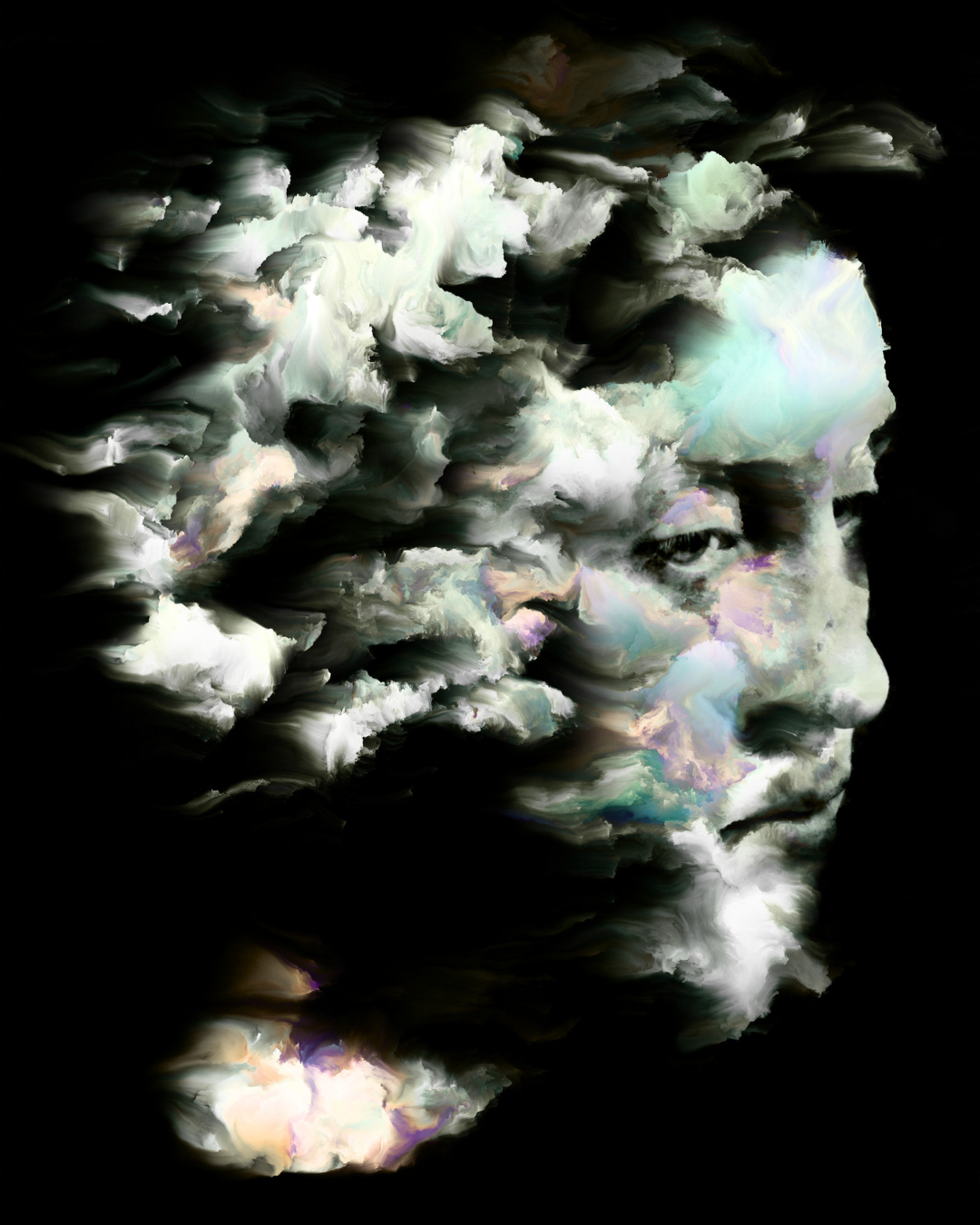
Hiraki Sawa’s Souvenir IV (2012) is a silent, black-and-white single-channel video set in an empty domestic room (this video has music on it, which I actually really like and seems to suit the mood for me but worth noting this was not the original as far as I can find out……).
It comes from a period of Sawa’s practice shaped by a friend’s sudden memory loss, in which rooms become mental landscapes where recollections linger like objects left behind (James Cohan, n.d.; Ota Fine Arts, n.d.).
Badger (2013) describes Sawa as an artist who “constructs beautiful video dreamscapes from pedestrian subjects” (p. 27), and here a plain room of patterned wallpaper, bare floorboards and a bright window becomes the site of a haunting. The title carries both meanings of souvenir: a keepsake we carry away, and the French word for ‘memory’ itself – it is a living distortion of may be how we perceive time, memory and feels exactly like my own burnout.
Writing on hauntology, Badger (2013) suggests that “the present perpetually contains within it ghosts of the past” (p. 32). Sawa’s figure embodies this, present several times over and thinner each time, each moment still carrying the ones before it. I
As I said, this is how my present state feels. Raymaker et al. (2020) define Autistic burnout as chronic exhaustion, loss of skills and reduced tolerance to stimuli, arising from the cumulative load of just trying to live in a world that values neuronormativity.
Buckle et al. (2021) describe Autistic inertia as difficulty starting, stopping or changing course, and the figure seems caught mid-movement, leaving the wall without reaching the window, moving but not getting anywhere. At the moment, my days feel broken, looping, and each pass leaves a fainter version of me behind. I seem to be struggling more and more with work and I know I need a rest – this is all very familiar, so no need to worry about me, I have support and am ok. – was just inspired by this when I saw it this morning!
The longer I look at this video, though, the more the fragments change their meaning. Deleuze and Guattari (1987) open A Thousand Plateaus by observing that “since each of us was several, there was already quite a crowd” (p. 3).
Sawa’s figure is a bit like a small crowd in one person, in burnout, fragmentation can feel like being scattered across too many demands, and yet the same image can be held as plurality, where every trace is a self that was truly there and still real.
David Gray-Hammond: NeuroHub Community Ltd (2023) writes of the chaotic self, an AuDHD Schizophrenic self that grows rhizomatically and resists being shaped and restricted into a single tidy way of being. The distortion in Sawa’s image feels like it fits this chaotic self. The streaks of light record movement that a single, more in-focus frame would erase. Nick Walker Sensei’s neuroqueer theory invites exactly this willingness to let divergence from the expected form become generative, in my interpretation, to maybe open up more possibilities, to see what emerges from the liminal stuck states of burnout and the creation of new ourselves (Walker, 2021).
I have written before about being neuro-holographic a concept discussed with Dawn Prince-Hughes and CASY Physics , and Sawa’s figure seems to portray that. For me, being neuro-holographic describes a felt understanding more than a cognitive or intellectual resonance of how we are woven into one another and into the world, a state in which there is no division between us and our environment and wider comos – being intensely attunded to the fact we are all made of star stuff and multiple.
It is bound up with feeling like my sensory system is so wide open, creating heightened sensitivity and hyper empathy that leaves me exhausted and feeling trapped between worlds. I have also described that the word neuroholographic can perhaps only be felt or experienced in a luminescent, undefinable iridescent way, and the silvery threads trailing from Sawa’s figure come close to that luminescence. A broken hologram keeps an impression of the whole picture in each of its pieces. Seen neuro-holographically, each thinned copy of the figure still carries all of her, blurred and present, bleeding into the patterned wall and the light beyond it. Fragmentation becomes a way of being distributed across place, space, and time, distorted, still there but stuck.
Liminality holds these ideas together. Turner (1967) described liminal beings as “betwixt and between” (p. 93), suspended on a threshold after one form has been left and before the next is taken. In my previous blogs about neuroqueering liminal spaces I have wrtten about how living in the in-between, at the edges of social groups, has shaped my Autistic life, but also how liminal spaces can become thresholds where silenced parts of the bodymind can return transformed.
Burnout is often what that silencing costs us. Gray-Hammond (2024) similarly reclaims the liminal as a space of queer potential, somewhere possibility gathers precisely because nothing has settled. Sawa’s figure hovers on such a threshold, between wall and window, memory and presence, departure and arrival.
Autistic Burnout keeps many of us in that doorway far longer than we would choose. Held neuro-holographically, the threshold can also become a place of queering, where a self exists in several states at once, unfinished and whole, waiting for what grows next.
A souvenir, the title of this piece, is something kept from a place we have left. Burnout may ask for that kind of tenderness toward the selves we pass through: the tired ones, the looping ones, the ones that flicker at the edge of the frame like in this video. Perhaps we can keep them as Sawa keeps his figure, carefully and without hurry, holding them gently while we wait to feel solid again, reclaim our ways of resting – dive into our special interests and passions, the things that bring us joy and glimmers – for me writing about this is therapeutic. It helps – it may not be how people see rest and recovery but it is what I need and may be some others can relate to this too – in parts …..
References
Badger, D. I. (2013). Hauntings: A nodalist study [Master’s thesis, University of Huddersfield]. University of Huddersfield Repository. http://eprints.hud.ac.uk/id/eprint/23291/
Buckle, K. L., Leadbitter, K., Poliakoff, E., & Gowen, E. (2021). “No way out except from external intervention”: First-hand accounts of autistic inertia. Frontiers in Psychology, 12, Article 631596. https://doi.org/10.3389/fpsyg.2021.631596
Deleuze, G., & Guattari, F. (1987). A thousand plateaus: Capitalism and schizophrenia (B. Massumi, Trans.). University of Minnesota Press. (Original work published 1980)
Raymaker, D. M., Teo, A. R., Steckler, N. A., Lentz, B., Scharer, M., Delos Santos, A., Kapp, S. K., Hunter, M., Joyce, A., & Nicolaidis, C. (2020). “Having all of your internal resources exhausted beyond measure and being left with no clean-up crew”: Defining autistic burnout. Autism in Adulthood, 2(2), 132–143. https://doi.org/10.1089/aut.2019.0079
Exploring threshold consciousness, temporal ecology, and the porous boundaries between dreaming and waking through a neuroqueer lens.
Hypnagogic and hypnopompic experiences — vivid sensory and emotional states that occur at the boundaries of sleep — they may include visual, tactile and auditory hallucinations and are often described within biomedical models as temporary disruptions in wake-sleep and sleep–wake states. However, for many Autistic and neurodivergent people, particularly during periods of burnout, trauma-related stress, and prolonged systemic overload, these experiences may become more frequent and intense and deeply destabilising. This is something I personally experience: the deeper into burnout I move, the more the boundary between dreaming and waking can blur.
This article introduces the idea of neurodivergent temporal ecology as a way to help theorise this and explore how dream persistence between wake and sleep states and threshold consciousness may emerge from interactions among monotropic attention, neurodivergent temporal rhythms, trauma physiology, and the sensory and social environments we inhabit. Drawing on neuroqueer theory (Walker, 2021), philosophical accounts of temporality (Deleuze, 1994; Manning, 2013), Autistic burnout research (Raymaker et al., 2020), and sleep science (Ohayon et al., 1996; Mahowald & Schenck, 2005), this piece reframes hypnagogic and hypnopompic states as relational experiences rather than purely neurological anomalies.
Hypnopompic and hypnagogic experiences in Autistic burnout are not merely sleep disturbances. They can be expressions of neurodivergent temporal ecology — moments when attentional, sensory, trauma-related, and environmental pressures destabilise normative boundaries between dreaming and waking and where our flow states between wake and sleep merge.
By drawing on my lived experience, I am suggesting that these different sleep states and versions of reality can challenge assumptions that consciousness should always be linear, stable, and organised. I am inviting people to rethink how sleep, perception, rest and wellbeing are understood, and to consider how environments might be reshaped to support diverse rhythms of awareness and reality.
Living at the porous edge of waking
For some Autistic and neurodivergent people, sleep may not always feel like a clear shift from wakefulness into rest or from rest into wakefulness. Instead, it can feel like temporarily living in a liminal threshold, a shifting terrain where dreams, memories, sensations, and waking perception overlap. This can be confusing, disorienting, and at times frightening.
During burnout or crisis, when sensory, emotional, and social demands exceed available energy, if you are anything like me, these threshold experiences may intensify. You might wake and still perceive dream imagery in your room, perhaps see spiders moving across the wall, shadowy figures in the corner that reach out to touch you, or hear voices that seem present and very real. These experiences can feel entirely real in the moment and may be accompanied by sleep paralysis and a sense of being trapped between worlds. Reaching out to touch the spiders, only to find your hand moving through empty air as the image fades, it can be deeply unsettling. Gradually, environmental and sensory cues become clearer, the dream loosens its hold, and waking awareness returns, often leaving emotional residue and exhaustion before the day has even begun.
Sleep research refers to these as hypnopompic experiences, which occur when REM dream processes persist briefly into waking consciousness (Ohayon et al., 1996). Similar experiences while falling asleep are known as hypnagogic states and are associated with narcolepsy, stress, disrupted sleep, and other neurological vulnerabilities (Mahowald & Schenck, 2005).
From a neurodivergent temporal ecological perspective, these threshold states are not simply individual neurological problems; they may reflect complex relationships among attention, trauma, sensory environments, and cultural expectations about time, productivity, and even how our rest and sleep function. Learning to accept this has made it less frightening for me, and accept it as something that is just a part of my life between worlds that intensify the more stressed or burnt out I am, although this may not be everyone’s experience.
Neuroqueer time and threshold consciousness
Neuroqueer theory challenges deficit-based interpretations of neurological differences by questioning assumptions that perception must always be stable, rational, and temporally linear (Walker, 2021). Expanding on this, I am suggesting that diverse experiences of consciousness may represent meaningful responses to lived conditions rather than signs of dysfunction.
Hypnagogic and hypnopompic states are deeply liminal. For those of us already marginalised and living in the liminal spaces, it may be no surprise that our waking and dream worlds reflect this too?!
Hypnagogic and hypnopompic experiences occur before our conscious awareness has fully stabilised into the structured clarity expected in waking life. Meaning is often felt before it can be explained. I often feel suspended between dreaming and waking, between my inner imagery and the external reality. It can be scary and confusing, which is why I’ve been thinking about this a bit more and trying to work out why it may be happening.
Philosophers such as Deleuze and Guattari (1994) describe time as layered and shaped by intensity rather than simply progressing forward. Manning (2013) writes about how experience is something felt before it is cognitively organised. Sleep threshold states make these ideas tangible, revealing consciousness as fluid and relational, shaped through ongoing interactions between body, memory, the environments we live within and interact with, and social rhythms based on different intersectional identities and experiences.
Spiral time, rhizomatic memory, and dream flow
Many neurodivergent people experience memory and time in non-linear ways. Past events may re-emerge as sensory atmospheres or emotional presences, creating a sense that the past remains active within the present. This can feel like living within a spiral of time rather than along a straight timeline.
Within such temporal patterns, dreams may continue to influence waking perception. Recurring hypnagogic or hypnopompic experiences can involve familiar dream environments, emotional connections with dream figures, or confusion about whether an event occurred in a dream or in waking life. For me, these experiences often intensify during burnout, when attentional flexibility decreases and emotional processing becomes more difficult (Raymaker et al., 2020). It is like my mind is trying to anchor itself and regain a coherent flow.
Dream persistence that overlaps with reality feels like it is perhaps functioning as a survival mode. When the nervous system is overwhelmed, continuing internal processing during sleep it is may be an attempt to conserve energy or make sense of distressing experiences. Although this can result in anxiety or disorientation, it also reflects an adaptive effort to maintain coherence and flow.
I have found it helpful to think about Deleuze and Guattari’s concept of the rhizome (1994), which offers a way of understanding experience as emerging through non-linear connections rather than clear beginnings or endings. Autistic perception often seems to move in this relational way, linking memories, sensory impressions from waking life, and dream imagery into shifting constellations of meaning and attention tunnels. At times, it can feel as though I enter or leave dreams at unexpected points — already somewhere in the middle of experience — rather than transitioning neatly from one state of consciousness to another.
Monotropism, inertia, and attentional depth
Monotropism theory suggests that Autistic and ADHD attention often involves deep engagement within a limited number of attentional channels (Murray et al., 2005). This can support creativity and intense focus but I think for some, myself included, it may also make transitions, including waking from sleep more effortful.
During burnout, reduced flexibility in attention can combine with the experience of monotropic split, intensifying the persistence of dream imagery across sleep–wake thresholds. Monotropic split refers to the way attention is divided between competing demands, where part of the bodymind remains deeply immersed in an internal focus while another part attempts to respond to external expectations (Adkin, 2022). This can create a feeling of cognitive and sensory stretching or fragmentation, particularly when environmental pressures require rapid shifts in attention and we are expected to bounce out bed and go to work or begin parenting duties!
In such states, the nervous system may struggle to complete the transition between dreaming and waking. Our attention tunnels, the deeply focused channels through which monotropic cognition often operates, may begin to blur across states of consciousness. A person may feel suspended, as if floating between inner imagery and outer reality, experiencing a slowed, blurry awareness where perception has not yet fully stabilised. Dream environments, emotional tones, or sensory impressions can linger as waking demands begin to intrude into our attention tunnel and pull us back into reality.
Research on Autistic inertia may further help to explain this process. Autistic inertia describes difficulties initiating, stopping, or switching between activities or cognitive states (Buckle et al., 2021). When combined with ADHD-related fluctuations in attentional regulation, including oscillations between hyperfocus and exhaustion, these dynamics can contribute to what might be described as temporal momentum, a continuation of cognitive immersion beyond the usual boundaries of sleep and waking (Heasman et al., 2024).
Dream-like flow states between conscious and unconscious may not be just sleep disturbances but may be understood as an interaction among monotropic attentional depth, inertia-related challenges in shifting states, and the physiological effects of burnout. As our attentional energy resources diminish and re-accolate and distribute themselves, the bodymind may remain engaged in internal processing, trying to organise its patterns and regain a flow state that makes more sense as the body begins to wake or go to sleep. This can result in an almost layered experience of perception, uncertainty about what is real, and needs a gradual re-orientation to the external world rather than an abrupt transition. It is why waking up can be sooooo hard!
Understanding hypnagogic and hypnopompic experiences through the lens of monotropic split and Autistic interia may offer a more nuanced account of the threshold consciousness for neurodivergent people. It highlights how attentional styles, environmental demands, and states of exhaustion interact to shape the ways neurodivergent people move and flow between dreaming and waking, immersion and return.
Burnout, trauma, and ecological strain
Autistic burnout is increasingly recognised as a consequence of prolonged stress, masking, and environmental mismatch (Raymaker et al., 2020). Trauma can fragment sleep cycles and intensify emotional dream content (Mahowald & Schenck, 2005). Sleep deprivation has also been linked to perceptual disturbances and cognitive dysregulation (Ohayon et al., 1996).
Frameworks such as Gray-Hammond’s ecosystemic model (2026) highlight how burnout, altered perception, and sleep disruption or changes interact with environmental pressures. These perspectives suggest that psychiatry can sometimes individualise systemic strain, locating distress solely within the person rather than addressing the conditions that contribute to it.
Altered states of consciousness may therefore be better understood as ecological signals, indications that our nervous systems are adapting to environments shaped by expectations of neuronormativity, constant productivity (even in sleep and the ways we sleep and rest!) and sensory tolerance. Productivity-focused time demands can place particular strain on neurodivergent people whose rhythms of engagement, ways of resting and recovery differ from dominant norms, leading us to burnout and more unusual sleep patterns.
Ethodiversity and relational consciousness
Ecological neurodiversity introduces the concept of ethodiversity, recognising that multiple cognitive, sensory, and relational styles coexist within shared environments (Tarragnat, 2025). From a this perspective, consciousness is not simply produced within the individual brain but emerges through ongoing assemblages of body, memory, environment, culture, and time. These relational conditions shape how attention moves, how energy is resourced, and how safety is experienced.
Building on the idea of monotropic split, burnout can be understood as a state in which these ecological relationships become strained or fragmented. When attentional demands exceed available capacity, the nervous system may remain partially engaged in internal processing even during periods of rest. Hypnagogic and hypnopompic experiences can therefore be seen as threshold moments in which perception is reorganising across disrupted ecological conditions.
Sleep is More-Than biological restoration; it can also be a site of cognitive and sensory integration, where experiences are slowly being sorted, re-patterned, and re-assembled in an attempt to regain coherence and flow. Dream imagery may persist into waking awareness because the bodymind may still be trying to regain a safe flow state before waking. More time in nature and engaging in stimming and monotonous flow states with what interests you and what you are passionate about may help rebalance this…….
The gradual fading of dream imagery on waking may reflect a process of ecological realignment, a slow recalibration of our internal temporal rhythms. While these experiences may signal burnout and misattunement with surrounding ecosystems, they may also indicate an adaptive move toward recovery. For myself, being aware of my hypnopompic and hypnogogic states is a signal that I need deep rest, reduced overload, and environments that better support my own neurodivergent rhythms of monotropic attention and engagement. I need more time with my passions and interests, more time stimming and meeting my sensory needs in the dark, under my weighted blanket.
Dream Thresholds, Temporal Diversity, and Mingling with the Universe
Hypnagogic and hypnopompic experiences remind us that consciousness is not always clear-cut or neatly divided into sleeping and waking. There is no ‘right way’ to sleep, to dream or to wake up!
For many Autistic and neurodivergent people, especially during burnout, these threshold states can become intense, immersive, and emotionally charged. Dreams may seem to linger in the room as we wake. Sensations and images can feel real for a few moments before gradually fading. These experiences can be frightening, confusing, and exhausting. At the same time, they may also reveal something important about how neurodivergent minds move through time and perception and why dream worlds and reality may blur at times – perhaps even beyond hypnopompic and hypnagogic experiences and into the wider ways of daydreaming, immersing in fantasy and role play.
Recognising temporal diversity as part of neurodiversity means understanding that different nervous systems have different rhythms of rest, monotropic attention, and recovery. Productivity-driven expectations about how quickly we should fall asleep, wake up, or “return to normal” can place additional strain on already overwhelmed systems. When dream imagery continues into waking life — or when vivid sensory experiences arise as we fall asleep — it may be a signal that our bodymind is trying to process, integrate, and make sense of overwhelming experiences.
From a neuroqueer and ecological perspective, altered states of awareness can be understood as relational signals. They may point to our current environment as too demanding, to unsafe sensory landscapes, or to social pressures that require constant adaptation and masking. In this sense, hypnopompic and hypnogogic experiences could be seen as part of the nervous system’s survival response, continuing its work of sorting and patterning experience when there has been little time to rest while awake.
In my own writing on Autistic perception, I have described this as “mingling with the universe.” Sometimes neurodivergent awareness feels deeply interconnected with surroundings — sensory detail, memory, emotion, and environment all blending together in ways that are difficult to separate. Hypnagogic and hypnopompic states can intensify this feeling. Inner worlds and outer realities briefly overlap, reminding us that consciousness is not fixed or isolated but shaped through ongoing relationships with the spaces and systems we inhabit.
Understanding these experiences through a lens of Neurodivergent Temporal Ecology challenges narrow psychiatric interpretations that focus only on individual symptoms. Burnout, sleep disruption and differences, and perceptual instability often emerge within wider contexts — including sensory-hostile environments, pressures to conform to linear productivity time, and limited opportunities for genuine rest or recovery. Supporting neurodivergent wellbeing, therefore, requires more than medical responses. It calls for cultural and structural change: creating environments that recognise and support different rhythms of living, thinking, and sleeping.
Hypnagogic and hypnopompic experiences can be unsettling. Yet they can also offer insight into how neurodivergent minds adapt, survive, and find meaning. When dreams continue into waking life or merge as we fall asleep, it may be a sign that we have reached the limits of our energy, but it can also be an invitation to slow down, seek safety, and restore connection with ourselves and our environments.
Temporal Diversity
Recognising temporal diversity expands how we can understand neurodivergent sleep, mental health, rest, and care. It encourages us to move away from rigid ideas about what consciousness “should” feel like and toward more compassionate, flexible ways of supporting neurodivergent lives.
By understanding that our monotropic perception is always moving in relationship with sensory landscapes, memories, emotions, and social rhythms, we can begin to see reality itself as something fluid and negotiated rather than fixed. Sleep and waking become liminal crossings rather than fixed boundaries.
Hypnagogic and hypnopompic experiences are not just disruptions to sleep or sleep disorders, but perhaps signals about how well our environments are really supporting and making sense to us. I see them as part of my monotropic flow state that enables me to transition between waking and dream worlds – where both worlds are equally important. When we learn to listen to these signals, we can create the possibility of lives where different ways of sensing time and consciousness are recognised as meaningful and not pathologised. There is very little discussion about hypnopompic and hypnagogic experiences; it is still very much shrouded in the same stigma as psychotic hallucinations, and I have found people look wary when I talk about this.
Recognising and sharing stories about these experiences may help neurodivergent people feel less pressure to force themselves back into fast, “normal” rhythms of waking and productivity. Instead, moving between dreaming and waking, focus and rest, can be understood as part of the natural diversity of human perception. Allowing time for slower realignment, through rest, sensory grounding, and meaningful flow states can support the gradual return of energy and clarity.
By learning to listen to our own rhythms and to the flow states that move between dreaming and reality, sleep and wakefulness, rather than constantly resisting or trying to cure these experiences, the meanings and re-orientation of flow within liminal dream spaces can begin to unfold more gently. Growing awareness and understanding of neurodivergent patterns of monotropic attention, rest, and recovery is part of an ongoing process of re-energising, re-orienting, and discovering more sustainable ways of being so we begin to re-world our experiences, not only in waking life, but also within our dream worlds and the shifting spaces in-between.
Buckle, K. L., Leadbitter, K., Poliakoff, E., & Gowen, E. (2021). “No way out except from external intervention”: First-hand accounts of autistic inertia. Frontiers in Psychology, 12, 631596. https://doi.org/10.3389/fpsyg.2021.631596
Deleuze, G. (1994). Difference and repetition. Columbia University Press.
Deleuze, G., & Guattari, F. (2013). A thousand plateaus: Capitalism and schizophrenia. Bloomsbury Academic.
Heasman, B., Williams, G., Charura, D., Hamilton, L. G., Milton, D., & Murray, F. (2024). Towards autistic flow theory: A non-pathologising conceptual approach. Journal for the Theory of Social Behaviour, 54(4), 469–497. https://doi.org/10.1111/jtsb.12427
Mahowald, M. W., & Schenck, C. H. (2005). Insights from studying human sleep disorders. Nature, 437(7063), 1279–1285. https://doi.org/10.1038/nature04287
Manning, E. (2013). Always more than one: Individuation’s dance. Duke University Press.
Murray, D., Lesser, M., & Lawson, W. (2005). Attention, monotropism and the diagnostic criteria for autism. Autism, 9(2), 139–156. https://pubmed.ncbi.nlm.nih.gov/15857859/
Ohayon, M. M., Priest, R. G., Caulet, M., & Guilleminault, C. (1996). Hypnagogic and hypnopompic hallucinations: Pathological phenomena? British Journal of Psychiatry, 169(4), 459–467. https://pubmed.ncbi.nlm.nih.gov/8894197/
Raymaker, D. M., Teo, A. R., Steckler, N. A., Lentz, B., Scharer, M., Delos Santos, A., Kapp, S. K., Hunter, M., Joyce, A., & Nicolaidis, C. (2020). “Having all of your internal resources exhausted beyond measure and being left with no clean-up crew”: Defining autistic burnout. Autism in Adulthood, 2(2), 132–143. https://doi.org/10.1089/aut.2019.0079
Walker, N. (2021). Neuroqueer heresies: Notes on the neurodiversity paradigm, autistic empowerment, and postnormal possibilities. Autonomous Press.
Burnout can feel like the ground of our very experience and existence has shifted or collapsed. Pathways of attention that once felt sustaining become blocked or fragile. Environments that were manageable begin to overwhelm. Relationships may require more energy than feels possible.
Recovery is not about returning to who we were before burnout. For many Autistic and ADHD people, it becomes a process of re-assembling life differently, rebuilding the ecological conditions and relationships that allow our attention, identity and belonging to reform into a new shape.
Monotropism and the return of attentional flow
Monotropism reminds us that deep attention is not just about hyper-focus and special interests. It is a way of organising our entire bodyminds and ways we experience the world; structuring time, anchoring identity and supporting regulation.
At some point during a period of burnout, you may find that you can slowly reconnect with interests and little things that bring glimmers of joy to your day. Reading about a long-held fascination for short periods, returning to creative or sensory activities without pressure to produce anything. Walking familiar routes that provide predictability, stim watching and stim listening to things that help you get into a flow state. Sorting, collecting, or organising objects and sensory tools may all help restore coherence and get the flow flowing again.
These acts may appear small from the outside, yet they allow what may feel like broken and fragmented experiences to gather again.
As attentional flow returns, you may notice the fog slowly shifting, slightly clearer thinking, reduced anxiety, renewed motivation, and greater emotional and sensory stability. Recovery is not about forcing productivity, but about restoring ecological continuity and flow of attention.
Rhizomatic becoming after burnout
Deleuze and Guattari describe the rhizome as a model of growth without a single origin or direction.
I see my own neurodivergent life unfold in this way, branching through interests, looping across time, and forming connections that do not follow normative developmental pathways or socially expected ways of being.
Burnout can disrupt these rhizomatic processes, blocking the flows that sustain becoming. Recovery involves reopening movement and flow. It may mean allowing new pathways to emerge rather than attempting to restore previous ones.
In this sense, recovery is not a return. It is a continuation of becoming, but under different ecological conditions.
Mycelial care and interdependence
Recovery rarely happens in isolation. Disability justice perspectives emphasise that wellbeing emerges through interdependence, not independence.
Neurodivergent communities often form mycelial networks of support, distributed systems of care that include practical help, shared knowledge, advocacy and emotional attunement.
These networks reduce the pressure to mask or perform. They create environments where different rhythms of participation and communication are possible and where our energy levels are supported rather than judged.
Through such relational infrastructures, survival becomes collective and more sustainable.
Relational fields and minor gestures
Erin Manning’s work helps us understand recovery as a shift within relational fields, the dynamic interplay of body, environment, affect and movement.
Large changes are not always necessary to begin healing. Recovery often unfolds through minor gestures:
protecting time for deep focus and stimming
reducing sensory demands and engaging in sensory flow
slowing daily rhythms
Connecting with trusted people who really ‘get you’
creating spaces for rest and other forms of communication and engagement
These small adjustments can reopen possibilities for movement and engagement.
Intra-action and ecological repair
From a posthuman perspective, experience is never purely individual. Karen Barad describes life as emerging through intra-action, the entanglement of bodies, environments, technologies and social structures.
Burnout signals that these entanglements have become unsustainable. Recovery therefore involves ecological repair: reshaping environments, renegotiating expectations and rebuilding trust between body and world.
This might involve sensory redesign, flexible participation, or alternative ways of organising work and education.
Re-assembly and re-worlding
As attentional pathways reconnect and care networks strengthen, our identity itself may shift and begin to reform.
Values may move toward sustainability, mutual aid and sensory safety. Participation in education or work may look different from before. Recovery from burnout is not about becoming who we once were. It is about becoming who we can be within more supportive ecologies.
In this sense, burnout can function as both rupture and opening within the liminal spaces where we live. It reveals the limits of existing systems while inviting the creation of new ones.
Re-assembly, is part of the broader work of re-worlding, cultivating neuroqueer environments in which diverse ways of sensing, thinking and relating can flourish.
Rhizomes remind us that there are many pathways of becoming. Mycelial networks remind us that no pathway is walked alone. Recovery begins where attention, care and possibility meet so we can re-world together and thrive in our own ways.
Find out more:
Chapman, R. (2023). Empire of normality: Neurodiversity and Capitalism. Pluto Press (UK).
Deleuze, G., & Guattari, F. (1987). A thousand plateaus: Capitalism and schizophrenia. University of Minnesota Press.
Deligny, F. (2013). The Arachnean and other texts. Univocal.
In my previous blog, we explored how monotropic attention can create deep rhizomatic pathways of learning and belonging, and how mycelial networks of care help sustain neurodivergent lives.
But what happens when these pathways become blocked? What happens when the networks that once supported us begin to strain or collapse? Or we don’t have the support networks there to begin with?
Many Autistic people describe burnout not only as exhaustion, but as a more fundamental disruption, a loss of flow, safety, and connection, a seismic shift that transforms our entire way of being.
Burnout is not simply “doing too much.” It can feel like the ground of our known experience itself has shifted and fallen through the cracks.
Burnout as a fracture in relational life
Burnout often unfolds gradually, and the buildup may go unnoticed for some of us; we may suddenly find ourselves in the depths, drowning. Attention may become harder to sustain. Sensory tolerance may narrow, social interaction and communication may feel increasingly effortful. Activities that once brought joy may feel distant or even unreachable.
The body may signal distress through meltdowns, shutdowns, pain, disruptions in sleep and eating patterns, or even difficulty initiating movement beyond wanting to curl up under a weight blanket in bed.
Time can feel slowed, fragmented, or just utterly overwhelming and confusing as it isn’t lining up with the neuronormative expectations of the world around us. These experiences are not isolated symptoms. They are signs that the flow between body, attention, our relationships, and the wider environment is under strain.
Rather than viewing burnout as a personal deficit, it can be understood as a fracture within a wider relational ecology.
When environments demand constant masking, rapid task-switching, or sensory endurance, the deep attentional flows that support our ability to engage in life can begin to fracture.
The disruption of monotropic flow
For many Autistic/ ADHD people, interests are more than hobbies. They are passions that provide structure, regulation, identity, and meaning. Burnout may involve losing access to these sustaining pathways and flow states.
A person who once found comfort in researching Tudor history, coding, drawing, gaming, building collections, or walking familiar woodland routes may suddenly feel unable to engage. Attention slips away, motivation may feel brittle, and even small tasks can require more effort and capacity than we actually have available.
This disruption can feel frightening and disorientating. Without stable attentional anchors, the world may become unpredictable and difficult to navigate. Burnout is therefore not only physical or emotional fatigue. It can be experienced as a collapse in the ecology of attention. We need to re-map and re-world our lives to navigate through burnout.
Social and sensory worlds under pressure
Burnout is socio-political and also emerges within overwhelming sensory contexts of the very spaces we need to live in to exist – our homes, education and work place settings and even in healthcare, the very places that are meant to understand and support us.
Open-plan noisy offices, bright, busy classrooms, bureaucratic systems, and performance-driven cultures can create chronic friction with our neurdivergent monotropic flow states. Over time, the effort required to adapt may exceed our available energy.
Masking, consciously or unconsciously adjusting behaviour and communication to meet normative expectations, can intensify this strain.
The cost is often cumulative and can run deep.
Many people describe reaching a point where:
communication becomes difficult
noise, scents, lights, certain textures and even previously safe food may feel physically painful or overwhelming
decision-making may slow down in a fog
everyday routines and exectutive functioning tasks may feel too overwhelming
trust in our environments and relationships with others can begin to diminish
These are not signs of personal weakness. They are signals that the relational conditions and environments supporting us have become unsustainable. Things need to change for us to survive.
Neuroqueer politics of burnout
Understanding Autistic or neurodivergent burnout in ecological terms shifts responsibility away from individuals and toward systems.
Speed, productivity, and independence are often treated as neutral values. In reality, they reflect specific cultural priorities that privilege certain cognitive styles while marginalising others.
Neuroqueer perspectives invite us to question these assumptions. They ask:
Who defines what counts as functioning?
Who has the power to say what rest should look like?
Whose attentional rhythms are recognised as valid?
What forms of participation and engagement with the world are made possible or impossible?
Autistic burnout can be read as both a social, political, and personal phenomenon. It exposes the limits of environments organised around normativity.
Recognising this does not remove the pain of burnout, but it may help to reduce shame and open space for collective change.
Toward ecological re-assembly
If burnout represents fracture, our recovery is not just restoration of previous capacity; it is often a process of re-assembling life differently.
This may begin with small shifts:
lowering demands
re-establishing sensory safety
reconnecting with trusted people
returning gently to meaningful interests or finding new glimmer of joy
allowing time to move, communicate and experience the world at a slower pace
These changes can feel minor, yet they may help re-imagine and re-build the conditions and environments that allow attention and participation to re-emerge.
Recovery is rarely linear. It unfolds through experimentation, adaptation, and relational support.
In this sense, burnout can become a liminal threshold, not only of loss, but of potential transformation to new ways of being and relating.