More Realms · Autistic Realms
Helen Edgar
July 2026
“It is learning how to take our differences and make them strengths.”
— Audre Lorde (1984, p. 112), The Master’s Tools Will Never Dismantle the Master’s House
In Old English, wyrd meant fate, but not necessarily the fixed, predetermined fate the word often suggests today. It is formed from the verb weorþan, meaning “to come to pass” or “to become” (Stone, 2022). Fate was imagined as something unfolding, something still happening, still being made. The same Germanic root that gives us wyrd also gives us weorþ, the ancestor of modern English “worth.” The words share a common origin and a connection between becoming and value that has echoed throughout the history of the word ‘weird’.
In Norse tradition, storytellers kept this idea alive through the image of a well beneath the World Tree, where the story tells us about the three keepers of fate — Urð, Verðandi, and Skuld — who were said to draw water from the well each day and pour it over the tree’s roots to keep it from decay, while also carving staves that set the courses of gods’ and mortals’ lives. Popular retellings often describe them as representing the past, present, and future, but their names suggest something more nuanced than a simple division of time to me.
Verðandi comes from verða, “to happen” or “to become,” the present participle of the same verb from which wyrd ultimately derives. Urð refers to “that which has come to pass,” while Skuld means “that which is owed” or “that which is due” (Stone, 2022; 1066 A Medieval Mosaic, n.d.). Together, they don’t just describe a timeline but an unfolding of what has become, what is becoming, and what follows from the lives we have lived. I read this as suggesting that being wyrd is about a life continually taking shape through living, changing, and becoming, always in process, never settled, always the potential to be ‘weird’ and deviate from norms.
The word wyrd remained in English over the years, and by the time Shakespeare wrote Macbeth, drawing on Holinshed’s Chronicles (1587), the Keepers of Fate had become the three Weird Sisters, whom Holinshed himself called the “goddesses of destinie” (Wikipedia, 2026b). Interestingly, the First Folio never actually uses the word “weird”, it uses the words “weyward” or “weyard” throughout. Whether that’s a printer’s slip for “weird,” or Shakespeare’s own choice of a different word “wayward,” meaning self-willed or contrary, is still debated by scholars. The “weird” we know today was fixed in place by an eighteenth-century editor, Lewis Theobald, in 1733, drawing the play back toward Holinshed’s own language (Bek-Pedersen, 2022).
From there, weird gradually shifted from its older meaning of fate and destiny towards the uncanny, the supernatural, and eventually the everyday sense of “odd” or “strange” that many associate with the word weird today – those of us who don’t quite fit in. However, that familiar meaning of the word weird only became widespread in the early nineteenth century (Wikipedia, 2026a). For most of its history, weird referred not to eccentricity but to fate, a meaning rooted in the older verb “to become.”
Weird Pride marks something many of us experience as both identity and resistance: a refusal to apologise for existing outside narrow ideas of normality. Neurodivergent, LGBTQIA+ and disabled people are often labelled weird simply because we differ from what society expects.
Weird Pride Day, held each year on 4 March, seeks to reclaim that word, to name whatever others have decided is “weird” about us and refuse to treat it as something shameful. I am writing this today in July as everyday is a Weird Pride day!
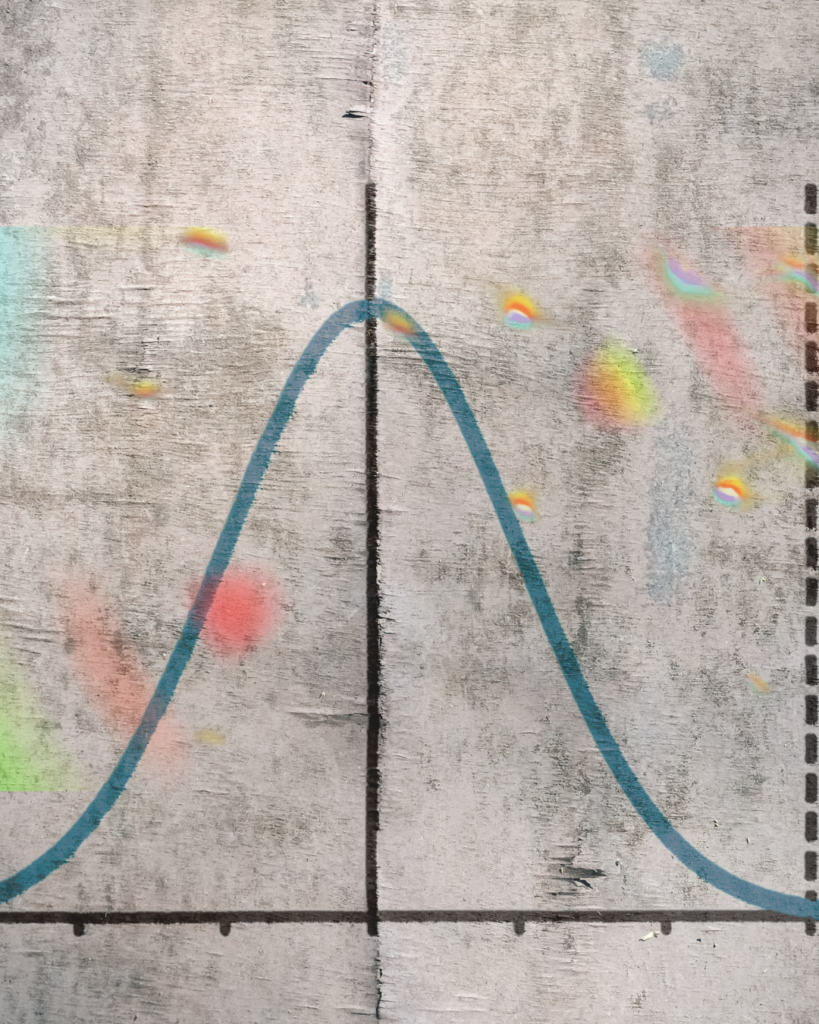
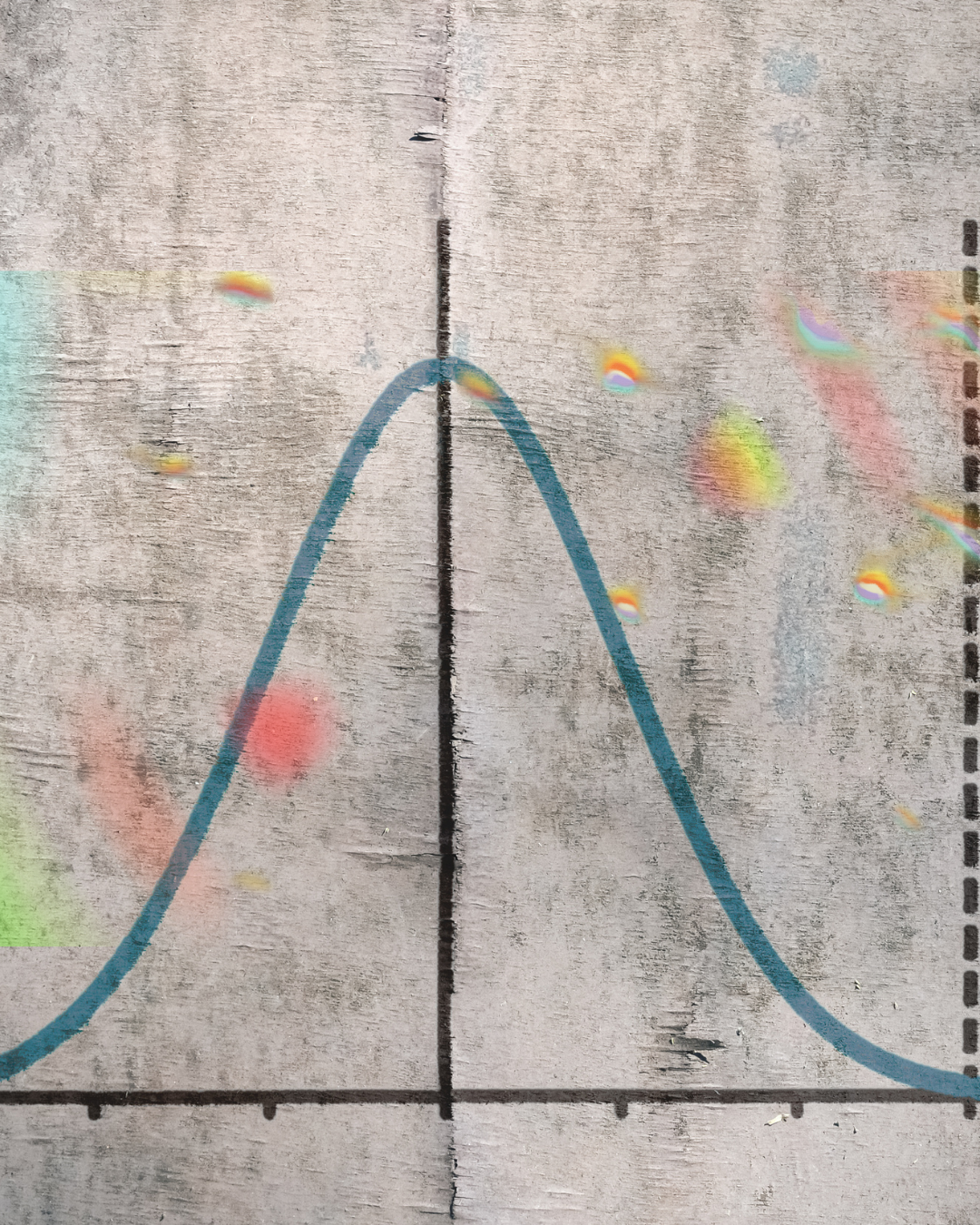
Which brings us to the word “normal” itself, because “normal,” from what I have read so far, seems to be a much younger, much less innocent idea than that of wyrd. During the nineteenth century, statisticians such as Adolphe Quetelet, and later Francis Galton, applied the bell curve (see image above) to human populations as a way of describing natural variation in physical traits like height and weight, and, later, intelligence and ability. What began as a way of describing variation gradually became a way of judging people, with the statistical average recast as the ideal and differences from it increasingly understood as deviations, not normal.
This interpretive leap was a historical choice, made by particular people in a particular moment, and it continues to shape our lives. Robert Chapman’s Empire of Normality (2023) traces this history beyond statistics alone, arguing that the modern idea of the “normal” mind emerged within industrial capitalism, where human bodies and minds were measured against standards of productivity. Neurodivergent liberation, therefore, has to navigate not only prejudice but the economic systems that produced those standards in the first place (Chapman, 2023). What stands out to me is that the origins of weirdness and weird stretch back well over a thousand years, while the idea of “normal,” which so often defines who belongs in society today, is barely two centuries old. Somewhere along the way, worth got redefined as fitting in, while being different stopped being something we valued at all.
Audre Lorde wrote about survival among women, specifically, women whose race, sexuality, and class had been erased by a feminist movement that claimed to speak for all of us (Lorde, 1984). She wasn’t writing about neurology or disability, but I think her work is relevant here. All differences in culture, race, gender, neurology, disability, or any other way of being were never the problem in our society. The problem has always been treating some differences as if they mattered less than others. Belonging begins when our differences are recognised, valued, and welcomed, not despite them; differences are what belonging is built from.
For people who have spent a lifetime being told their weirdness is the problem, this is more than semantics; it is about valuing people as humans, supporting their needs, accepting and showing an interest in their weird ways of being, valuing the weirdness and creativity people may have rather than trying to fix or other them further.
Long before weird came to mean “doesn’t fit,” it was connected to wyrd: becoming, unfolding, a life still being woven. Weirdness, in its oldest sense, is not about being broken or being someone strange who doesn’t fit into society. It is about being curious, creative, unfinished, still growing, still becoming, thinking and acting in ways that see the world a little differently, and finding wonder in that rather than shame. There is no “normal” waiting to be discovered or worked towards, because every idea of “normal” has been made by people, in particular places and times, often by those with more power and privilege for the benefits of productivity in today’s society (Murray, F., Weird Pride Day: Weird vs. Normal).
Belonging isn’t something we can create alone. It grows in communities that recognise, value, and welcome difference and weirdness instead of trying to erase them. We need communities where culture, race, gender, neurology, disability, and every other different or weird way of being is understood not as a barrier to belonging, but as what belonging is built and created from.
I think this is what wyrd actually means, human worth that was never about being static, never about being plotted somewhere along someone else’s bell curve, but about always moving, always still taking shape.
Let’s embrace our wyrd, weirdness, and everyone else’s too.
Find out more about Weird Pride here.
References
Bek-Pedersen, K. (2022). Macbeth and ‘the Weird Sisters’ – on Fates and Witches. Scottish Studies, 39, 58-80. https://doi.org/10.2218/ss.v39.7159
https://pure.au.dk/portal/en/publications/macbeth-and-the-weird-sisters-on-fates-and-witches/
Chapman, R. (2023). Empire of normality: Neurodiversity and capitalism. Pluto Press. https://www.plutobooks.com/product/empire-of-normality/
Lorde, A. (1984). The master’s tools will never dismantle the master’s house. In Sister outsider: Essays and speeches (p. 112). Crossing Press.
Murray, F., Weird Pride Day. Weird vs. normal. https://weirdpride.day/normality/
Murray, F., Weird Pride Day. Magic and the Weird.
https://weirdpride.day/magic
Stone, A. (2022). Wyrd: Fate and destiny in North European paganism (Corrected ed.). Heart of Albion Press. (Original work published 1989)
Wikipedia contributors. (2026a). Wyrd. Wikipedia. Retrieved July 2026.
https://en.wikipedia.org/wiki/Wyrd
Wikipedia contributors. (2026b). Three Witches. Wikipedia. Retrieved July 2026.
https://en.wikipedia.org/wiki/Three_Witches
Wikipedia contributors. (2026c). Weird. Wikipedia. Retrieved July 2026.
https://en.wikipedia.org/wiki/Weird
1066 A Medieval Mosaic. (n.d.). Wyrd. Retrieved July 2026, from http://1066.co.nz/Mosaic%20DVD/stamford%20bridge/Wyrd.htm
Courses, books and resources
If you would like to take these ideas further, my courses, books and resources live on Autistic Realms. Everything in the shop is pay what you can, and many resources are free.
- Re-Storying Autism course: a video course and workbook with David Gray-Hammond.
- Building a Positive Autistic Identity: a gentle, self-paced course written for Autistic people.
- Embracing Monotropism: my book on monotropism and preventing Autistic burnout.
- Re-Storying Autism (book): co-written with David Gray-Hammond.
- An Introduction to the Theory of Monotropism: a free e-book.
- The Autistic Realms shop: over 380 resources, pay what you can and many free.