Inspired by our Writing the Dawn Gather and Write session and Julia Lee Barclay-Morten’s Intuitive Processing Workshop, October 2026
Rabindranath Tagore, the Bengali poet, painter, musician and educator who became the first non-European to win the Nobel Prize in Literature in 1913, filled Stray Birds with poems so short that many are a single line.
Verse 24 reads:
“Rest belongs to the work as the eyelids to the eyes“
Nobody thinks of blinking as a failure of seeing. The eyelid closes so many times a minute, keeping the eye protected, and sight is only possible because it briefly rests. Rest, in Tagore’s line, is part of the work, held inside it, the way an eyelid is part of an eye.
In an earlier post, Reclaiming Rest: Autistic Burnout, Monotropism and Resistance, I wrote about how Autistic and monotropic ways of resting can look very different from the rest that society recognises and validates. A monotropic bodymind focuses its attention deeply on a few channels at a time (Murray et al., 2005). This can bring joyful flow and, for me, long stretches when I forget to eat, drink, or notice my tiredness.
Autistic burnout is long-term exhaustion, often with a loss of skills and expected ways of functioning, brought on by the chronic stress of living in a world that values neuronormativity (Raymaker et al., 2020). When we finally stop, the stopping is often read as laziness, avoidance or regression. If you are AuDHD like me and your rest involves movement, it may not be recognised as rest at all. It may seem like nothing meaningful is happening. I want to linger with what is seen as “nothing” and emptiness. Is anything ever really nothing or empty?
Ma: the fullness of the space between
The Japanese concept of Ma (間) offers a different way of thinking about emptiness. Ma is often translated as interval, gap, pause or the space between, though none of these quite holds it. It describes the meaningful space between things, in a room, in music or in a conversation, and the felt time of waiting, pausing and resting (Pilgrim, 1986). Older forms of the character showed moonlight shining through a gap in a gate. Later the moon became a sun, and both versions show light passing through an opening (Pilgrim, 1986, p. 258). The space between the gateposts is where the light comes in.
Ma is shaped by Shinto and Buddhist thought and runs through Japanese architecture, garden design, theatre, music and everyday life. The architect Arata Isozaki brought it to wider international attention with his exhibition Ma: Space-Time in Japan (Isozaki et al., 1979). I come to Ma as a guest, I am a white British woman and Pilgrim (1986) notes that for some Japanese people it is a deep and living word that resists being analysed across culture and language at all (p. 257), so I hold my reading of it lightly and am mindful of this, but also inspired.
What moves me is how much Ma treats the pause as being so full and alive. Isozaki describes how, in Japan, space and time were never fully separated and were understood as belonging to each other (Isozaki et al., 1979, as cited in Pilgrim, 1986, p. 256). The silence between notes gives a piece of music its shape, the empty space in a garden lets the stones and moss be seen, and the pause in a conversation leaves room for something unspoken to arrive. I see Ma as a full empty space, full of becoming.
For many Autistic people, those pauses are where we can come back to ourselves. We may need longer processing time before answering, quiet stretches between social demands, or a whole evening of deep diving into our passions and interests after a busy day. These spaces are often treated as gaps to be filled, delays to be corrected or proof that we are falling behind. Seen through Ma, they become intervals with their own life and meaning.
Pilgrim (1986) describes the Shinto practice of komoru, a retreat into a secluded space such as a cave or a temple room for renewal. These are places that hold nothing and yet are felt to be full of sacred power (p. 263). I think of my sensory den a little like this. Reclaiming these spaces means letting the pause belong to us. We do not have to justify the emptiness or fill it with something more acceptable.
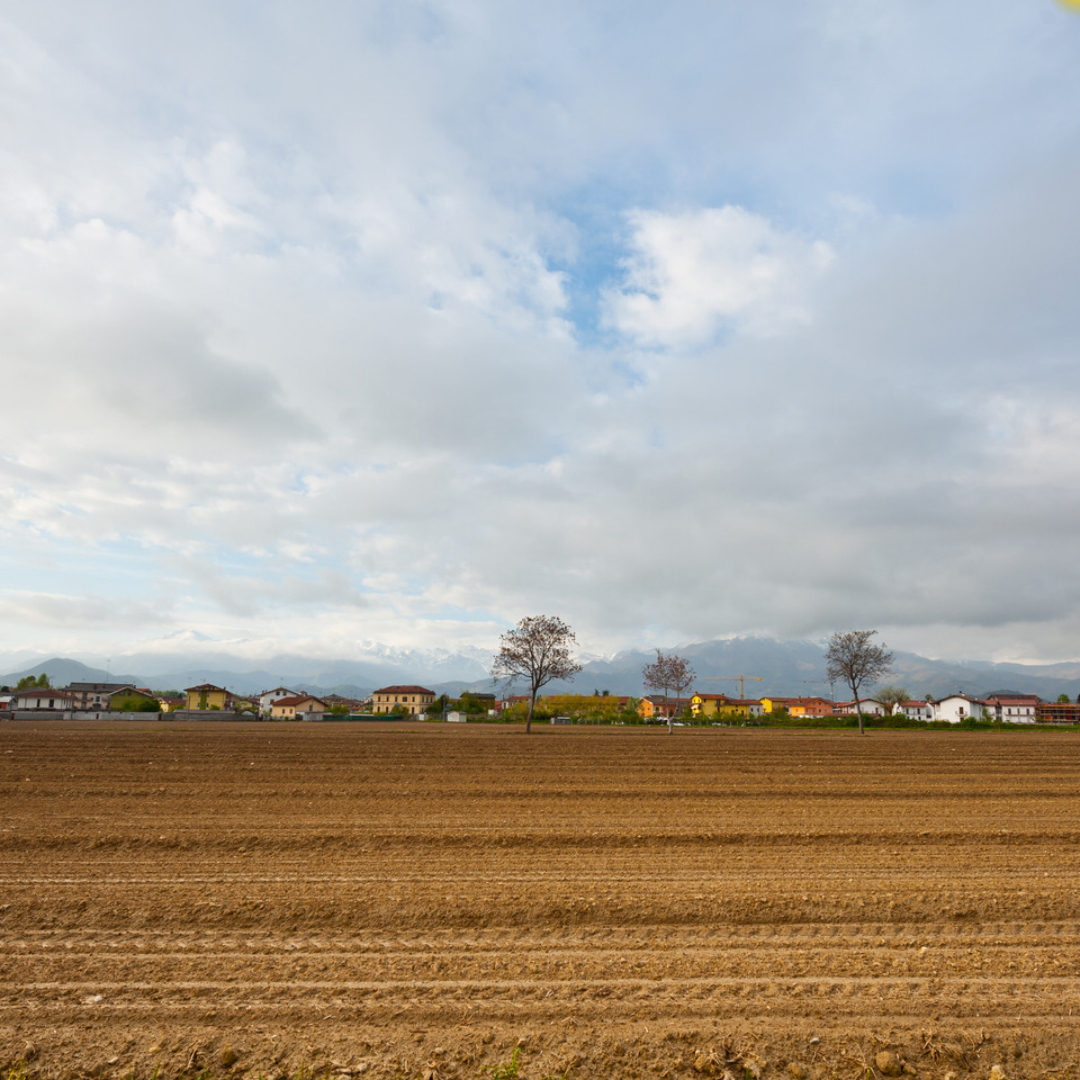
What would it be like to be a fallow field?
Farmers have long left fields fallow, unplanted for a season or more, so the land can recover. A fallow field looks as if it’s waiting. You can imagine a farmer leaning on the fence and wondering when it will be ready. Imagine, though, being the field itself, and answering. It might say something like this:
You see stillness, and I understand why. From where you stand there is only stubble and weeds and the slow grey of the sky. Down here it is busy in a way you cannot see or hear. Rain is soaking back into places that were baked hard from the summer sun. Worms are pulling last year’s leaves down into the dark. Roots I never planted are loosening the clay, and when they die they will become food for whatever comes next. I smell of wet earth and rot but I am moving, slowly at the pace of the cycles of frost and thaw. Please do not walk across me to check on me. I will tell you when I am ready, and you will know it by my greenness.
This is how I have come to think about Autistic rest and burnout recovery. The fallow season is where our mind and body soil rebuild their capacity and energy. The repair happens deep inside us, out of sight. For me it keeps its own seasonal monotropic time rather than going by any expected schedule, such as a 6-week CBT course aimed at easing my depression. Rushing it, or ploughing it up to prove to others that something is happening, tends to strip away what was quietly being restored and leaves me even more depleted.
Pilgrim (1986) calls these intervals “pregnant nothings.” He draws on the Noh actor Komparu Kunio’s idea that time can be empty without ever being uncreative (p. 259). Isozaki describes Ma as the expectant stillness that comes just before a change, a moment called utsuroi (Isozaki et al., 1979, as cited in Pilgrim, 1986, p. 270). I picture the field in that stillness on the morning before its first green shoots. A fallow field is a kind of Ma in our internal landscapes, an interval between harvests where the light gets in through the gate.
Rest as Resistance
Tricia Hersey, founder of The Nap Ministry (2016), has been advocating for many years that rest is a form of resistance against grind culture, capitalism and white supremacy, systems that treat human bodies as tools for production (Hersey, 2022a). Her work grows from Black liberation theology, womanism, Afrofuturism, somatics and community organising. It began from her own generational exhaustion as a Black woman in America and from remembering Ancestors whose rest was stolen through slavery (Hersey, 2022b). Access to rest is always shaped by race, class, disability, gender and care responsibilities. She asks anyone moved by her messages of reclaiming rest, perhaps reclaiming our fallow periods, to learn that history slowly and to honour it.
Hersey describes rest as anything that connects your mind and body (Hersey, 2022b). She is talking about far more than napping in the day or buying expensive pillows and wellness products. For many Autistic people, that connection to meaningful rest might come through stimming, a sensory den, immersion in a beloved interest, long walks, solitude, or simply time when nothing is asked of us and we can ‘just be’ and embrace Ma.
One of the most freeing threads in Hersey’s writing is her insistence that nobody is going to hand us rest, so we have to take it. Years of masking, compliance-based support and being told to push through can leave many Autistic people waiting for permission that never arrives, whether from an employer, a school, a clinician, or our own internalised voice of neuronormativity. A fallow field does not ask the farmer whether it may rest. The season simply is what it is. I find comfort in that, and in Hersey’s reminder that we are worthy of rest just as we are, without having earned it through exhaustion first.
Grind Culture and Stolen Imagination
In We Will Rest! The Art of Escape, Hersey (2024) writes that “grind culture has stolen our imagination” (p. 89). This line goes straight to the heart of what Autistic burnout is like for me as a creative person. When every hour is expected to be accounted for, there is no room left for daydreaming, wandering attention, or the long monotropic deep dives where ideas connect in unexpected constellations. Hersey speaks about what she calls the DreamSpace, the inner place of daydreaming and invention that rest opens back up (Hersey, 2020). The fallow field is a kind of DreamSpace for the land. Nothing has been planted, so anything might still grow, and it is full of potential. Wildflowers may arrive blown in by the wind, and the soil gets the chance to become something ‘other’ or ‘more than’ it was last year.
Neuroqueering rest
Nick Walker (2021) describes neuroqueering as the practice of subverting, refusing and diverging from the neuronormative and heteronormative performances we have been trained into, and of creating new ways of being in their place.
Resting in our own Autistic ways is, I think, a form of neuroqueering. Stimming when we feel the urge, sleeping at unconventional times when we can, staying in pyjamas with a special interest all weekend, declining social events we know may drain us because of the pressure to mask, letting a work project lie fallow for months: each of these refuses the script of how a “productive” person is meant to move through time. Alison Kafer (2013) writes about crip time as bending the clock to meet disabled bodies and minds, rather than bending bodies and minds to meet the clock (p. 27). I have written elsewhere about monotropic time and how differently it can flow. A fallow season is crip time, monotropic time, field time, Ma, and I think it belongs to the one resting.
Fallow as a freedom practice
bell hooks (1994) wrote of love as the practice of freedom, and Hersey often returns to hooks in her books. I have begun to think of fallowing in the same way as Hersey, as a freedom practice. It is something we return to repeatedly, never complete, and never do entirely alone, as we are always connected to something somewhere. Some of my rejuvenating rest happens interdependently, remotely, online, and through body-doubling sessions such as Gather and Write or the Intuitive Processing Workshop.
Hersey (2024) calls on us to “collectively build new worlds, as we simultaneously dismantle and deprogram ourselves from the systems that prop up and perpetuate the racial, social and environmental harm done by white supremacy and extractive capitalism” (p. 151). The word extractive matters here. Land that is farmed year after year without rest becomes depleted, compacted and eroded, and humans treated the same way burn out, and some of us die. Fallowing refuses extraction. It trusts that what is resting is also rebuilding, and that the rebuilding is part of making a different world possible.
That collective dimension is what keeps me hopeful, as a fallow field is never really alone. It is held by the weather, the soil life, the hedgerows, the mycelial networks thriving underneath and the patience of whoever is waiting.
Pilgrim (1986) points out that the Japanese word for human being, ningen (人間), is written with the character for person alongside the character for Ma, read here as gen (p. 256). The philosopher Watsuji Tetsurō placed this idea of betweenness at the centre of his ethics (LaFleur, 1978, as cited in Pilgrim, 1986, p. 275).
To be huMAn
To be huMAn, in the shape of the word itself, is to stand among and in relation to others. In English, too, Ma hides inside the word, and “human” is thought to share its root with humus, the soil. Perhaps to be human is to keep becoming, never finished, always taking shape in the Ma between us and in the earth beneath us. Deleuze and Guattari (1987) place becoming in the middle too, describing the rhizome as always between things, an intermezzo (p. 25).
In neurodivergent community spaces the Ma between us is often kinder, the double empathy gap is less problematic, most of the time (Milton, 2012). Rest becomes easier when we are surrounded by people who understand us, who do not need us to perform, and who will hold the space while we lie fallow for a while.
Annie Dillard (1974) wrote that “the gaps are the thing” (p. 276), rest belongs to the work as the eyelids to the eyes, and the gap is where the light comes in.
Wishing you some restful fallowing!
References
Deleuze, G., & Guattari, F. (1987). A thousand plateaus: Capitalism and schizophrenia (B. Massumi, Trans.). University of Minnesota Press.
Dillard, A. (1974). Pilgrim at Tinker Creek. Bantam Books.
Hersey, T. (2020, July 14). Slowly emerging after a 3 week Sabbath. The Nap Ministry. https://thenapministry.wordpress.com/2020/07/14/slowly-emerging-after-a-3-week-sabbath/
Hersey, T. (2022a). Rest is resistance: A manifesto. Little, Brown Spark.
Hersey, T. (2022b, February 21). Rest is anything that connects your mind and body. The Nap Ministry. https://thenapministry.wordpress.com/2022/02/21/rest-is-anything-that-connects-your-mind-and-body/
Hersey, T. (2024). We will rest!: The art of escape. Little, Brown Spark.
hooks, b. (1994). Outlaw culture: Resisting representations. Routledge.
Isozaki, A. (1979). Ma: Space-time in Japan. Cooper-Hewitt Museum.
https://mcachicago.org/whats-on/exhibitions/ma-the-japanese-concept-of-time-space/ (these are only photos on internet I can find currently!)
Kafer, A. (2013). Feminist, queer, crip. Indiana University Press.
Milton, D. E. M. (2012). On the ontological status of autistic people: The ‘double empathy problem’. Disability & Society, 27(6), 883–887. https://doi.org/10.1080/09687599.2012.710008
Murray, D., Lesser, M., & Lawson, W. (2005). Attention, monotropism and the diagnostic criteria for autism. Autism, 9(2), 139–156. https://doi.org/10.1177/1362361305051398
Pilgrim, R. B. (1986). Intervals (“ma”) in space and time: Foundations for a religio-aesthetic paradigm in Japan. History of Religions, 25(3), 255–277.
https://www.journals.uchicago.edu/doi/10.1086/463043
Raymaker, D. M., Teo, A. R., Steckler, N. A., Lentz, B., Scharer, M., Delos Santos, A., Kapp, S. K., Hunter, M., Joyce, A., & Nicolaidis, C. (2020). “Having all of your internal resources exhausted beyond measure and being left with no clean-up crew”: Defining autistic burnout. Autism in Adulthood, 2(2), 132–143. https://doi.org/10.1089/aut.2019.0079
Tagore, R. (1916). Stray birds. Macmillan.
https://www.ibiblio.org/eldritch/rt/stray.htm
Walker, N. (2021). Neuroqueer heresies: Notes on the neurodiversity paradigm, autistic empowerment, and postnormal possibilities. Autonomous Press.

Courses, books and resources
If you would like to take these ideas further, my courses, books and resources live on Autistic Realms. Everything in the shop is pay what you can, and many resources are free.
- Re-Storying Autism course: a video course and workbook with David Gray-Hammond.
- Building a Positive Autistic Identity: a gentle, self-paced course written for Autistic people.
- Embracing Monotropism: my book on monotropism and preventing Autistic burnout.
- Re-Storying Autism (book): co-written with David Gray-Hammond.
- An Introduction to the Theory of Monotropism: a free e-book.
- The Autistic Realms shop: over 380 resources, pay what you can and many free.