Helen Edgar | Autistic Realms | More Realms
I was reading a philosophy article this weekend, one of those pieces that sits at the edge of physics and metaphysics, the kind of territory I find myself drawn into more and more, especially since joining the CASY Autistic Physics Group and working on Love You Down To Your Star Stuff with Stimpunks where I volunteer as Co-Creative Director alongside Ryan Boren. The article, ‘The quantum world reveals reality is made of relations, not objects: Deleuze’s metaphysics can make sense of quantum weirdness‘ was by George Webster, published in February 2026 in IAI News, and it was about quantum mechanics and the nature of reality. Specifically, about what is actually real at the most fundamental level of the universe.
I came across this line:
“Objects do not come first and then differ; rather, objects emerge out of more fundamental processes of differentiation.”
This feels like a statement about identity, about what we actually are. It felt, in a way I am still working through, like a description of something I have always known from the inside, without ever quite having the language for it. It helps explain how I feel that I am not a fixed, bounded thing moving through the world, but that I emerge, in and through my relationships and encounters with everything around me.
This piece is my attempt to think that through. As always, this is exploratory, I am definitely not a physicist, and I am not making literal claims about quantum mechanics applying directly to human experience, as I really don’t know enough! However, I do think physics can offer us resonant frameworks, ways of thinking that help us articulate things that neuronormative language has never quite been able to hold, and it may help understand and explain some ways of being Autistic or otherwise neurodivergent.
What quantum physics may be actually saying
Webster’s article draws on the work of physicist Carlo Rovelli, who developed what is called Relational Quantum Mechanics (RQM). The basic idea is that at the quantum level, particles do not have fixed, independent properties. A particle’s properties only become real in relation to another system. There is no such thing as an absolute, standalone description of a quantum object that holds true for all observers in all contexts. In other words, what something is depends on what it is in relation to.
Rovelli explains that the world of quantum mechanics is not a world of objects, it is a world of events, and events are always interactions between systems. Reality, at its most fundamental, is not a collection of separate things with built-in properties, it is a vast, shimmering web of relations.
Webster goes even further, drawing on the philosopher Gilles Deleuze to argue that this is not just a strange quirk of the quantum scale, it is actually how reality works at every level. Deleuze argued that difference and relation come first. The apparently stable, separate things we perceive — objects, individuals, identities — emerge out of relational processes, not the other way around. As Webster puts it: “Objects do not come first and then differ; rather, objects emerge out of more fundamental processes of differentiation.” Deleuze saw this as a model for how reality works at every level — not objects first, then relations, but relations first, and then eventually what we recognise as objects.
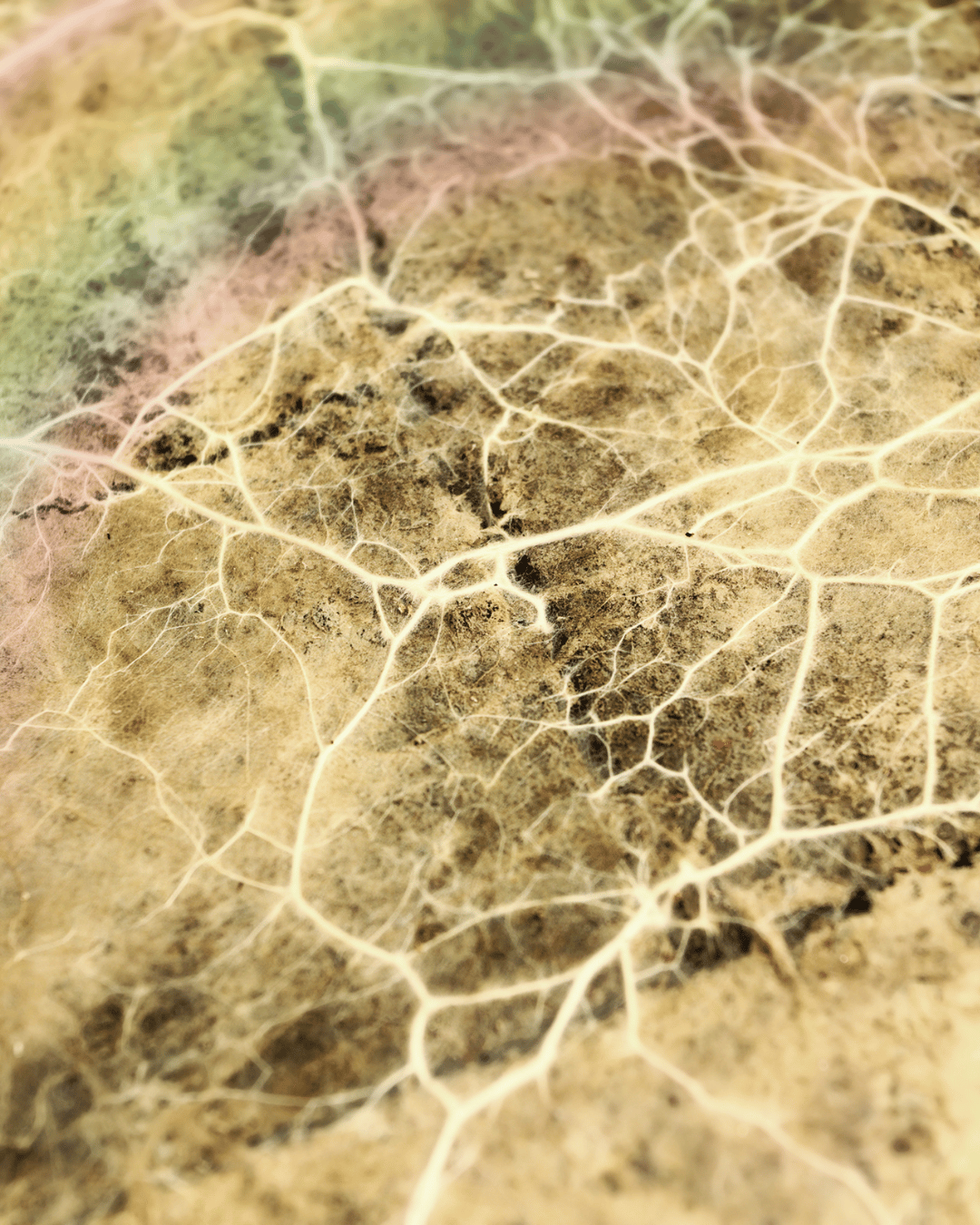
In my ongoing reading of Deleuze and Guattari over the past few years, it feels like things are starting to connect in a strange way……something is starting to make a bit more sense, folds unfolding and nodes of the rhizome and constellations are beginning to connect a bit more in relation to my Autistic identity and relations with others……
Why this matters for how Autistic people have been understood
One of the things Webster observes is that even our philosophical and logical language cannot easily hold a relational worldview. Our logic is built to describe objects and their properties. If relations come first, that language actively gets in the way, so we need different frameworks, different vocabularies, to say what is actually true and also how we feel.
Many of us, as Autistic people, may recognise this difficulty as the neuronormative-dominated language and society we have all grown up in, with its emphasis on fixed traits, stable categories, and measurable deficits has never quite been able to hold what our experience actually is or feels like. As I explored in Living in Layers, my reality is layered, non-linear, and sensorily permeable in ways that the majority of the world seems to fail to recognise or understand. It feels like the language we have is so limited, and just keeps breaking up against us.
This is why I am so passionate about our Stimpunks glossary, created by the neurodivergent and disabled community — we have to create our own vocabulary to survive, as it just isn’t there in the world we currently live in. As Audre Lorde’s and bell hooks’ work reinforces, language is a vital tool for survival, self-revelation, and political action – ‘language is a place of struggle‘.
The frameworks built to describe and assess Autistic people are rooted in exactly the kind of object-thinking that Webster is critiquing. They ask people, what properties does this person contain? What is inside this individual that differs from the norm? How do we measure, categorise, and if possible remediate, fix or change the object so they fit into society?
Damian Milton’s (2012) Double Empathy Problem helped my understanding of this gap of difference over a decade ago. The double empathy problem helps explain that the misunderstanding so often attributed to Autistic people is not located inside one person, it lives between people, in the quality and texture of the encounter, the shared or unshared frameworks two people bring into contact with each other through their lived experiences. In my longer piece The Double Empathy Problem is DEEP (Double Empathy Extreme Problem – Dynamic, Embodied, Ecological, and Political), I explore how this operates not just between individuals but at social, cultural, and structural systemic levels.
The “problem,” in other words, is a relational property. It is not something carried in the Autistic person’s neurology like a stone in a pocket. It emerges, as all relations do, in the encounter itself, in the liminal spaces. In the gap between two different ways of sensing the world, two different attentional rhythms, two different histories of what communication has felt like and meant.
I have spent a long time feeling like the problem, as I think many of us may have as Autistic people. I find something genuinely moving in the idea that physics is pointing towards the same conclusion that disabled activists and Autistic-led researchers have been making for decades. The difficulties we encounter are ecological as David Gray-Hammond has been writing about in their Ecosystemic Model, which we have expanded on in our Re-Storying Autism course and book.
What needs to change is not the person but the conditions of relation. Rovelli might put it a little differently, saying that properties only become real in relation to another system. There is no absolute, observer-independent description of a person that tells the whole truth about themselves. What we are is always, in part, a function of what and who we are in relation to each other and our environment.
This connects to the work of Ombre Tarragnat (2025) on ethodiversity. Ethodiversity (short for ethological diversity), is a concept that moves neurodiversity thinking beyond the brain and into the wider ecological and relational field. Rather than focusing only on neurological difference, ethodiversity attends to the full range of behavioural and existential styles: the different ways that humans and other animals move through, sense, and inhabit their worlds. Tarragnat describes it as encompassing not just biology but inter- and intraspecific relationality, the ways our differences are always already entangled with the environments and relationships we are embedded in.
What I find so useful here is that ethodiversity frames difference as fundamentally ecological and relational rather than as a property contained within an individual. The parallel Tarragnat draws with biodiversity makes sense to me as just like biodiversity is a property of an ecosystem, (something that emerges from how species relate to each other and their habitat), ethodiversity is a property of a relational field. You cannot understand anything by studying one organism in isolation.
Tarragnat also introduces the concept of ethonormativity, the often unspoken rules that govern which ways of being, behaving, and relating are acceptable or expected in a given context. Ethonormativity, like neuronormativity, is not located inside the person. It is a property of the relational and social environment, a set of conditions that certain bodyminds move through with ease, and that others may find exhausting, painful, or simply impossible to meet. When we think of diversity in this way, the difficulty and barriers Autistic, otherwise neurodivergent or disabled people face are not their personal divergence, it is the narrowness of what the relational field is prepared to hold.
A Pause……
This piece is pretty wordy, and I am aware that when we talk about Autistic and neurodivergent experience in these kinds of registers, we can end up — without meaning to — centring the voices that the world already knows how to value. I want to gently push back against that, including in my own writing.
The ideas here belong to all of us, and relation has to come first. These are not ideas that matter more or less depending on how someone communicates, moves, or exists in the world. I have been thinking and writing a lot lately about how neuro-affirming practice is not a framework or a checklist — it is a way of being. It is about being genuinely present with people, as they are, in the relational field we share. That means all of us, including, and I would say especially, people with profound and multiple learning and intellectual disabilities, whose ways of being in relation are so often the most misread, the most unseen, and the most undervalued by the systems built around them.
I spent twenty years as a SEND teacher, and some of the richest, most meaningful things I have come to understand about what genuine relation looks and feels like, what it means to truly be with someone, came from my time in class. Relation and safety was the foundation of everything. A shift in breathing, a change in muscle tone, a turn toward a familiar voice or a sound. These weren’t lesser forms of connection, just different ones, asking something different of the people around them to connect with them. Asking us to slow down, to pay attention differently, to stop waiting for communication that looks like ours before we decide someone is worth relating to. This is the embodied DEEP dimension of the Double Empathy Problem — Dynamic, Embodied, Ecological, and Political — the reminder that relation happens in and through bodies, breath, and shared presence, long before it happens in words. It is a way of being with each other, across the full and beautiful range of how we all exist with one another and with our environment.
Tarragnat’s ideas about ethonormativity does its most violent work on those whose ways of being are furthest from what any normative system recognises as meaningful communication or social participation. The relational field that needs to change is not only the one around verbally articulate Autistic people, but it is also every environment that has decided in advance what counts as a person worth relating to, with those most marginalised always being pushed further away instead of centring them.
This is why, if we return to Rovelli, the question is never just about asking “what is this person like?”, it is also always about “what kind of relational field are we creating together, and whose ways of being does that field make possible?”
Philosopher and physicist Karen Barad (2007) calls this intra-action, which is a bit different from inter-action. Interaction assumes two separate, already-formed things that then come into contact. Intra-action suggests something more radical, that the things themselves, the identities, the properties, the selves, are produced through the meeting. We do not arrive fully formed and then enter into relation, we are, in part, constituted by the relations we are held within and have always been a part of. Barad also draws on quantum physics to make this argument, which is why it sits so naturally alongside Rovelli’s, as both point toward a world where relation is everything.
Erin Manning (2016) develops something similar when she writes about Autistic experience and what she calls the minor gesture, the ways of moving, attending, and relating that do not register within dominant frameworks, but that are doing real, significant, world-making work nonetheless. For Manning, Autistic ways of being are not failed attempts at neurotypical relation, they are different modes of intrarelation, of being constituted in and through a world that is always already more-than-individual.*
This is why I find the word intradependent useful alongside the more familiar interdependent. Interdependence acknowledges that we need each other and intradependence goes further as it suggests that we are, in some fundamental sense, made of each other, that the boundaries between self and relation, between individual and environment, are more porous and more dynamic than the frameworks built around us have ever allowed us to embrace.
What becomes possible when we think relationally
We are all interdependent and intradependent and Webster helps highlight that this is precisely why Deleuze matters. Deleuze offers what Webster calls “the metaphysics science needs”, a different conceptual vocabulary, one built for difference, flow, and becoming rather than for fixed objects and their properties. I think this may also be part of the metaphysics that neurodiversity needs, an ever-expanding neuroqueer framework that begins with relation rather than with the individual as an isolated, assessable unit.
If identity emerges from relations rather than residing inside individuals, then support cannot be about fixing a person in isolation. It has to be about transforming the relational conditions — the environment, the encounter, the quality and structure of connection itself. The sensory climate of a space, the pacing, the temporality and texture of relating and forming connections and relationships. Whether a community can hold someone’s particular way of attending to the world without requiring them to translate themselves into something more legible, more manageable, more like the expected norm, and whether the people building those spaces are genuinely asking whose ways of being they are designed around, and whose they are still leaving out.
This is what I see at work in the best neurodiversity-affirming spaces I am fortunate to be part of — the CASY group, the Stimpunks community, NeuroHub Community and Thriving Autistic. These aren’t spaces that take a person as an object to be supported, assessed, and adjusted, but co-created spaces that understand themselves as relational fields. They are communities that consider what those fields need to become, so that different kinds of bodyminds can genuinely flourish within them. Spaces that hold the full range of experiences, from the most academically articulate to those whose presence, joy, pain and relation express themselves entirely outside of neuronormative language as sensory beings. Everyone has equal worth and we are all dependent on each other to not only survive, but thrive and create meaningful lives together.
In We Are Star Stuff, which I am continuing to develop collaboratively with Ryan Boren at Stimpunks, we wrote about being literally made of elements forged in dying stars: about the deep, physical reality of our connection to the cosmos and to each other. Relational quantum mechanics takes this even further, not just that we are made of the same stuff, but that what we are, at the most fundamental level of reality, is constituted by our relations with each other and our environments. There is no isolated self beneath the web of connection, there is only what emerges in, through and in the spaces between every encounter.
We are not broken objects. We are relations, all of us still becoming. And I think (and I hope) that sitting with some of these thoughts might help change everything about how we understand, support, and truly be with each other.
This piece is part of a growing constellation of writing. You might also enjoy We Are Star Stuff (with Ryan Boren, Stimpunks), Living in Layers, Neuroqueering Relational Ecologies and The Double Empathy Problem is DEEP.
References
Barad, K. (2007). Meeting the universe halfway: Quantum physics and the entanglement of matter and meaning. Duke University Press.
bell hooks (2014). “Yearning: Race, Gender, and Cultural Politics”, p.160, Routledge.
Cordero-Rivera, A. (2017). Behavioral diversity (ethodiversity): A neglected level in the study of biodiversity. Frontiers in Ecology and Evolution, 5, art. 7. https://doi.org/10.3389/fevo.2017.00007
Deleuze, G. (1994). Difference and repetition (P. Patton, Trans.). Columbia University Press. (Original work published 1968)
Deleuze, G., & Guattari, F. (1987). A thousand plateaus: Capitalism and schizophrenia (B. Massumi, Trans.). University of Minnesota Press. (Original work published 1980)
Edgar, H., & Boren, R. (2026). We are star stuff. Stimpunks Foundation. https://stimpunks.org/star-stuff/
Edgar, H., & Gray-Hammond, D. (2026). Weird Pride in a Hostile World. Presented at Neurodiversity is More Than, Institute for Medical Humanities, Durham University.
https://autisticrealms.com/weird-pride-in-a-hostile-world/
Gray-Hammond, D. (2026, January 2). Autism ecosystemic model. NeuroHub Community. https://neurohubcommunity.org/2026/01/02/autism-ecosystemic-model/?v=7885444af42e
Gray-Hammond, D., & Edgar, H. (2026). Re-Storying Autism. Amazon.
https://amzn.eu/d/0aJIhxZB
Gray-Hammond, D., & Edgar, H. (2026). Re-Storying Autism [Video course]. NeuroHub Community. https://neurohubcommunity.org/course/re-storying-autism-video-course/?v=7885444af42e
Manning, E. (2016). The minor gesture. Duke University Press.
Milton, D. (2012). On the ontological status of autism. Disability & Society, 27(6), 883–887.
Rovelli, C. (1996). Relational quantum mechanics. International Journal of Theoretical Physics, 35, 1637–1678.
Tarragnat, O. (2025, February 25). What is ethodiversity? https://ombretarragnat.com/2025/02/25/what-is-ethodiversity/
Walker, N. (2021). Neuroqueer heresies. Autonomous Press.
Webster, G. (2024). The metaphysics science needs: Deleuze’s naturalism. European Journal of Philosophy, 32(3), 820–846. https://doi.org/10.1111/ejop.12909
Webster, G. (2026, February 19). The quantum world reveals reality is made of relations, not objects. IAI TV. https://iai.tv/articles/the-quantum-world-reveals-reality-is-made-of-relations-not-objects-auid-3501s-not-objects-auid-3501