Tag: liminal spaces

  • Neuroqueering in the Liminal Spaces

    Neuroqueering in the Liminal Spaces

    Neuroqueering in Liminal Spaces

    “By silencing our bodyminds, they (neurotypical society) have halted the growth of a chaotic self. We are no longer able to move fluidly through our experience, instead frozen like ice on an arctic tundra” (Gray-Hammond, 2023)

    David Gray-Hammond (Emergent Divergence) and I are responding to each other’s blogs to help expand the Autistic Rhizome. We are adding nodules to the webs of discussions happening in the Dark Forests (Boren, 2024) of the online communities and creating an open-source bank of writing to carve a path for community discussion about neuroqueering.

    David is continuing his ‘Reclaiming Neurofuturism’ series and has responded to my post The Double Empathy Problem is DEEP. He explored the litigious nature of disabled embodiment and questioned the intentional creation of minority silos via the double empathy divide (Milton, 2012). In support of my own thinking, David also suggests that we need to embrace the healing power of liminal spaces.

    I am writing extensively about the in-between, liminal spaces and Ma as a potential chapter for Nick Walker’s new Neuroqueer Anthology (struggling to write it coherently so that it may make sense to others, but it is slowly forming!). Liminality has been a long term passion of mine, tunnelling back over 30 years. As an autistic person, I feel I have lived my entire life in the liminal. I have always been in-between or on the edges of social groups, always struggling with an internal battle due to the effects masking has on my sensory system. Being monotropic has meant the in-between is felt intensely; it has led to cycles of burnout and impacts my mental, physical and sensory health.

    I am still living in the liminal, on the edges, often in spaces filled with anxiety and uncertainty. However, I have gone through a huge and difficult process of unlearning and relearning over the past few years since I realised I was autistic, rejecting the deficit ways of thinking about neurodivergence and dismantling my own ableist thought patterns. Patterns that have been reinforced over decades by the weight of neuronormativity. I am grateful for the autistic communities I am part of for supporting me and providing cushioning to help me navigate my way through this messy process whilst trying to prevent myself heading into a deeper burnout cycle. However, I still feel like I am living on the edges, even within the most caring and supportive neurodivergent communities.

    The years of masking, the impact of living in a neuronormative ableist-driven society and going through cycles of burnout has, in many ways resulted in my bodymind being ‘silenced’, getting stuck. David echoed this feeling as he explained;

    “By silencing our bodyminds, they (neurotypical society) have halted the growth of a Chaotic Self . We are no longer able to move fluidly through our experience, instead frozen like ice on an arctic tundra.”

    Tundras are cold and harsh environments, but biodiversity adapts to the landscape and the short growing seasons, plants and animals transform their ways of being to survive. Tundras offer some hope that life can exist even in the cruellest of environments.

    However, we don’t want people feeling frozen, stuck on an arctic tundra, trapped in endless freeze/thaw/burnout cycles. People deserve more than a life in survival mode where they are constantly on high alert for danger and in looping patterns of sensory regulation-seeking behaviour, living in Meerkat Mode (Adkin, 2023). In Walker’s inspiring presentation,Expanding the Creative Potentials of Human Neurodiversityat ITAKOM (It Takes All Kinds of Minds Conference, March 2023), she explored how we need to work together so we can flourish so that the;

    ‘creative synergy, the chemistry that is between and among different minds’ can emerge…so the magic happens’.

    We need our beautifully different bodyminds to work together; we need to develop a common language and be open to different ways of thinking, more accepting and inclusive. Radical inclusivity is a concept Ryan Boren (Stimpunks) and I have been exploring as part of our Neuroqueer Learning Spaces Project. There is no single path to radical inclusivity; it begins with being embodied, of being open to connecting with yourself and others, it is cultivated by ongoing neuroqueering efforts to meet needs, it is a confrontation with normativity. Radical inclusivity is more than accommodating needs; it is about fostering cognitive and somatic liberty to enable the potential of neuroqueering to open up new, as yet unknown possibilities.

    Radical Inclusive spaces would benefit everyone. They are embodied spaces of deep connection and safety where people can tune in and be responsive to the needs of others. They offer a deeper connection, and they close the DEEP double empathy gap that I feel is at the root of so much hurt, pain, disconnect and disorientation. For radical inclusion, we need to work together. We need connections, a shared deep understanding, an embodied presence, a sense of meaning, and a sense of belonging. We need community, love and kindness to expand the rhizome.

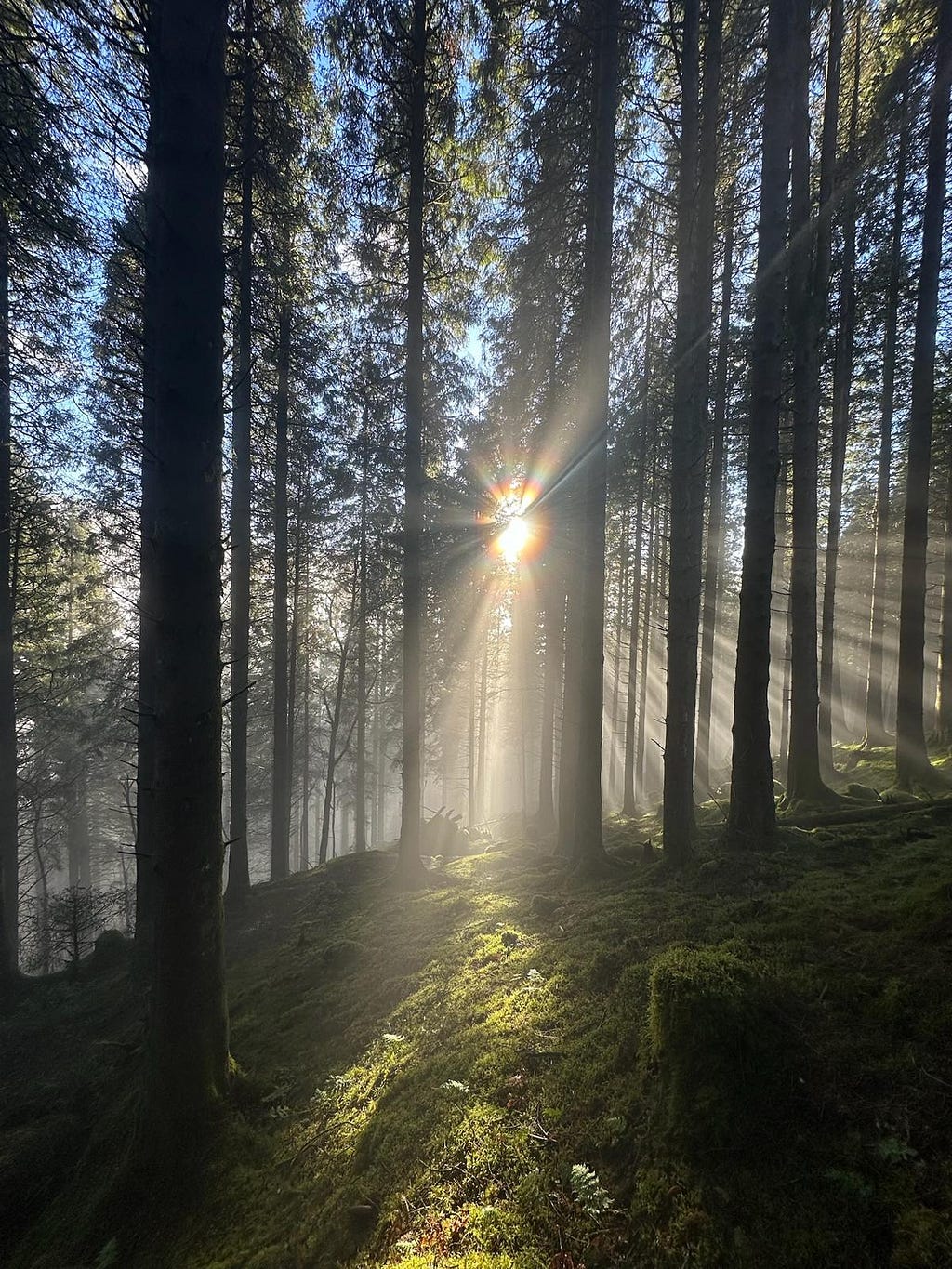
    Deleuze and Guattari’s One Thousand Plateaus (1980) explores the concepts of the rhizome and also the importance of plateaus being transforming spaces that resist the linear hierarchy of neuronormativity and embrace the potential of the multiplicity of rhizomatic connections. The possibility to use these concepts to explore neuroqueer theory shines through One Thousand Plateaus, it is like a sunbeam bringing hope in Ma, inbetween the doorways of the liminal spaces that so many of us may feel we are living in.

    Rhizomes are open-ended; they have no middle, they have no start and there is no end. (Much like this series of blogs between David and I, I am again beginning in the Middle Entrance, again. You are joining conversations that have been evolving over the past two years in David’s Emergence Divergence Discord server, a node of the autistic rhizome, Open invite to join us there!).

    In summary:

    Rhizomes are interconnected networks of shared ideas and experiences filled with potential. Much like neuroqueer theory, rhizomes have multiple entry points, they are non-heirarchical. Anyone can neuroqueer, and anyone can enter a rhizome at any point, at any time, if the desire and intent are inside them to want to transform and explore neuroqueering.

    Smooth Spaces challenge the idea of traditional hierarchy. They are continuous spaces where the theories of Monotropism (Murray et al., 2005) and Flow Theory (Heasman et al., 2024) can flourish and open up creative neuroqueer potential, an emerging way of being. I experience smooth spaces as the spaces in the gaps of the rhizome; they are the liminal spaces.

    Plateaus are spaces of stability; they offer balance and equilibrium, equity, potential for awe and wonder and further expansion and transformation.

    Liminal Spaces provide smooth, open plateaus, spaces to connect, transform, and neuroqueer from the safety of our rhizomatic communities.

    This new series of blogs will provide a plateau for discussion, a space where the intensity you may feel of being stuck at or between a node point of the rhizome can gain some stability and grounding. We are seeking to expand our bodyminds as we write and connect with others, exploring the dynamics and discord of the DEEP Double Empathy Extreme Problem. As Walker (2019, pg 283) suggested in her thesis;

    “we need to “look beyond social cues to the deeper dynamics of interacting bodies, exceptional tactile and kinesthetic sensitivity, and affinity for what I’ve termed the aesthetics of emergence

    We are opening discussions to explore the endless possibilities of an awe-inspiring neuroqueer future, to help bridge the DEEP empathy gap so many people are experiencing and to work towards a radically inclusive society.

    “To recognise our responsibility to each other lies in our power to create better futures for each other. Connection is the striking surface of a hammer on the walls of the masters house.” (Gray-Hammond, 2024)

    **These blogs will also form part of the discussions and feed into the Neuroqueer Learning Spaces Project I am developing with Ryan Boren (Stimpunks)**

    References

    Adkin, T., & Gray-Hammond, D. (2023). Meerkatting — Emergent Divergence. Emergent Divergence. https://emergentdivergence.com/tag/meerkatting/

    Boren, R. (2024, June 9). Campfires in dark Forests: Community brings safety to the serendipity. Stimpunks Foundation. https://stimpunks.org/2024/05/16/campfires-in-dark-forests-community-brings-safety-to-the-serendipity/

    Edgar, H. (2024, June 15) The Double Empathy Problem is DEEP — MoreRealms — Medium. Medium. https://medium.com/@helenrealms/the-double-empathy-problem-is-deep-2364b3412c39

    Edgar, H. (2023, June 27). Middle entrance — MoreRealms — Medium. Medium. https://medium.com/@helenrealms/middle-entrance-973dc06920b0

    Gray-Hammond, D. (2023). Reclaiming Neurofuturism: Rhizomatic Communities and the Chaotic Self. Emergent Divergence. https://emergentdivergence.com/2023/04/30/reclaiming-neurofuturism-rhizomatic-communities-and-the-chaotic-self/

    Gray-Hammond, D. (2023). Autistic rhizome — emergent divergence. Emergent Divergence. https://emergentdivergence.com/category/autism/autistic-community/autistic-rhizome/

    Gray-Hammond, D., & Gray-Hammond, D. (2024, June 15). Reclaiming Neurofuturism: Responding to “The Double Empathy Problem is DEEP” by Edgar, 2024. Emergent Divergence. https://emergentdivergence.com/2024/06/16/reclaiming-neurofuturism-responding-to-the-double-empathy-problem-is-deep-by-edgar-2024/

    Heasman, B. et al., Towards autistic flow theory: A non-pathologising conceptual approach. Journal for Theory of Social Behaviour, https://doi.org/10.1111/jtsb.12427

    Milton, D. E. (2012). On the ontological status of autism: the ‘double empathy problem.’ Disability & Society, 27(6), 883–887. https://doi.org/10.1080/09687599.2012.710008

    Murray, D., Lesser, M., & Lawson, W. (2005c). Attention, monotropism and the diagnostic criteria for autism. Autism, 9(2), 139–156. https://doi.org/10.1177/1362361305051398

    Nick Walker. (2023, March 19). Dr Nick Walker • Expanding the Creative Potentials of Human Neurodiversity • ITAKOM Conference 2023 [Video]. YouTube. https://www.youtube.com/watch?v=AOITXkj5bqM

    Walker, N. (2019). Transformative Somatic Practices and Autistic Potentials: An Autoethnographic Exploration. California Institute of Integral Studies ProQuest Dissertations & Theses, 2019. 27665905.
  • Neuroqueer Collaborative Work Flow Spaces

    Neuroqueer Collaborative Work Flow Spaces

    A behind-the-scenes look into the collaborative workflow between Helen Edgar (Autistic Realms) and Ryan Boren (Stimpunks) as we write about Neuroqueer Learning Spaces (NQLS) and continue our neuroqueering journeys, connecting with awe-inspiring people and discovering new ideas to explore along the way.

    Liminal Spaces

    Ryan Boren (Stimpunks) and I are neuroqueering ourselves and the spaces we work in as we write about NQLS. We met online in 2022 in the liminal spaces between various online neurodivergent communities, both constantly feeling on the edge of things, even in the most neuro-inclusive settings and groups we could find.

    We are both autistic and multiply neurodivergent and deeply passionate about working towards radical inclusivity. Due to our lived experience as parents and professionals, we have seen first-hand the harm that the heavy burden of cisheteronormativity, neuronormativity and neuro-essentialism is causing, especially to neurodivergent people. Normativity is breaking people’s mental and physical health and severely destroying the tremendous potential that is inside everyone. We need to find caring spaces to connect with others, to create an ecological system of care (Bettin, AutCollab), a responsive space that enables authenticity and values the potential of everyone, regardless of neurology, disability, race, gender or any other intersection that is marginalised.

    Liminality

    by Carrie Newcomer (2021)

    So much of what we know
    Lives just below the surface.
    Half of a tree
    Spreads out beneath our feet.
    Living simultaneously in two worlds,
    Each half informing and nurturing
    The whole.
    A tree is either and neither
    But mostly both.

    I am drawn to liminal spaces,
    The half-tamed and unruly patch
    Where the forest gives way
    And my little garden begins.
    Where water, air and light overlap
    Becoming mist on the morning pond.

    I like to sit on my porch steps, barn jacket and boots
    In the last long exhale of the day,
    When bats and birds loop in and then out,
    One rising to work,
    One readying for sleep.

    And although the full moon calls the currents,
    And the dark moon reminds me that my best language
    Has always emerged out of the silence,
    It is in the waxing and waning
    Where I most often live,
    Neither here nor there,
    But simply On the way.

    There are endings and beginnings
    One emerging out of the other.
    But most days I travel in an ever present
    And curious now.
    A betwixt and between,
    That is almost,
    But not quite,
    The beautiful,
    But not yet.

    I’ve been learning to live with what is,
    More patient with the process,
    To love what is becoming,
    And the questions that keep returning.

    I am learning to trust
    The horizon I walk toward
    Is an orientation
    Not a destination
    And that I will keep catching glimpses
    Of something great and luminous
    From the corner of my eye.

    I am learning to live where losses hold fast
    And grief lets loose and unravels.
    Where a new kind of knowing can pick up the thread.

    Where I can slide palms with a paradox
    And nod at the dawn,
    As the shadows pull back
    And spirit meets bone.

    Carrie Newcomer (2021)
    From Until Now: New Poems by Carrie Newcomer. Copyright © 2021 Carrie Newcomer. Published by Available Light Publishing

    Our Neuroqueer Learning Spaces project is born largely from trauma, grief and a shared passion for challenging, deconstructing and re-imagining what our education and healthcare system could be like if people were prepared to unlearn and unleash their bodyminds from the weight of conforming to neuronormative, socially constructed ways of being. The pressure to ‘fit in’ is real and intense, and neuronormativity is limiting for everyone (not just neurodivergent people).

    The pressures and barriers to education and health care we have endured and are still battling against are heavy. It has left us, like so many other people in our situation,feeling broken and ‘weathered like sea glass’ (Shepherd et al.,2024). As part of NQLS, we have created a community-driven NQLS Manifesto and an NQLS Open Framework of Guidance. We are also in the process of developing anti-behaviourism resources to help parents/carers and professionals and those they support to challenge harmful practices, such as (Applied Behaviour Analysis) ABA and (Positive Behaviour Support) PBS. These WHY SHEET resources are free open license and can be edited and used to help self advocate for young people who may be facing barriers accessing education.

    If you value this project, please consider signing our WHY Sheet endorsement page along with many other parents/carers and professionals to help give confidence, agency and autonomy to those needing these resources.

    Inspired by the quote from Audre Lorde (1984), “The master’s tools will never dismantle the master’s house”, we are advocating a need to:

    “Queer the system, queer the tools and create new tools.”

    (Nick Walker, 2024)

    Our Neuroqueering Journeys

    Trust

    Where my voice has often felt dismissed as a parent, it is often validated, listened to and sought as a professional. Trust is an issue. Different voices are trusted by different people, in different places. Safe spaces are needed to develop trust, and time is needed to be with people to gain trust. Reaching out and connecting takes courage; there is always a doubt as to whether you are really in a safe space where you can truly trust and be trusted. There is a vulnerability in admitting things aren’t working, exploring what is under the surface, finding people to connect with who share your struggles and ethos, and having a shared hope for change to find a way out of difficult situations. We need spaces where we feel safe and where there is trust so that we can unlearn and relearn and continue to neuroqueer.

    As a white professional person, being a part of both the neurodivergent parent/carer communities and the professional education and healthcare communities, I am aware I am in a unique and relatively safe position of privilege to even write and explore this topic. Enforced hierarchy and the double empathy problem (Milton, 2012) are at the root of so many difficulties and often result in the voices of neurodivergent or disabled people being dismissed. At best, voices may be silenced, and at worse, lived experience can be so deeply misunderstood and misinterpreted it can lead to accusations of not parenting ‘right’, being sent on courses to try and make families conform to neuronoramtive ideals, or in some of the most severe cases we have seen lead to accusations of neglect, FII and safeguarding concerns (Shona Murphy).

    Trust, safe spaces, and community are vital to NQLS and our own personal neuroqueering journeys. When the world feels unsafe, you need to create your own spaces and make your own connections. We think creating neuroqueer learning spaces is one possibility that is worth exploring.

    Can We Trust?

    by Pernille Fraser (2019)

    Can we trust the space you offer?
    Can we trust the words you utter?

    Can we trust the time decided?
    Can we trust the form provided?

    Can we trust your singular view?
    Can we trust the treatment we receive from you?

    Can we trust the way you perceive?
    Can we trust you to sit, listen and receive?

    Can we trust you not to leave another dent……in us….again?
    Can we trust the system you’ve decided and provided
    … will it actually be in our best interest…
    … with our knowledge and guide?

    Can we trust you to understand that sound is once, twice, three times as loud?
    Can we trust you to understand that light, ‘that light’… there is burning, burning our eyes?

    Can we trust you to provide the space to breathe?
    Can we trust you to understand that our senses are more involved- BIGGER?
    Can we trust you to let us move away from you… that you cause the trigger?

    Can we trust you not to deplete our hard fought for energy and vigour?
    Can we trust you to listen when we say we are tired…. and let us leave the room?

    Can we trust you to give us time to form……form our own words…..it our way and not yours?

    Can we trust you not to constantly correct when we misspell or stutter?
    Can we trust you to say what you are going to do and not just assume?

    Can we trust you to understand that your correction……. may only be correct for you?

    Can we trust you to not magnify difference and constantly question our existence?
    Can we trust you to leave us and let us decide?

    Can we? Can we trust you? Can we decide?

    (This poem was written by Pernille Fraser, a Stimpunks NQLS contributor.)

    Safe Spaces & Community

    Our work has taken place in the dark forests of online communities,
    “Dark forests like newsletters and podcasts are growing areas of activity”. As are other dark forests, like Slack channels, private Instagrams, invite-only message boards, Element, Discord and a myriad of other interconnected platforms that people are seeking because they are “spaces where depressurised conversation is possible because of their non-indexed, non-optimized, and non-gamified environments. The cultures of those spaces have more in common with the physical world than the internet.” The Dark Forest Theory of the Internet — OneZero via The Dark Forest Theory of the Internet. This dark forest metaphor fits nicely with the NQLS idea of primordial learning spaces such as our Cavendish caves, campfires, and watering holes.

    ** Caves are spaces for quiet reflection, introspection, and self-directed learning.

    **Campfires are spaces for learning with a storyteller — teacher, mentor, elder, or expert.

    **Watering holes are spaces for social learning with peers.

    Intermittent collaboration = group work punctuated by breaks to think and work by ourselves.

    The golden thread of being a “space holder” has been inspired by Kay and Dan Aldred (2023) and is woven through our NQLS ideology. It is within the forests of online community spaces that the role and value of being a virtual “space holder” is valued. It allows the exploration of thought and the creation of connections within connections — rhizomes within rhizomes.

    As a community, Stimpunks has a unique way of working; they have created and are nurturing the role of ‘space holder’. This has enabled me to safely explore, take risks and expand my ideas of how workspaces can be transformed. Stimpunks is a living example of how a neuroqueer learning space can work and is working .

    Stimpunks offers various online platforms and spaces in their local community. They offer;

    watering holes for collaborative work and parallel play,

    campfires to learn from others & share resources

    caves to rest, and have independent time to reflect.

    Our Journey

    Ryan’s IT skills have been embraced and expanded as we collaborated with people across various countries and communities, merging projects and ideas, which is something we will be continuing to develop. This is in line with AutCollab’s NeurodDiventures project where our “evolving web of relationships, mutual aid, and peer support initiatives is best understood in terms of emergent Ecologies of Care beyond the human”. NQLS aim to create radically inclusive, non-hierarchical spaces that are safe, nurturing environments for divergent (and neuroqueer) thinking, creativity, exploration, and collaborative niche construction. We believe NeuroDiventures is a wonderful structure for NQLS to build upon.

    This has been, and continues to be a fairly intense, immersive roller coaster of a journey. Ryan and I are both Autistic, multiply neurodivergent and monotropic. We dived into this project with our entire bodyminds, leaving little space for other work, which has sometimes been tricky to navigate and manage, switching attention tunnels as monotorpic people is exhausting. Our shared interest, passion and seemingly endless capacity for neuroqueering our bodyminds and education has made our workflow fairly prolific. Whilst Ryan has created new additions to Stimpunks neuroqueering webpages, I have infodumped my thoughts as I have read through 100’s of pieces of work (academic research papers, blogs and books) related to the barriers of education our young people are experiencing and ideas for more humane progressive neuroqueering ways forward. Ryan has been diving into his own reading lists and also sharing with the Stimpunks team along the way. We have a mountain of materials; what we have reflected upon and written about so far is only the tip of the iceberg. We are trying to weave in emergent thoughts as we go along, creating a neuroqueering tapestry of ideas which is reflected via Stimpunks website and our blogs and social media posts.

    Writing

    As with all projects, there have been hurdles and obstacles to overcome and crashes along the way where we have just become ‘stuck’; this has been no exception. The ebbs and flows of our own mental and physical health have had an inevitable impact. We have had to find ways between our time zone differences, family demands, lifestyles and different workflow patterns to try and resolve things along the way. One of our biggest stumbling blocks was the actual process of writing. This was a significant issue given that our project needs to be reflected online through words and the spaces between our words to bring meaning to others.

    We needed to find ways to write and work together in a shared space, which involved neuroqueering my own ways of working and collaborating. It has made me reflect upon previous projects, taking the positives and negatives and bringing some of those ideas into our shared new online spaces and neuroqueering them in the way we communicated and socialised in multiple online watering hole spaces where we discussed what we had learnt from others in our meetings (campfire spaces) and reflected by ourselves (in cave spaces) in our own niche constructed sensory dens at home.

    The progress of my IT skills have been lying dormant since the late 1990s. Ryan is a former WordPress and Automattic lead developer with a very efficient workflow system fully embedded into Stimpunks running of their organisation. I worked as an early years and primary teacher in the UK, supporting those with profound and multiple learning disabilities. I learnt the importance of listening and being there even when verbal words aren’t used, the value of connecting in shared spaces, and the potential of guiding learning by following and building on children’s personal interests to deepen their learning through play to provide more meaningful experiences. These were all valuable experiences for NQLSs, but my tech and writing skills were not developed beyond the needs of class planning and report writing.

    Collating vast amounts of research and creative writing using either my trusted Word or Google Docs was not working for Ryan; it was proving to be a huge barrier to any successful collaboration. While our independent work was carried out in its own fairly reliable way, our collaborative chapter for Nick Walker’s upcoming new Neuroqueer book, which we hope to submit a chapter towards, was very stuck.

    I defaulted to multicoloured pens and paper and laboriously retyped my thoughts onto my laptop, transferring them to our websites, whilst Ryan was magically transforming our many conversations on a live stream via Stimpunks.

    Due to the distance of around 5000 miles separating us, these conversations took place and continue to take place across multiple online platforms, often simultaneously, as we move between our many open tabs of Discord, Element, Word- Press, Facebook, Twitter and a myriad of other apps and spaces within the same conversations, often resting in HyperBeam for co-regulation and to share music and videos with other Stimpunks family peers, creating a sense of togetherness and belonging.

    Whilst the conversations continued to flow, our collaborative chapter remained static as a 20k word draft of my stream of consciousness lay in Ryan’s inbox with hyperlinks to a vast amount of research to try and validate and justify (some of) my thinking (some of it is just my thoughts, and I am hoping they may resonate with others?!).

    We called on the support of a member of the Steampunks team to help bridge the gap, but it soon became evident we needed an entirely different system to work. Being a tech person at heart, Ryan needed Markdown as a part of his creative writing method (Markdown gives documents semantic structure without specifying formatting at all). We have now transferred our working documents to GitHub, enabling a flow to resume, and I am quickly seeing the benefits of adopting Stimpunks workflow thinking and moving on from 1997. (However, I still use my multicoloured pens and paper to make notes as I go!)

    We are approaching an extended deadline date for Nick Walker’s chapter submission, but with a neuroqueering workflow in place and the evolution of our ever-expanding Cavendish online spaces, we are making progress, hurrah!

    Onwards

    Living within Stimpunk’s myriad of primordial Cavendish Cave, Watering Hole, and Campfire spaces in the forests of the online community is proving to be an epic journey. I have found spaces where I can finally breathe, explore, have some me-time, continue my own neuroqueering journey and intermittently collaborate with others. I feel fortunate to be meeting some amazing people along the way. I am having fun, diving between and venturing out from the edges of liminal spaces to create and explore neuroqueer learning possibilities with others who share this passion and know the potential of Neuroqueer Learning Spaces.

    Onwards!

    Music has been an integral part of our workflow system in and between our Cavendish Neuroqueer Learning Spaces to rest, recover and re-energise independently and collectively.

    We have many playlists which are uploaded onto Stimpunks website.

    Ryan’s Playlist

    Helen’s Playlist

    If you want to learn more, here are some codes to Markdown and plain text and the workflow thinking they enable.

    If you’d like to learn more about collaborating, please contact us via Stimpunks. (PS, we accept submissions and collaboration from everyone in all formats and languages, including handwritten work using paper and pen, voice recordings/ podcasts, photography, art and all forms of Alternative and Augmentative Communication……all welcome, Mardown skills are not a requirement!).